
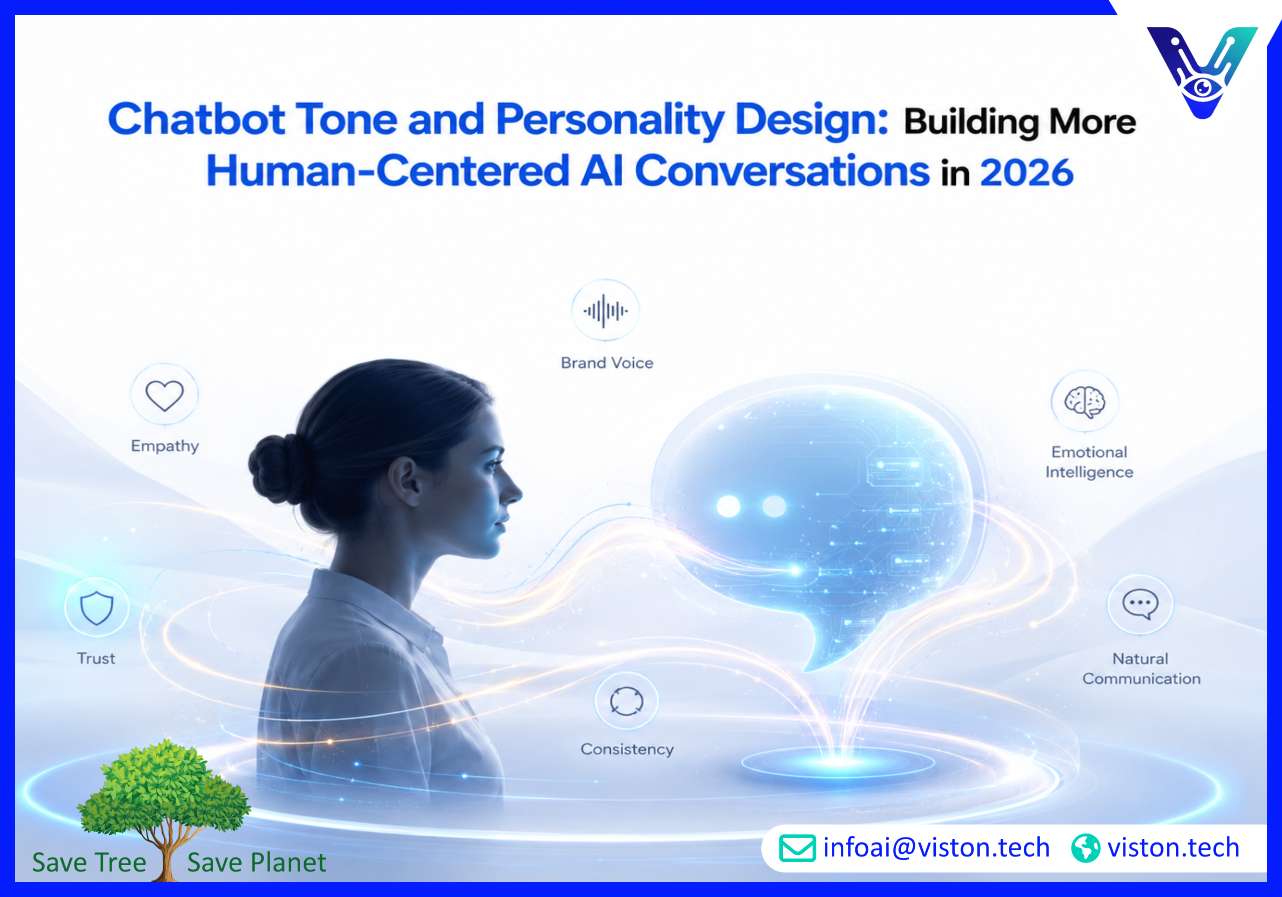
As AI chatbots become a core part of customer engagement strategies, businesses are discovering that functionality alone is no longer enough. Users increasingly expect conversational experiences that feel natural, helpful, and aligned with a brand’s identity. Effective chatbot tone and personality design helps organizations create meaningful interactions that improve trust, engagement, and customer satisfaction while supporting broader business objectives.
Chatbot tone and personality design is the process of defining how a chatbot communicates with users across conversations, channels, and customer journeys. While chatbot functionality determines what a chatbot can do, personality design determines how it delivers information and interacts with people.
A well-designed chatbot personality creates consistency across customer interactions by establishing:
In 2026, organizations increasingly recognize that chatbot personality directly impacts user perception, adoption rates, and overall customer experience.
Modern consumers interact with chatbots across websites, mobile applications, messaging platforms, customer support portals, and internal business systems. These interactions often shape a user’s first impression of a brand.
Without a defined conversational identity, chatbots can appear inconsistent, robotic, or confusing.
Strong chatbot personality design helps businesses:
As AI capabilities continue to advance, the quality of conversational design often becomes a competitive differentiator.
Users naturally assign human characteristics to conversational systems. A chatbot that communicates clearly, consistently, and appropriately feels more reliable than one with inconsistent messaging.
Personality design influences how users perceive:
Businesses that invest in personality design often create more intuitive and satisfying user experiences.
Successful chatbot personality design requires more than choosing a friendly greeting. It involves creating a structured conversational framework that aligns with business goals and audience expectations.
The chatbot should reflect the organization’s existing communication style.
For example:
The chatbot should feel like a natural extension of the company rather than a separate digital tool.
Businesses should define how the chatbot communicates across different scenarios.
Areas to standardize include:
Consistency helps users understand what to expect throughout the conversation.
Different audiences require different communication approaches.
Factors influencing chatbot tone include:
A chatbot supporting enterprise software buyers will typically use different language than one assisting retail shoppers.
Modern chatbot experiences increasingly incorporate emotional intelligence principles.
While chatbots should avoid pretending to be human, they can acknowledge user frustration, urgency, or confusion through thoughtful response design.
Examples include:
This approach improves customer confidence and reduces friction.
Personality design should support specific business goals.
A lead generation chatbot may prioritize confidence and guidance, while a customer support chatbot may emphasize clarity and empathy.
Understanding the chatbot’s primary purpose helps shape its communication style.
Organizations should document personality guidelines before deployment.
A framework may define:
This ensures consistency as the chatbot evolves over time.
Many businesses make the mistake of overhumanizing chatbots.
Users generally appreciate conversational language but still expect accurate information and efficient assistance.
The most effective chatbot personalities strike a balance between approachable communication and professional service delivery.
Chatbot communication should adapt to context.
Examples include:
Different situations often require different tonal adjustments while maintaining overall personality consistency.
Personality design is not a one-time exercise.
Businesses should regularly analyze:
These insights help refine conversational experiences over time.
Even advanced AI chatbots can create poor user experiences when personality design is overlooked.
Common mistakes include:
These issues often reduce user trust and negatively impact chatbot performance.
A successful chatbot personality should enhance usability rather than distract from it.
For organizations implementing AI chatbot integration strategies, conversational design is just as important as the underlying technology. Viston AI helps businesses create chatbot experiences that combine intelligent automation with carefully structured tone, personality, and communication frameworks.
Effective chatbot personality design requires alignment between business objectives, customer expectations, brand identity, and technical implementation. Beyond building chatbot functionality, Viston AI focuses on creating conversational experiences that support customer engagement, lead generation, support automation, and operational efficiency.
Through AI chatbot integration services, organizations can develop chatbots that communicate consistently across websites, messaging platforms, CRM-connected workflows, customer support systems, and other digital touchpoints. By combining conversational design principles with integration expertise, businesses can create chatbot experiences that feel more natural, trustworthy, and valuable to users.
As customer expectations continue to evolve in 2026, organizations increasingly benefit from chatbot strategies that prioritize both intelligent automation and high-quality conversational experiences.
Chatbot tone and personality design defines how a chatbot communicates with users, including its language style, level of formality, communication patterns, and alignment with brand voice.
A well-designed personality improves user engagement, builds trust, enhances customer experience, and creates more consistent interactions across digital channels.
Yes. Effective conversational design can improve customer satisfaction, increase conversation completion rates, strengthen brand perception, and support higher adoption rates.
No. Personality should align with business objectives, industry requirements, customer expectations, and the specific role of the chatbot within the organization.
Yes. As part of its AI Chatbot Integration services, Viston AI helps organizations design conversational experiences that align chatbot communication with business goals, customer needs, and brand identity.
Chatbot tone and personality design has become a critical component of successful AI chatbot integration strategies in 2026. While advanced functionality remains important, the way a chatbot communicates often determines how users perceive and engage with it. Businesses that invest in thoughtful conversational design can create more consistent, trustworthy, and user-friendly experiences across digital channels. By combining effective personality frameworks with strong AI Chatbot Integration practices, organizations can improve engagement, strengthen customer relationships, and achieve greater long-term value from conversational AI initiatives. Viston AI supports businesses in building chatbot experiences that balance intelligent automation with meaningful human-centered communication.
