
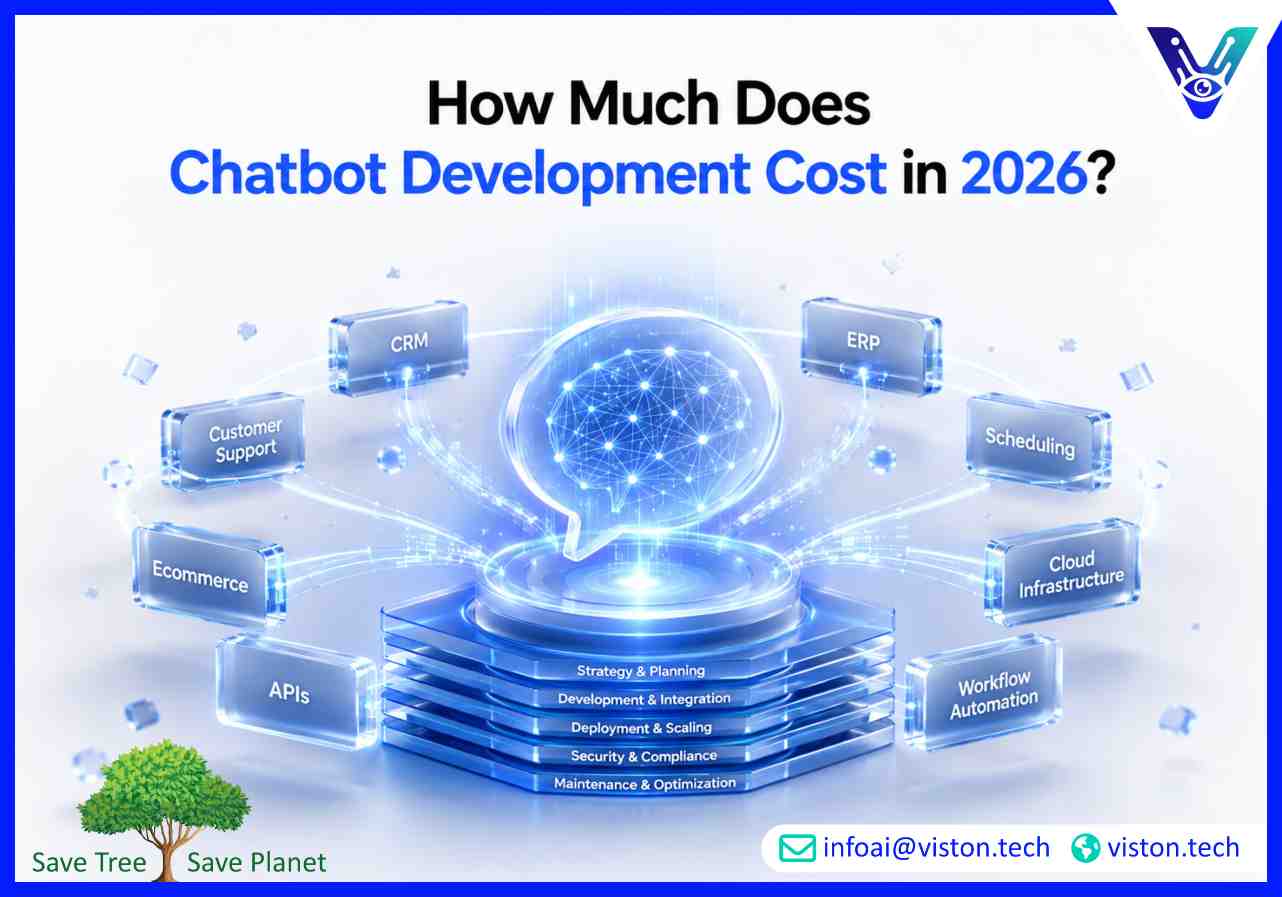
As businesses increasingly adopt conversational AI to improve customer engagement, automate support, and streamline operations, one of the most common questions decision-makers ask is: how much does chatbot development cost? The answer depends on several factors, including chatbot complexity, integration requirements, AI capabilities, deployment channels, and ongoing maintenance needs. Understanding these variables helps organizations make informed investment decisions and achieve better long-term outcomes from AI chatbot integration.
Chatbot development costs can vary significantly depending on business objectives and technical requirements. A simple chatbot designed to answer basic questions will require far less investment than an enterprise-grade AI assistant integrated with multiple business systems.
Key factors influencing chatbot development cost include:
Organizations should evaluate chatbot investments based on business outcomes rather than development costs alone.
Rule-based chatbots follow predefined conversation paths and are suitable for handling simple inquiries, FAQs, appointment scheduling, and basic customer support tasks.
These projects typically involve:
While less expensive than AI-powered solutions, rule-based chatbots may struggle with complex user requests and dynamic conversations.
AI chatbots use natural language understanding to interpret user intent and provide more flexible responses.
Common capabilities include:
These solutions require more development effort but often deliver stronger automation and customer experience benefits.
Enterprise chatbot development projects typically involve extensive integrations, security requirements, workflow automation, and scalability planning.
Features may include:
Enterprise deployments require specialized expertise and often involve multiple stakeholders across departments.
Successful chatbot projects begin with requirements gathering, use-case definition, user journey mapping, and technical planning.
During this phase, businesses identify:
Investing in proper planning often reduces implementation risks and prevents costly redesigns later.
Conversation design directly impacts chatbot effectiveness.
This process includes:
Well-designed conversational experiences typically improve user satisfaction and adoption rates.
For AI-powered chatbots, development teams must train and optimize models using relevant business data and use cases.
This may involve:
The complexity of AI requirements often has a significant impact on project costs.
Many modern chatbot projects require connections to existing business systems.
Common integrations include:
Integration complexity is often one of the largest factors affecting chatbot development budgets.
Development is only one part of a successful chatbot initiative. Integration determines how effectively the chatbot interacts with business data and operational systems.
Without proper integration, chatbots may:
Businesses increasingly prioritize AI chatbot integration because it enables real-time access to information, workflow automation, and personalized customer experiences.
In 2026, organizations are moving beyond standalone chatbots toward connected conversational platforms that operate across websites, mobile apps, CRM systems, support environments, and communication channels.
Many organizations focus solely on initial development expenses while overlooking long-term operational requirements.
Common hidden costs include:
A realistic budget should account for both implementation and ongoing optimization.
Organizations can improve project efficiency and control costs through careful planning and phased implementation.
Focus on areas where automation can generate measurable impact, such as customer support, lead qualification, appointment booking, or employee self-service.
Not every system needs to be integrated immediately. Businesses can begin with critical platforms and expand capabilities over time.
A flexible architecture allows organizations to add new features and channels without rebuilding the entire solution.
Defining performance indicators early helps ensure development efforts remain aligned with business objectives.
For businesses evaluating chatbot investments, Viston AI focuses on delivering AI chatbot integration solutions that connect conversational experiences with real business workflows and operational systems.
Successful chatbot projects require more than conversational interfaces. Organizations need reliable integrations, scalable architectures, workflow automation, security controls, reporting capabilities, and user-focused design. Viston AI helps businesses align chatbot implementation with practical business goals, ensuring that conversational AI supports customer engagement, operational efficiency, and long-term scalability.
By emphasizing integration strategy, workflow optimization, and business outcomes, organizations can maximize value from chatbot investments while avoiding many of the challenges associated with disconnected or underutilized chatbot deployments.
Costs vary based on functionality, integrations, and AI capabilities. Simple chatbot projects generally require less investment than advanced AI-powered or enterprise solutions.
Integration complexity is often the largest cost driver, especially when chatbots need access to multiple business systems and real-time data sources.
Yes. AI chatbots typically require additional development, training, testing, and optimization, which increases implementation costs but often delivers greater flexibility and automation value.
Yes. Most chatbot deployments require updates, monitoring, optimization, security reviews, and AI model improvements to maintain performance over time.
Yes. Viston AI helps organizations evaluate chatbot requirements, integration needs, scalability goals, and implementation strategies to develop realistic project plans and investment expectations.
Understanding how much chatbot development costs requires looking beyond initial implementation expenses. The total investment depends on chatbot complexity, AI capabilities, integration requirements, security needs, and long-term operational considerations. Businesses that approach chatbot projects strategically are more likely to achieve meaningful automation, improved customer experiences, and measurable returns. As conversational AI continues to evolve in 2026, AI chatbot integration plays an increasingly important role in maximizing business value. Organizations seeking scalable and business-focused chatbot solutions can benefit from working with experienced specialists such as Viston AI to align technology investments with operational goals.
