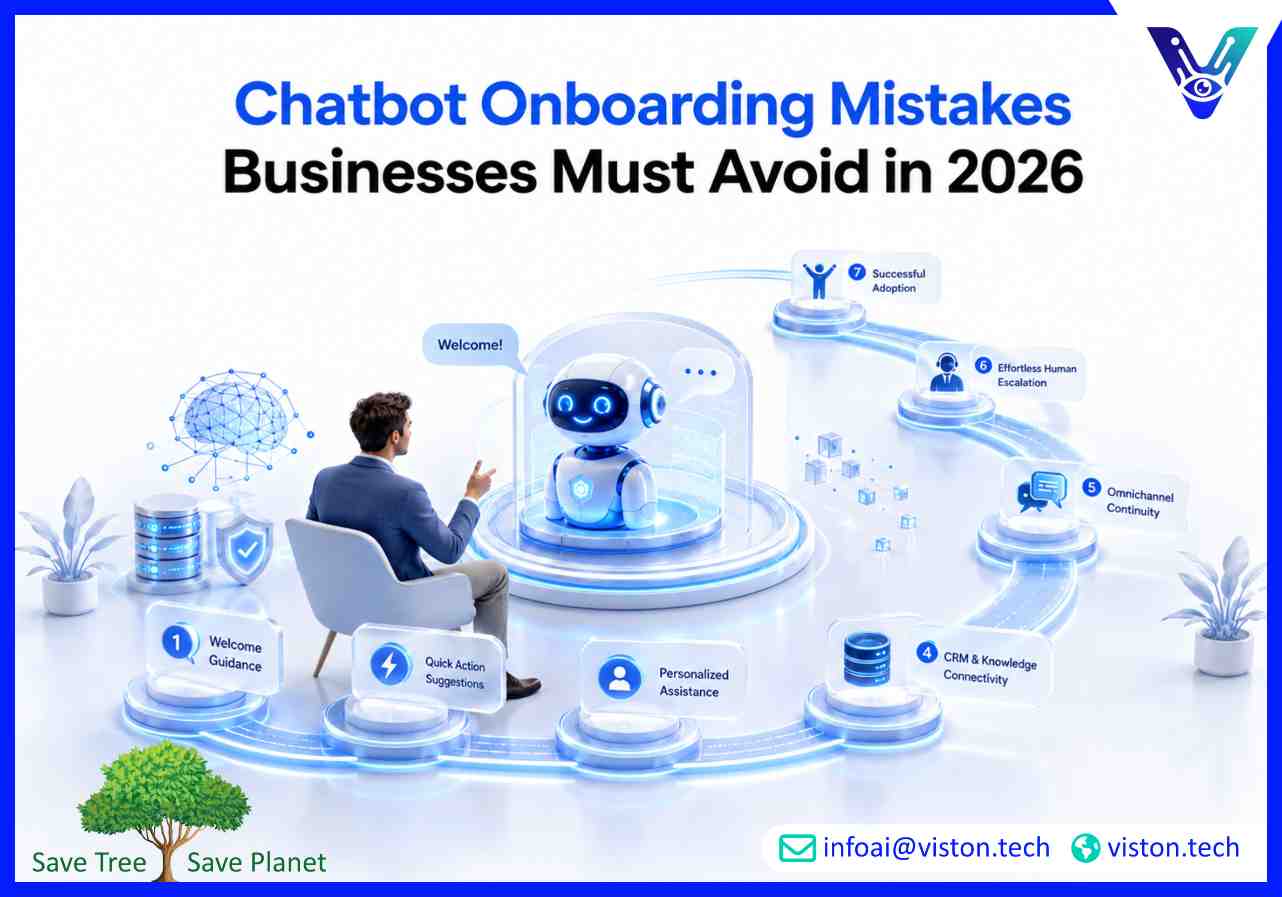
Chatbot Onboarding Mistakes Businesses Must Avoid in 2026
As AI-powered customer interactions become a standard part of digital business operations, chatbot onboarding has become one of the most important factors influencing adoption, engagement, and customer satisfaction. While organizations invest heavily in AI chatbot integration, many overlook onboarding design, resulting in poor user experiences, low engagement rates, and missed business opportunities. Understanding common chatbot onboarding mistakes can help businesses build more effective conversational experiences and maximize the value of their chatbot investments.
Why Chatbot Onboarding Matters More Than Ever in 2026
Chatbot onboarding is the first interaction users have with a conversational AI system. It sets expectations, introduces capabilities, and guides users toward achieving their goals.In 2026, users expect chatbots to be intelligent, intuitive, and immediately useful. If onboarding creates confusion or friction, users often abandon the interaction before experiencing any value.Poor onboarding can negatively impact:
User adoption rates
Lead generation performance
Customer satisfaction
Support automation effectiveness
Conversion rates
Customer retention
Return on AI investment
Organizations that prioritize onboarding design typically achieve better engagement and stronger business outcomes from AI chatbot integration initiatives.
Common Chatbot Onboarding Mistakes That Hurt User Experience
1. Starting with Long and Generic Welcome Messages
One of the most common onboarding mistakes is overwhelming users with lengthy introductions that provide little practical value.Many chatbots begin conversations with paragraphs explaining features, company information, or technical capabilities. Most users simply want to know how the chatbot can help them right now.Instead of long introductions, businesses should:
Keep welcome messages concise
Clearly state the chatbot’s purpose
Offer immediate action options
Guide users toward common tasks
A simple, focused introduction creates a smoother onboarding experience and improves engagement.
2. Asking Too Many Questions Too Early
Some organizations treat chatbot onboarding like a data collection exercise rather than a customer experience.Requesting excessive information during the first interaction can frustrate users and increase abandonment rates.Examples include:
Multiple personal details
Lengthy qualification questions
Unnecessary demographic information
Complex forms presented conversationally
Businesses should collect only the information required to deliver immediate value and gather additional details later in the customer journey.
3. Failing to Explain What the Chatbot Can Do
Users should never be forced to guess how a chatbot can help them.When onboarding lacks clear guidance, users often enter vague queries or leave the conversation entirely.Effective onboarding should clearly communicate available capabilities such as:
Customer support assistance
Appointment booking
Lead qualification
Order tracking
Product recommendations
Knowledge base access
Providing quick-action buttons or suggested prompts helps users get started confidently.
The Technical and Integration Mistakes Behind Poor Onboarding
4. Disconnecting Onboarding from Business Systems
A chatbot that cannot access relevant business data often delivers a disappointing onboarding experience.Without proper AI chatbot integration, users may receive generic responses instead of personalized assistance.Common integration gaps include:
Missing CRM connectivity
No access to support platforms
Disconnected knowledge bases
Unavailable customer account information
Lack of real-time data access
Modern onboarding experiences depend on connected systems that allow chatbots to provide accurate, context-aware assistance from the first interaction.
5. Ignoring Omnichannel Consistency
Businesses increasingly deploy chatbots across websites, mobile applications, WhatsApp, social media platforms, and customer portals.When onboarding experiences differ significantly across channels, users encounter confusion and inconsistent service quality.A strong onboarding strategy should maintain:
Consistent messaging
Unified brand voice
Standardized workflows
Shared customer context
Cross-channel continuity
Consistency helps create a seamless customer experience regardless of where users engage with the chatbot.
6. Poor Human Escalation Planning
Even the most advanced AI chatbot cannot resolve every customer issue.One of the biggest onboarding mistakes is failing to provide clear pathways to human support when necessary.Users become frustrated when:
The chatbot cannot understand requests
Complex issues remain unresolved
No escalation options are visible
Support handoffs require repeated information
Businesses should make human assistance accessible throughout the onboarding journey.
How Poor Onboarding Impacts Business Performance
Many organizations view onboarding as a minor design consideration, but its impact extends across the entire customer experience.Common consequences of ineffective onboarding include:
Higher abandonment rates
Lower chatbot utilization
Reduced automation effectiveness
Lost sales opportunities
Increased support workloads
Negative customer perceptions
Poor AI adoption rates
As conversational AI becomes increasingly integrated into business operations, onboarding quality directly affects the overall success of chatbot programs.Organizations that continuously optimize onboarding often see measurable improvements in customer engagement and operational efficiency.
Best Practices for Creating Effective Chatbot Onboarding Experiences
Businesses can avoid common onboarding mistakes by following several proven principles.
Focus on Immediate Value
Users should achieve a meaningful outcome as quickly as possible. Every onboarding interaction should move them closer to solving a problem or completing a task.
Use Guided Conversations
Quick replies, suggested actions, and structured conversation paths reduce confusion and improve usability.
Personalize When Appropriate
Connected systems and AI chatbot integration enable businesses to tailor onboarding experiences based on customer context, previous interactions, and business needs.
Monitor User Behavior
Analytics help identify drop-off points, unsuccessful interactions, and onboarding opportunities for improvement.
Continuously Optimize
Chatbot onboarding should evolve based on user feedback, performance data, and changing business objectives.Successful onboarding is not a one-time design exercise but an ongoing optimization process.
How Viston AI Helps Businesses Improve Chatbot Onboarding Through AI Chatbot Integration
For businesses implementing conversational AI, onboarding success depends on more than conversation design alone. Effective onboarding requires seamless AI chatbot integration with business systems, customer data sources, workflows, communication channels, and operational processes.Viston AI specializes in AI chatbot integration solutions that help organizations create connected and user-focused chatbot experiences. By integrating chatbots with CRM platforms, customer support systems, knowledge bases, scheduling tools, and business applications, organizations can provide more relevant and personalized onboarding interactions from the very first conversation.Rather than relying on isolated chatbot deployments, Viston AI focuses on building integrated conversational experiences that support customer engagement, automation, lead generation, and operational efficiency. This approach helps businesses reduce onboarding friction, improve user adoption, and achieve stronger outcomes from their chatbot investments across multiple industries.As chatbot adoption continues to expand in 2026, organizations increasingly benefit from onboarding strategies supported by scalable, secure, and well-integrated AI systems.
Frequently Asked Questions
What is the most common chatbot onboarding mistake?
The most common mistake is overwhelming users with long introductions or too many questions before providing value. Effective onboarding should help users accomplish a goal quickly.
Why do users abandon chatbots during onboarding?
Users often leave when onboarding is confusing, requires excessive effort, lacks clear guidance, or fails to explain what the chatbot can do.
How does AI chatbot integration improve onboarding?
AI chatbot integration enables access to customer data, CRM systems, support platforms, and knowledge bases, allowing more personalized and relevant onboarding experiences.
Should chatbots always offer human support options?
Yes. Providing access to human assistance helps resolve complex issues, improves customer trust, and reduces frustration when automation reaches its limits.
Can Viston AI help improve chatbot onboarding experiences?
Yes. Viston AI helps businesses enhance onboarding through AI chatbot integration strategies that connect conversational AI with business systems, workflows, and customer engagement processes.
Conclusion
Understanding and avoiding common chatbot onboarding mistakes is essential for businesses investing in AI chatbot integration. Poor onboarding can reduce adoption, frustrate users, and limit the value of conversational AI initiatives. By focusing on clarity, usability, personalization, system integration, and continuous optimization, organizations can create onboarding experiences that encourage engagement and support business objectives. As customer expectations continue to evolve in 2026, effective onboarding will remain a critical factor in chatbot success. Businesses seeking scalable and connected chatbot experiences can benefit from working with specialists such as Viston AI to develop onboarding strategies that align with long-term operational and customer experience goals.