
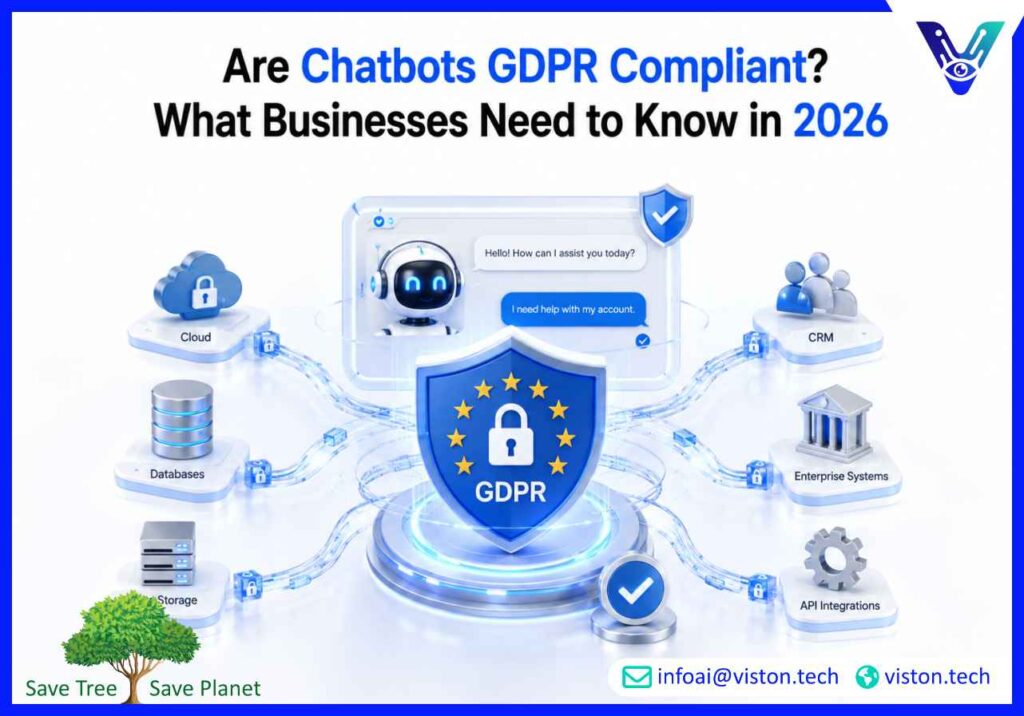
As organizations increasingly adopt AI-powered customer interactions, data privacy has become a critical consideration. Businesses using conversational AI often ask a fundamental question: Are chatbots GDPR compliant? The answer depends not on the chatbot itself, but on how it is designed, integrated, deployed, and managed. For businesses operating in or serving customers within the European Union, GDPR compliance must be a core part of any AI chatbot integration strategy.
The General Data Protection Regulation (GDPR) is one of the world’s most comprehensive data privacy frameworks. It governs how organizations collect, process, store, and protect personal data belonging to individuals within the European Economic Area (EEA).
Many chatbots process personal information during conversations, including:
Because chatbots frequently handle personal data, GDPR requirements often apply directly to chatbot deployments.
A chatbot can support GDPR compliance when it is implemented with appropriate privacy controls, security measures, consent mechanisms, and data governance practices.
GDPR compliance is not determined by whether a chatbot uses artificial intelligence. Instead, compliance depends on how personal data is managed throughout the chatbot lifecycle.
Organizations must have a lawful reason for collecting and processing user data through chatbot interactions.
Common lawful bases include:
Businesses should clearly explain why information is being collected and how it will be used.
Users should know they are interacting with a chatbot and understand how their information is processed.
Best practices include:
Transparency helps build trust while supporting regulatory compliance.
GDPR encourages organizations to collect only the information necessary for a specific purpose.
For example, a chatbot helping users track an order may not require detailed demographic information. Collecting unnecessary data increases compliance risk and operational complexity.
Organizations must be able to support GDPR data subject rights, including:
Chatbot systems should integrate with broader data management processes that allow businesses to respond to these requests efficiently.
While chatbots can improve customer experience and operational efficiency, improper implementation can create compliance challenges.
Some chatbot workflows request more information than necessary for the intended interaction. This increases regulatory exposure and may violate GDPR principles.
If chatbot conversations collect marketing preferences, sensitive information, or optional personal data, organizations may need explicit user consent.
Consent processes should be clear, specific, and easy to withdraw.
Chatbot integrations often connect with:
Weak security controls can expose personal data during transmission or storage.
Businesses frequently use external AI platforms and cloud services to power chatbot functionality. Organizations remain responsible for understanding how these providers handle data and whether appropriate processing agreements are in place.
As AI capabilities continue to evolve, businesses are expected to adopt stronger privacy and governance practices when deploying chatbots.
Privacy considerations should be built into chatbot development and integration from the beginning rather than added later.
This includes:
Organizations should evaluate how chatbot workflows process personal information and identify potential privacy risks before deployment.
Modern chatbot integrations often rely on APIs and interconnected business systems. Security controls should protect data across every connection point.
Important considerations include:
Businesses should determine how long chatbot conversation data is stored and when it should be deleted.
Retaining personal information indefinitely may create unnecessary compliance risks.
Organizations should ensure chatbot-driven decisions affecting users are appropriately monitored and governed, particularly when AI is involved in automated processing.
GDPR compliance extends beyond avoiding regulatory penalties. It directly influences customer trust, brand reputation, and long-term business sustainability.
Organizations that demonstrate responsible data handling often benefit from:
In 2026, many customers actively evaluate how businesses use AI and handle personal data before sharing information through digital channels.
For businesses implementing conversational AI, GDPR compliance should be considered throughout the chatbot integration process rather than treated as a separate requirement. Viston AI specializes in AI chatbot integration, helping organizations connect conversational AI with business systems while supporting security, governance, and responsible data management practices.
Effective chatbot integration involves more than creating conversations. It requires careful attention to system architecture, CRM connectivity, workflow automation, access controls, data handling processes, and ongoing performance monitoring. Organizations must ensure chatbot deployments align with internal compliance requirements and applicable privacy regulations.
Viston AI focuses on building integrated chatbot solutions that support operational efficiency, customer engagement, and scalable automation while helping businesses establish secure and well-governed conversational experiences. As privacy expectations continue to grow, businesses benefit from chatbot integration strategies that prioritize transparency, security, and responsible data usage from the outset.
No. GDPR compliance depends on how a chatbot collects, processes, stores, and protects personal data. Compliance is determined by implementation and governance practices rather than the chatbot technology itself.
Yes. Chatbots can collect personal information when there is a lawful basis for processing and users are properly informed about how their data will be used.
Not always. The requirement depends on the purpose of data processing and the lawful basis being used. Certain activities may require explicit consent.
Common risks include excessive data collection, inadequate consent management, weak security controls, poor retention practices, and insufficient oversight of third-party providers.
Yes. Viston AI provides AI chatbot integration services that help organizations connect chatbot solutions with business systems while supporting secure, scalable, and privacy-conscious implementation approaches.
Are chatbots GDPR compliant? They can be, but compliance depends on how organizations design, integrate, and manage their chatbot ecosystems. Businesses must focus on transparency, lawful data processing, security, governance, and user rights throughout the entire chatbot lifecycle. As AI adoption accelerates in 2026, GDPR compliance remains a critical component of successful AI chatbot integration. Organizations that prioritize privacy alongside automation can build greater customer trust while reducing operational and regulatory risks. For businesses implementing conversational AI, working with experienced specialists such as Viston AI can help ensure chatbot integration strategies align with both business objectives and responsible data management practices.
