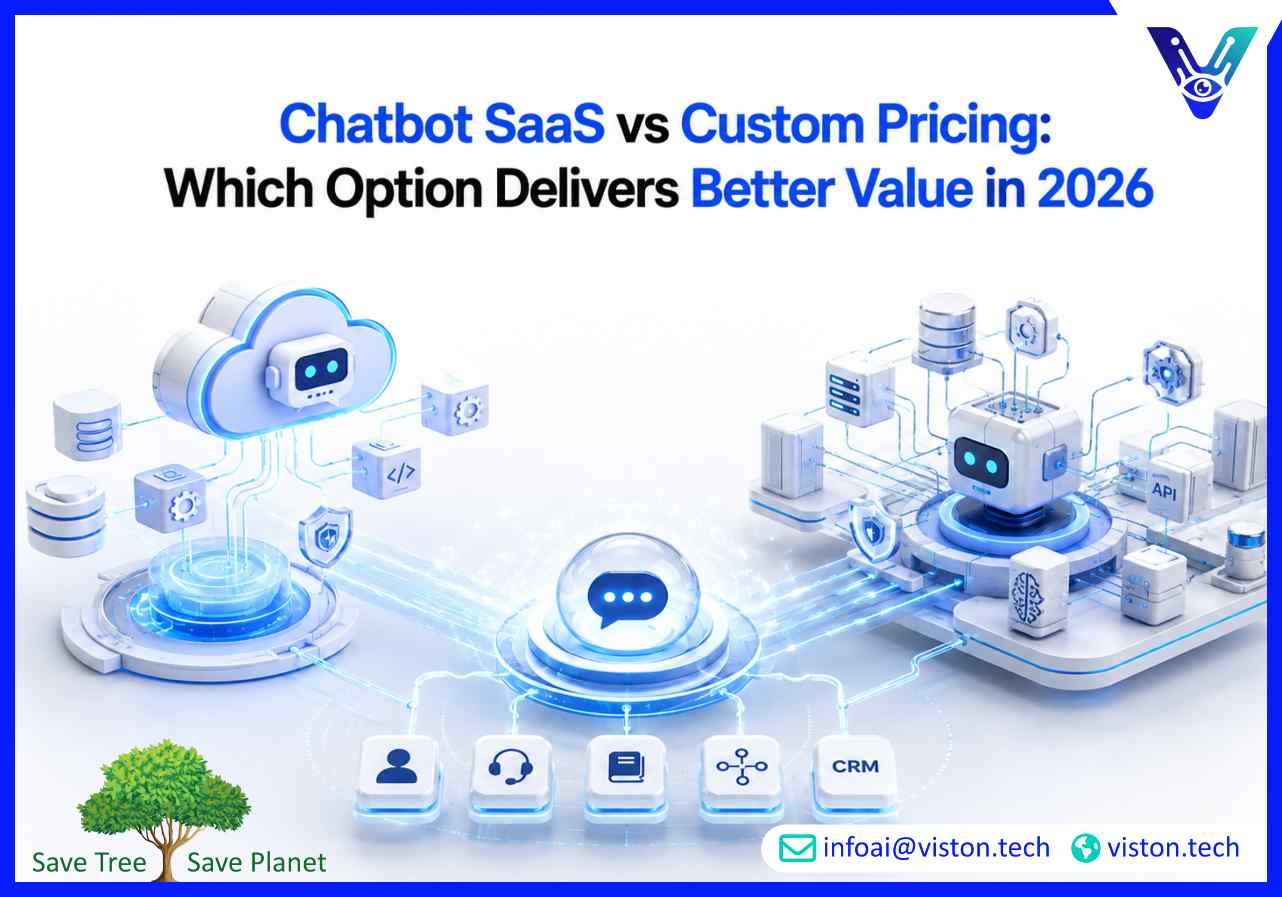
Chatbot SaaS vs Custom Pricing: Which Option Delivers Better Value in 2026?
As businesses increasingly adopt conversational AI to automate customer interactions, improve support efficiency, and drive growth, one of the most common questions decision-makers face is whether to choose a SaaS chatbot platform or invest in a custom chatbot solution. Understanding chatbot SaaS vs custom pricing is essential because the right choice affects not only upfront costs but also scalability, integration capabilities, long-term flexibility, and overall business value.
Understanding Chatbot SaaS vs Custom Pricing
Chatbot pricing generally falls into two categories: Software-as-a-Service (SaaS) subscription models and custom-developed chatbot solutions.A SaaS chatbot is typically offered through a monthly or annual subscription. Businesses gain access to a pre-built platform with configurable features, hosting, maintenance, and support included.A custom chatbot, on the other hand, is developed specifically for a business’s unique requirements. It often involves custom integrations, tailored workflows, proprietary AI models, and specialized functionality designed around operational needs.While SaaS solutions usually have lower entry costs, custom chatbot development can provide greater flexibility and long-term strategic advantages for organizations with complex requirements.
How SaaS Chatbot Pricing Works
SaaS chatbot providers generally use recurring pricing models based on usage, features, channels, users, or conversation volume.
Common SaaS Pricing Factors
Monthly subscription fees
Number of chatbot interactions
User seats and administrators
AI model access levels
Channel integrations
CRM and business system connectivity
Advanced analytics capabilities
Support and service levels
For startups and small businesses, SaaS platforms often provide a faster path to deployment because infrastructure, updates, and maintenance are managed by the vendor.However, costs can increase significantly as usage grows, particularly when businesses require multiple integrations, advanced AI capabilities, or enterprise-level security controls.
Advantages of SaaS Pricing
Lower upfront investment
Faster deployment
Vendor-managed infrastructure
Predictable monthly expenses
Built-in updates and maintenance
Reduced technical management requirements
Potential Limitations
Limited customization options
Restricted workflow flexibility
Vendor dependency
Usage-based cost increases
Limited control over AI models
Integration constraints
How Custom Chatbot Pricing Works
Custom chatbot pricing is typically based on development complexity, integrations, AI capabilities, deployment requirements, and ongoing support.
Key Cost Drivers for Custom Chatbots
Business requirements analysis
Conversation design and workflow development
CRM integration
ERP integration
API development
Knowledge base integration
AI model configuration
Security and compliance implementation
Testing and quality assurance
Maintenance and optimization
Unlike SaaS subscriptions, custom chatbot development usually involves a larger initial investment. However, businesses gain ownership over workflows, integrations, data architecture, and user experiences.For organizations with specialized processes, custom solutions often provide better long-term operational value despite higher upfront costs.
Advantages of Custom Pricing Models
Tailored business workflows
Unlimited integration possibilities
Greater scalability control
Ownership of chatbot functionality
Enhanced security customization
Competitive differentiation
Flexible AI implementation
Potential Challenges
Higher initial investment
Longer implementation timelines
Ongoing management responsibilities
Dedicated technical expertise may be required
When SaaS Chatbots Make Financial Sense
SaaS chatbot solutions are often the most cost-effective option when businesses need rapid deployment and have relatively straightforward requirements.Examples include:
Basic customer support automation
Lead capture workflows
FAQ management
Appointment scheduling
Simple ecommerce assistance
Low-volume customer interactions
For startups and growing companies, SaaS platforms can deliver immediate value without requiring large development budgets.The subscription model also makes budgeting easier because costs are distributed over time rather than concentrated in a major implementation project.
When Custom Chatbots Deliver Better ROI
Custom chatbot solutions often become more economical over time when businesses have complex operational requirements or high interaction volumes.
Organizations That Benefit Most from Custom Development
Large enterprises
Multi-location businesses
Healthcare organizations
Financial services providers
Manufacturing companies
Technology companies
Businesses with proprietary workflows
Custom development becomes particularly valuable when chatbot functionality must connect deeply with business systems, automate complex workflows, or support unique customer journeys.In these situations, the flexibility and efficiency gains often outweigh the higher implementation costs.
How AI Chatbot Integration Influences Total Cost
Many businesses focus solely on chatbot software costs while overlooking integration expenses.In reality, successful chatbot implementation depends heavily on how well the chatbot connects with existing business systems.Integration requirements commonly include:
CRM platforms
ERP systems
Customer support tools
Knowledge management systems
Marketing automation platforms
Payment gateways
Communication channels
Analytics and reporting tools
Whether choosing SaaS or custom development, integration complexity often has a greater impact on total project costs than the chatbot software itself.Organizations should evaluate integration requirements early to avoid unexpected implementation expenses.
How Viston AI Helps Businesses Choose the Right Chatbot Integration Approach
As an AI Chatbot Integration specialist, Viston AI helps organizations evaluate, implement, and optimize chatbot solutions that align with their operational goals and technology environments.Choosing between SaaS and custom chatbot pricing involves more than comparing software costs. Businesses must assess workflow complexity, integration requirements, scalability expectations, security needs, reporting requirements, and long-term automation objectives.Viston AI focuses on connecting conversational AI with existing business systems, ensuring that chatbot solutions deliver meaningful business outcomes rather than functioning as isolated communication tools. Whether organizations require CRM connectivity, omnichannel support, workflow automation, API integration, or enterprise-grade scalability, a structured integration strategy helps maximize the return on chatbot investments.As AI adoption continues to accelerate in 2026, businesses increasingly benefit from integration-focused approaches that balance cost efficiency, performance, user experience, and future scalability.
Frequently Asked Questions
Which is cheaper: SaaS or custom chatbot development?
SaaS chatbots typically have lower upfront costs and are often more affordable for small businesses. Custom chatbot development usually requires higher initial investment but may provide better long-term value for organizations with complex requirements.
What is the biggest hidden cost in chatbot projects?
System integration is often the most overlooked expense. Connecting chatbots with CRM platforms, ERP systems, databases, and business workflows can significantly affect overall project costs.
Can a SaaS chatbot be customized?
Most SaaS platforms offer configuration options, but customization is usually limited compared to fully custom-developed chatbot solutions.
When should a business choose a custom chatbot?
Organizations should consider custom chatbot development when they require specialized workflows, deep system integrations, advanced automation, strict compliance requirements, or unique customer experiences.
Can Viston AI help determine whether SaaS or custom development is the better option?
Yes. Viston AI helps businesses evaluate chatbot integration requirements, operational goals, scalability needs, and technology environments to determine the most suitable implementation strategy.
Conclusion
Understanding chatbot SaaS vs custom pricing is essential for making informed AI investment decisions in 2026. While SaaS platforms offer affordability, speed, and simplicity, custom chatbot solutions provide flexibility, scalability, and deeper business integration capabilities. The right choice depends on organizational goals, technical requirements, customer experience expectations, and long-term growth plans. Businesses evaluating AI Chatbot Integration should look beyond software subscription fees and consider the broader impact of integrations, automation opportunities, and operational efficiency. With the right strategy and implementation approach, chatbot technology can become a valuable driver of business performance and customer engagement.