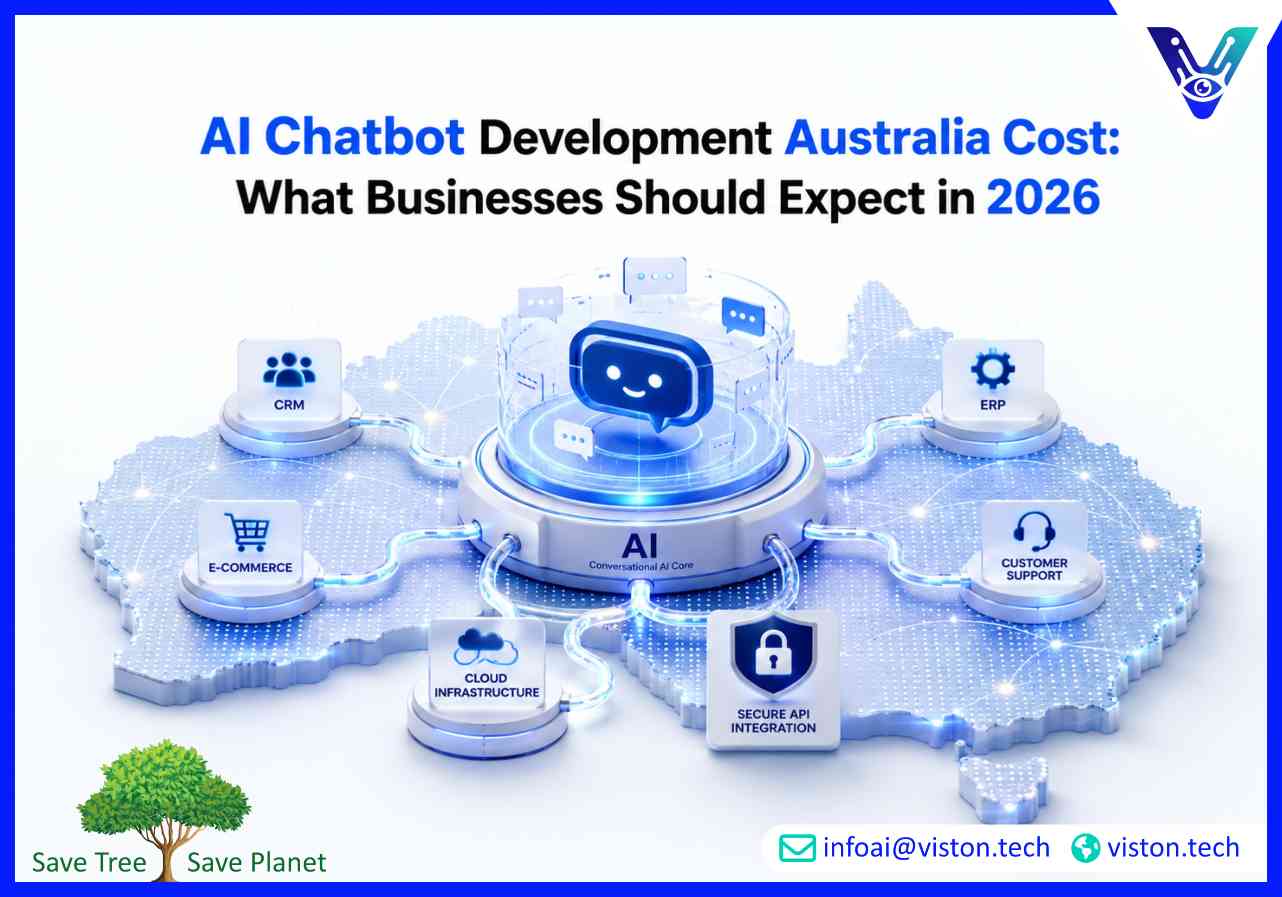
AI Chatbot Development Australia Cost: What Businesses Should Expect in 2026
AI chatbots have become a core part of customer engagement, support automation, lead generation, and operational efficiency. For Australian businesses evaluating chatbot projects in 2026, understanding development and integration costs is essential for making informed technology investments. The total cost depends on business requirements, integrations, AI capabilities, security needs, and long-term scalability rather than the chatbot interface alone.
What Influences AI Chatbot Development Australia Cost?
AI chatbot development costs vary significantly because every business has different goals, workflows, and technology environments. A simple FAQ chatbot requires far less investment than an enterprise-grade AI assistant connected to multiple business systems.The most common factors affecting chatbot project costs include:
Business complexity and use cases
Number of integrations required
Website, mobile, and omnichannel deployment requirements
Natural language processing capabilities
Custom AI model implementation
CRM and ERP connectivity
Knowledge base integration
Security and compliance requirements
Reporting and analytics functionality
Ongoing maintenance and optimization
Australian organizations increasingly prioritize chatbots that deliver measurable business outcomes rather than standalone conversational tools. As a result, integration requirements often represent a substantial portion of project costs.
Typical AI Chatbot Development Cost Ranges in Australia
While every project is unique, businesses can generally expect chatbot investments to fall into several categories.
Basic AI Chatbot Projects
Entry-level chatbot implementations typically focus on answering common questions, collecting contact information, and providing simple customer support.These projects often involve:
Website deployment
Basic conversation flows
Limited customization
Minimal integrations
Standard reporting
These solutions are suitable for small businesses seeking an initial automation capability.
Mid-Market Integrated Chatbot Solutions
Many Australian businesses require chatbots that connect directly with operational systems.Common integrations include:
Customer Relationship Management platforms
Helpdesk software
Marketing automation tools
Scheduling systems
Ecommerce platforms
Knowledge management systems
These projects generally require greater planning, testing, security controls, and workflow design.
Enterprise AI Chatbot Platforms
Large organizations often require sophisticated conversational AI systems capable of supporting thousands of interactions while accessing real-time business information.Enterprise implementations may include:
Multiple business system integrations
Advanced workflow automation
Custom AI training
Multilingual support
Role-based access controls
Compliance management
Enterprise analytics
Omnichannel deployment
These projects involve significantly more technical effort, governance, and ongoing optimization.
Why AI Chatbot Integration Often Impacts Costs More Than Development
One of the biggest misconceptions is that chatbot development itself represents the largest project expense. In many cases, chatbot integration work accounts for a substantial portion of the overall investment.Businesses expect modern chatbots to perform useful actions rather than simply answer questions.This often requires connectivity with:
CRM platforms
ERP systems
Customer support software
Product databases
Inventory systems
Payment platforms
Marketing automation tools
Internal knowledge repositories
Each integration introduces additional considerations including API development, authentication, permissions, data mapping, security testing, and long-term maintenance.The more connected a chatbot becomes, the more business value it can deliver. However, greater connectivity also increases implementation complexity.
Business Benefits That Justify Chatbot Investment
Organizations evaluating chatbot costs should consider the operational benefits generated by successful implementation.
Reduced Support Costs
AI chatbots can handle routine inquiries continuously, reducing pressure on customer service teams and allowing staff to focus on higher-value tasks.
Improved Customer Experience
Customers increasingly expect immediate responses regardless of time zone or business hours.AI-powered chatbots help organizations provide faster support while maintaining consistency across customer interactions.
Increased Lead Generation
Chatbots can qualify prospects, gather information, route inquiries, and support sales processes automatically.This helps businesses improve conversion opportunities without increasing staffing costs.
Operational Efficiency
When integrated with internal systems, chatbots can automate repetitive workflows and reduce manual administrative effort.This creates efficiency gains across customer support, operations, sales, and internal service functions.
Cost Considerations for Australian Industries
Different industries often have unique chatbot requirements that influence project costs.
Healthcare
Healthcare organizations typically require stronger privacy controls, secure data handling, patient communication workflows, and compliance-focused implementation.
Financial Services
Banks, insurers, and financial service providers often require advanced authentication, audit logging, and regulatory compliance controls.
Retail and Ecommerce
Retail businesses frequently prioritize product recommendations, order tracking, inventory access, and customer support automation.
Professional Services
Professional service firms commonly use chatbots for lead qualification, appointment scheduling, client onboarding, and knowledge management.Industry-specific requirements can significantly influence development timelines and overall project costs.
How Viston AI Supports AI Chatbot Integration Projects
For businesses seeking long-term value from conversational AI, chatbot integration is often more important than chatbot deployment alone. Viston AI focuses on AI chatbot integration services that help organizations connect chatbot technology with operational systems, customer data, and business workflows.Modern chatbot projects frequently require integration with CRM platforms, customer support software, marketing systems, databases, knowledge repositories, and communication channels. Successfully connecting these systems requires expertise in API connectivity, workflow automation, security, scalability, and user experience design.Viston AI helps businesses develop integrated chatbot solutions that support customer engagement, automation initiatives, and operational efficiency objectives. Rather than treating chatbots as isolated tools, the focus is placed on building connected conversational experiences that align with broader business processes and digital transformation goals.For Australian organizations evaluating chatbot investments in 2026, a well-planned integration strategy can significantly improve return on investment while supporting future scalability and business growth.
Frequently Asked Questions
How much does AI chatbot development cost in Australia?
Costs vary depending on complexity, integrations, AI capabilities, compliance requirements, and deployment scope. Projects can range from simple customer support bots to enterprise-grade conversational AI platforms.
Why do chatbot integration requirements increase project costs?
Integrations require secure connections between the chatbot and business systems such as CRM platforms, databases, helpdesk software, and ERP applications. This adds development, testing, and maintenance effort.
Can AI chatbots integrate with existing business software?
Yes. Modern chatbots can integrate with CRM systems, marketing platforms, ecommerce solutions, helpdesk tools, scheduling software, knowledge bases, and many other business applications.
How long does an AI chatbot project usually take?
Simple implementations may take several weeks, while enterprise projects involving multiple integrations and advanced workflows can take several months.
Can Viston AI help reduce chatbot implementation risks?
Yes. Through AI chatbot integration expertise, Viston AI helps businesses plan system connectivity, workflow design, scalability, and operational alignment to support successful chatbot deployments.
Conclusion
Understanding AI chatbot development Australia cost requires looking beyond the chatbot itself and evaluating the broader business ecosystem. Integration requirements, workflow complexity, security expectations, and long-term scalability often have the greatest influence on project investment. Businesses that approach chatbot implementation strategically can achieve meaningful improvements in customer experience, operational efficiency, and automation outcomes. For organizations seeking connected conversational AI solutions, AI Chatbot Integration services and experienced implementation partners such as Viston AI can help ensure chatbot investments deliver measurable business value in 2026.