Suggest NLP Automation Tools for SMEs: Practical Options for Smarter Business Operations in 2026
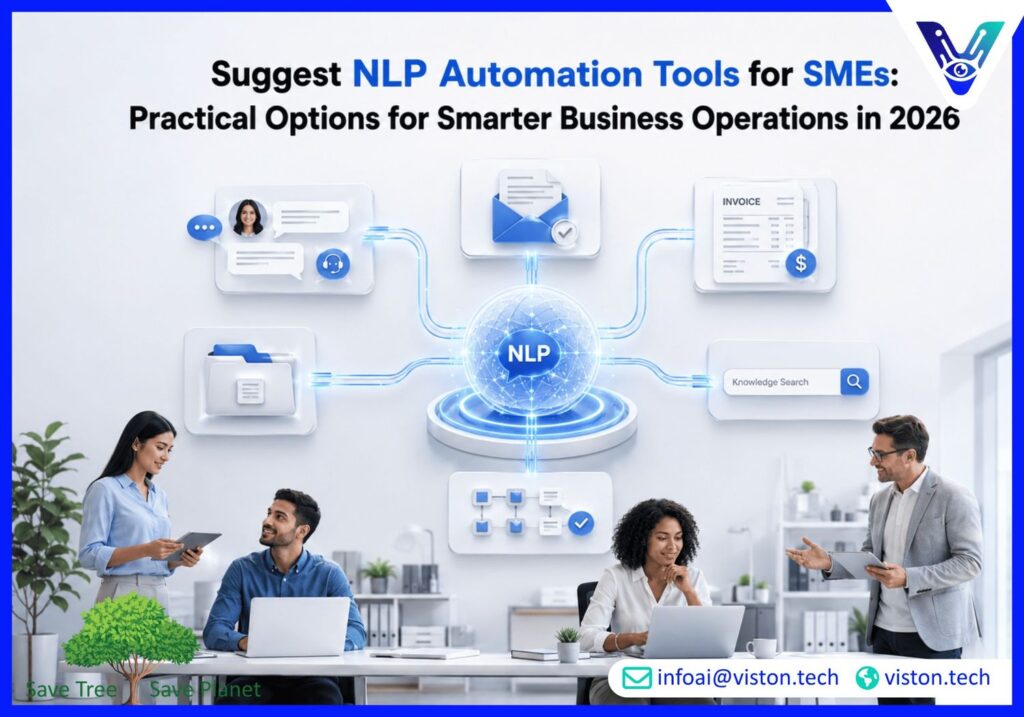
Small and medium-sized enterprises (SMEs) are under increasing pressure to improve efficiency, reduce operational costs, and deliver better customer experiences. Natural Language Processing (NLP) automation tools have become a practical solution for businesses looking to automate repetitive language-based tasks, extract insights from data, and improve decision-making. In 2026, NLP technologies are more accessible than ever, making them a valuable investment for growing businesses across industries.
What Are NLP Automation Tools and Why Do SMEs Need Them?
Natural Language Processing is a branch of artificial intelligence that enables computers to understand, analyze, interpret, and generate human language. NLP automation tools use these capabilities to streamline business processes that involve text, speech, documents, emails, customer interactions, and unstructured data.For SMEs, NLP tools can help eliminate manual work while improving consistency and scalability. Instead of relying on employees to process large volumes of customer inquiries, documents, or feedback, businesses can automate these workflows with intelligent systems.
Common SME Challenges NLP Can Address
Managing high volumes of customer support requests
Processing business documents and contracts
Analyzing customer feedback and reviews
Automating email responses and ticket routing
Extracting information from invoices and forms
Improving internal knowledge management
Supporting multilingual communication
Enhancing lead qualification and sales workflows
As AI adoption continues to grow, SMEs are increasingly using NLP-powered automation to compete with larger organizations without significantly increasing operational costs.
Top NLP Automation Tools SMEs Should Consider in 2026
The best NLP automation tool depends on business goals, technical requirements, integration needs, and budget. Below are several categories of NLP solutions that are particularly useful for SMEs.
Customer Service Automation Platforms
NLP-powered chatbots and virtual assistants can handle routine customer inquiries, provide instant responses, and escalate complex issues to human agents when necessary.These solutions help SMEs:
Reduce support workloads
Provide 24/7 customer assistance
Improve response times
Increase customer satisfaction
Lower support costs
Modern conversational AI systems can understand context, recognize intent, and deliver more natural customer interactions than earlier chatbot technologies.
Document Processing and Information Extraction Tools
Many SMEs spend significant time processing contracts, invoices, forms, reports, and compliance documents. NLP automation tools can extract key information from these documents automatically.Common applications include:
Invoice data extraction
Contract analysis
Purchase order processing
Compliance documentation review
Financial record management
Automated document processing improves accuracy while reducing administrative overhead.
Sentiment Analysis Solutions
Understanding customer sentiment is critical for business growth. NLP sentiment analysis tools evaluate customer opinions across reviews, surveys, emails, social media, and support interactions.SMEs can use sentiment analysis to:
Identify customer satisfaction trends
Monitor brand perception
Detect emerging issues early
Improve products and services
Support customer retention efforts
Email and Communication Automation
Email remains a core communication channel for many SMEs. NLP tools can automate email classification, prioritization, routing, summarization, and response generation.Benefits include:
Faster response management
Reduced manual workload
Improved communication consistency
Enhanced productivity across teams
Knowledge Management and Search Solutions
As organizations grow, information becomes increasingly difficult to manage. NLP-powered search and knowledge systems help employees quickly locate relevant information from internal documents, databases, and business systems.These tools improve operational efficiency by reducing time spent searching for information and enabling faster decision-making.
Key Factors SMEs Should Evaluate Before Selecting an NLP Tool
Not all NLP solutions deliver the same level of value. SMEs should evaluate tools based on business requirements rather than simply adopting the latest technology trend.
Ease of Implementation
Many SMEs have limited technical resources. Solutions with user-friendly interfaces, low-code capabilities, and straightforward deployment models can accelerate implementation and reduce costs.
Integration Capabilities
NLP tools should integrate seamlessly with existing business systems such as:
CRM platforms
ERP systems
Helpdesk software
Email platforms
Document management systems
Ecommerce platforms
Strong integration capabilities help maximize automation opportunities and improve workflow efficiency.
Scalability
Business requirements evolve over time. SMEs should select NLP solutions that can accommodate increasing workloads, additional users, and expanding data volumes without requiring major system changes.
Data Security and Compliance
Organizations handling sensitive customer or business data must ensure NLP platforms provide appropriate security controls, access management, encryption, and compliance support where applicable.
Customization Options
Industry-specific terminology, workflows, and business processes often require customized NLP models. Flexible solutions can deliver better accuracy and business outcomes compared to generic implementations.
How NLP Automation Creates Business Value for SMEs
Successful NLP adoption is not simply about automation. The real value comes from improving operational performance and enabling employees to focus on higher-value activities.
Improved Operational Efficiency
Automating repetitive language-based tasks reduces manual effort and increases processing speed. Employees can dedicate more time to strategic initiatives rather than administrative work.
Better Customer Experiences
Customers increasingly expect rapid, accurate, and personalized responses. NLP-powered systems can help SMEs meet these expectations while maintaining service quality at scale.
Enhanced Decision-Making
Businesses generate large volumes of unstructured data every day. NLP tools transform this information into actionable insights that support more informed decisions.
Cost Reduction
Automation helps reduce operational costs associated with manual processing, repetitive support tasks, document management, and information retrieval.
Competitive Advantage
SMEs that effectively use NLP automation can often compete more effectively with larger organizations by delivering faster service, greater efficiency, and improved customer experiences.
Building Effective NLP Automation Strategies for Long-Term Success
Implementing NLP technology successfully requires more than selecting a software platform. Businesses should define clear objectives, identify high-impact use cases, establish measurable outcomes, and continuously optimize performance.A successful NLP strategy often includes:
Business process assessment
Workflow automation planning
Data quality evaluation
Integration design
Performance monitoring
Continuous model improvement
Governance and compliance management
Organizations that approach NLP implementation strategically are more likely to achieve measurable business results and sustainable returns on investment.
How Viston AI Supports NLP Automation Initiatives
For organizations exploring Natural Language Processing Solutions, selecting the right implementation partner can be just as important as selecting the technology itself. NLP projects often involve data preparation, workflow design, system integration, model customization, automation planning, and ongoing optimization.Viston AI focuses on helping businesses leverage NLP technologies to automate language-intensive processes and improve operational efficiency. Depending on business requirements, NLP solutions can support customer engagement, document processing, information extraction, sentiment analysis, intelligent search, workflow automation, and data-driven decision-making.Businesses evaluating NLP automation initiatives often require solutions that integrate with existing systems, scale with growth, maintain data security standards, and deliver measurable outcomes. A practical implementation approach can help organizations reduce deployment risks while maximizing business value.As NLP adoption continues to expand across industries, organizations increasingly seek partners capable of aligning technology capabilities with real-world business objectives. A structured approach to NLP implementation can help SMEs move beyond experimentation and achieve meaningful operational improvements.
Frequently Asked Questions
What is the best NLP automation tool for SMEs?
The best solution depends on the business objective. Customer service automation, document processing, sentiment analysis, and communication automation platforms are among the most commonly adopted NLP tools for SMEs.
Are NLP automation tools expensive for small businesses?
Many modern NLP platforms offer scalable pricing models, making them accessible to SMEs. Costs vary based on functionality, usage volume, customization requirements, and integration complexity.
Can NLP tools integrate with existing business software?
Most enterprise-grade NLP solutions support integration with CRM systems, ERP platforms, helpdesk software, ecommerce systems, and document management tools through APIs and connectors.
How long does it take to implement NLP automation?
Implementation timelines vary depending on project scope. Simple automation projects may take a few weeks, while more advanced, customized solutions can require several months.
What industries benefit most from NLP automation?
Industries including retail, ecommerce, healthcare, finance, professional services, manufacturing, logistics, education, and technology frequently use NLP automation to improve efficiency and customer experiences.
How can Viston AI help with NLP automation projects?
Viston AI supports organizations exploring Natural Language Processing Solutions by helping align NLP technologies with business processes, automation objectives, integration requirements, and operational goals.
Conclusion
NLP automation tools are becoming an essential part of modern business operations. From customer service and document processing to sentiment analysis and knowledge management, these technologies help SMEs improve efficiency, reduce costs, and enhance customer experiences. As businesses continue to generate increasing amounts of unstructured data, Natural Language Processing Solutions provide practical ways to transform information into business value. Organizations that adopt NLP strategically and focus on measurable outcomes will be better positioned for sustainable growth in 2026 and beyond. For businesses evaluating NLP opportunities, working with experienced specialists such as Viston AI can help ensure that technology investments align with operational goals and long-term business needs.

 Small and medium-sized enterprises (SMEs) are under increasing pressure to improve efficiency, reduce operational costs, and deliver better customer experiences. Natural Language Processing (NLP) automation tools have become a practical solution for businesses looking to automate repetitive language-based tasks, extract insights from data, and improve decision-making. In 2026, NLP technologies are more accessible than ever, making them a valuable investment for growing businesses across industries.