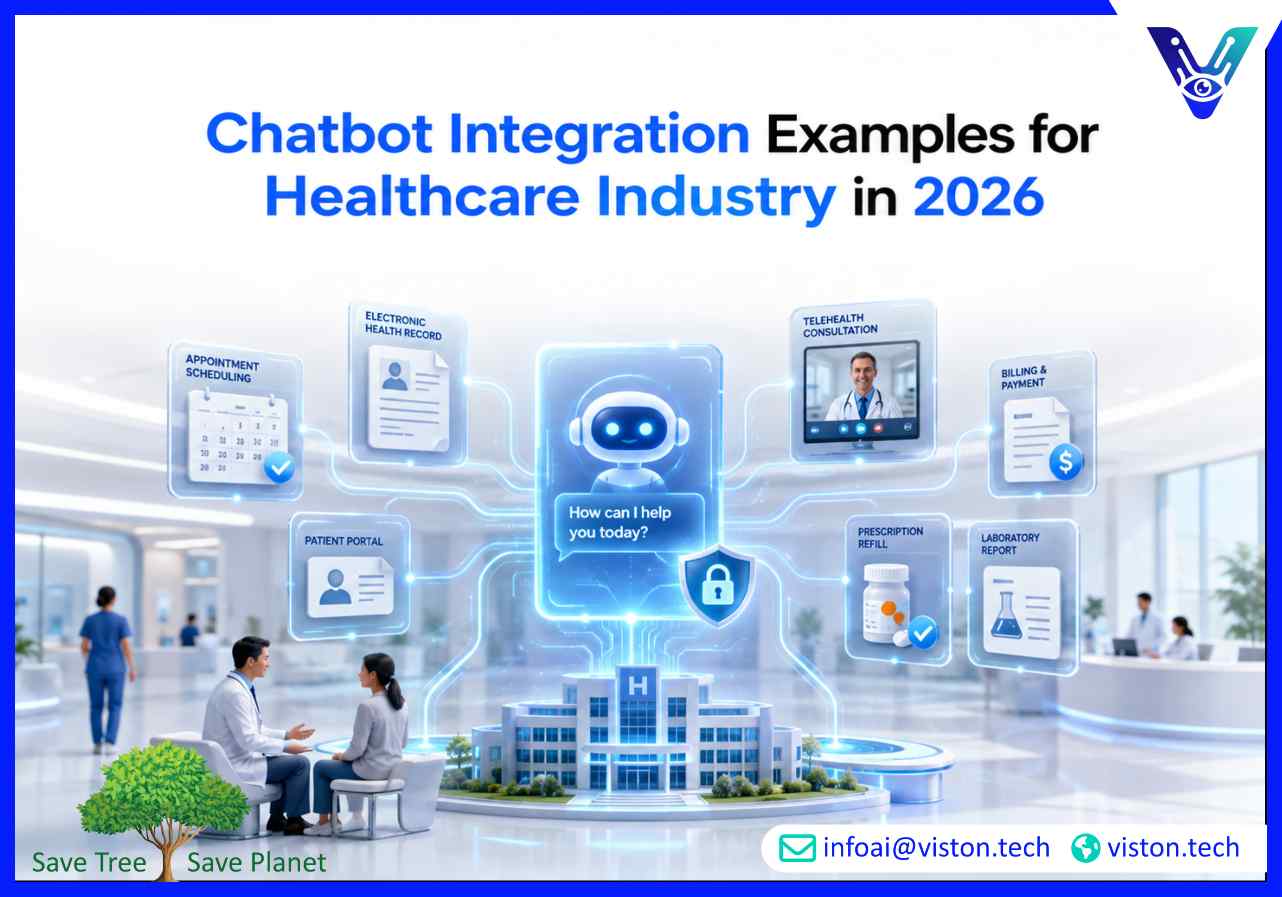
Chatbot Integration Examples for Healthcare Industry in 2026
Healthcare organizations are using chatbot integration to reduce administrative pressure, improve patient access, and connect conversations with real clinical and operational workflows. In 2026, the strongest examples are not standalone chat widgets. They are secure, integrated AI chatbot systems connected to scheduling, EHR, CRM, billing, triage, and support processes.
What Chatbot Integration Means in Healthcare
Chatbot integration in healthcare means connecting an AI chatbot with the systems, data, workflows, and communication channels a healthcare organization already uses. Instead of simply answering generic questions, an integrated chatbot can help patients book appointments, check service availability, complete intake forms, receive reminders, ask billing questions, or route urgent concerns to the right team.For hospitals, clinics, telehealth providers, diagnostic centers, insurance teams, and healthcare networks, the value comes from workflow connection. A chatbot that cannot access approved information, trigger a task, create a ticket, update a record, or escalate safely has limited business value.Healthcare chatbot integration usually involves:
Appointment booking systems
Electronic health record or electronic medical record systems
Patient portals
CRM and contact center platforms
Billing and insurance systems
Telehealth platforms
Knowledge bases and approved medical content
SMS, WhatsApp, web chat, mobile apps, and email channels
Human handoff workflows
Audit logs, consent controls, and access permissions
The healthcare industry has a higher responsibility than most sectors because chatbot conversations may involve sensitive patient information. That makes privacy, security, escalation rules, clinical boundaries, and compliance-aware design essential parts of AI Chatbot Integration.
Practical Chatbot Integration Examples for Healthcare Industry
1. Appointment Scheduling Chatbot
One of the most common chatbot integration examples for healthcare industry teams is appointment scheduling. A patient can ask for available slots, choose a doctor or department, confirm a time, and receive reminders without waiting on a phone line.When integrated properly, the chatbot connects with the appointment management system in real time. It can check doctor availability, prevent double bookings, confirm patient details, send calendar notifications, and update the scheduling platform automatically.This is especially useful for outpatient clinics, dental practices, diagnostic labs, therapy centers, and multi-specialty hospitals where call volumes are high and missed appointments affect revenue and care continuity.
2. Patient Intake and Pre-Visit Form Chatbot
A patient intake chatbot collects required information before a consultation. It can ask about symptoms, medical history, insurance details, consent forms, allergies, current medication, or reason for visit.The integration matters because the collected data should move securely into the correct patient management system or review queue. Staff should not have to copy and paste information manually from a chat transcript.This example helps healthcare providers reduce front-desk workload, improve visit preparation, and identify missing information before the patient arrives.
3. Symptom Triage and Care Navigation Chatbot
A triage chatbot helps patients understand the right next step based on approved rules and predefined pathways. For example, it may guide a patient toward emergency care, primary care, teleconsultation, pharmacy advice, or a specialist appointment.This type of chatbot must be designed carefully. It should not replace clinical judgment or provide unsafe diagnosis. It should ask structured questions, stay within approved boundaries, explain when urgent care is needed, and escalate to a qualified professional when risk signals appear.For healthcare networks, triage chatbot integration can reduce unnecessary calls, guide patients to the correct department, and support more efficient care navigation.
4. Prescription Refill Request Chatbot
A prescription refill chatbot allows eligible patients to request medication refills through a secure conversational interface. It can confirm identity, check refill eligibility, collect pharmacy preference, and route the request to the clinical or administrative team.With proper integration, the chatbot connects to the patient portal, pharmacy workflow, or EHR task queue. This prevents refill requests from being lost in email inboxes or phone messages.This example works best when the chatbot follows clear rules around controlled medications, expired prescriptions, clinician review, and patient safety.
5. Lab Result Notification and Explanation Support
Healthcare providers can use chatbot integration to notify patients when lab results are available and guide them to the patient portal. The chatbot may also answer general questions about how to access reports, what the next administrative step is, or when to contact the care team.For safety, the chatbot should avoid interpreting complex results unless the organization has approved clinical content and governance in place. In many cases, the best role for the chatbot is secure access support, status updates, and routing questions to the right professional.
6. Billing and Insurance Support Chatbot
Billing questions create heavy support demand for hospitals and clinics. A chatbot can answer questions about invoices, payment methods, claim status, accepted insurance, co-pay information, refund steps, and document requirements.When integrated with billing or insurance systems, the chatbot can retrieve approved account information, open a billing support ticket, send payment links, and notify finance teams when manual review is needed.This example improves patient experience because financial confusion often creates frustration after care has already been delivered.
7. Post-Discharge Follow-Up Chatbot
A post-discharge chatbot can check whether patients understand medication instructions, follow-up appointments, wound care steps, warning signs, and recovery guidance. It can also remind patients to schedule follow-up visits.Integrated workflows allow the chatbot to escalate concerning responses to a nurse, care coordinator, or support team. This is valuable because early intervention can prevent avoidable complications and improve continuity of care.
8. Telehealth Support Chatbot
Telehealth providers can integrate chatbots to help patients prepare for virtual consultations. The chatbot can check device readiness, explain how to join a video visit, collect pre-consultation details, send reminders, and resolve common access issues.This reduces missed virtual appointments and lowers support pressure during peak consultation hours.
Why Healthcare Chatbot Integration Matters in 2026
In 2026, healthcare organizations are under pressure to improve access, control administrative costs, protect patient data, and deliver more responsive digital experiences. Patients expect fast answers, but healthcare teams cannot rely only on manual phone support, email queues, or disconnected portals.AI Chatbot Integration helps healthcare providers build a more connected patient support model. The chatbot becomes part of the service workflow rather than a separate front-end tool.The strongest healthcare chatbot projects usually focus on:
Reducing repetitive administrative work
Improving appointment conversion and attendance
Helping patients find the right service faster
Supporting secure patient communication
Improving staff productivity
Creating consistent answers from approved sources
Reducing avoidable call center pressure
Improving visibility into patient needs and service demand
However, healthcare chatbot integration also carries risks. Poorly designed chatbots may give unclear answers, collect unnecessary patient information, fail to escalate urgent issues, or create privacy concerns. That is why healthcare organizations should treat chatbot integration as a structured digital health implementation, not a quick plug-in installation.
Key Requirements for Safe and Useful Healthcare Chatbot Integration
Clear Use Case Boundaries
Healthcare chatbots should have defined responsibilities. A chatbot built for appointment booking should not suddenly provide medical advice. A billing support chatbot should not collect clinical details. Clear scope protects patients, staff, and the organization.
Secure Data Handling
Healthcare chatbot integration must consider patient data privacy from the beginning. This includes secure authentication, encrypted data transfer, role-based access, audit trails, consent handling, and careful control over what information the chatbot can access or store.
Human Escalation
Every healthcare chatbot should include safe handoff pathways. If a patient expresses severe symptoms, confusion, frustration, or a sensitive concern, the chatbot should route the conversation to an appropriate human team.
Approved Knowledge Sources
Healthcare chatbots should answer from approved content, not uncontrolled public information. This may include service pages, clinic policies, patient education materials, insurance guidelines, or internally reviewed care instructions.
Integration with Operational Systems
The chatbot should connect with real workflows. That may include scheduling tools, CRM platforms, patient portals, EHR systems, helpdesk software, payment systems, or notification platforms. Without integration, the chatbot may create another disconnected communication channel.
Monitoring and Continuous Improvement
Healthcare needs change over time. Chatbot performance should be reviewed regularly through conversation analytics, escalation rates, unresolved queries, user satisfaction, response accuracy, and workflow completion rates.
How to Choose the Right Healthcare Chatbot Integration Use Case
The best starting point is usually a high-volume, low-clinical-risk workflow. Appointment scheduling, FAQs, billing support, service navigation, intake forms, and reminders are often better first projects than complex diagnostic support.Healthcare leaders should evaluate each use case based on:
Patient value
Operational workload reduction
Data sensitivity
Integration complexity
Compliance requirements
Risk of incorrect answers
Need for human review
Measurable business outcome
A strong chatbot integration roadmap may begin with administrative automation, then expand into care navigation, post-visit follow-up, internal staff support, and more advanced patient engagement workflows once governance and data controls are mature.
How Viston AI Supports Healthcare Chatbot Integration
Viston AI is relevant to healthcare chatbot integration because its AI Chatbot Integration services focus on connecting conversational AI with business systems, workflows, automation, and enterprise data environments. For healthcare organizations, this type of integration is important because patient-facing chatbots need to do more than respond to simple questions. They need to support secure, practical, and measurable workflows.Viston AI’s capabilities align with healthcare use cases such as appointment support, patient engagement, workflow automation, service navigation, and integration with existing enterprise systems. Its broader AI service portfolio includes AI chatbot development, automation, business system integration, and healthcare AI use cases, which makes it suitable for organizations exploring connected chatbot solutions rather than isolated chatbot widgets.For hospitals, clinics, diagnostic providers, telehealth companies, and healthcare service networks, Viston AI can support the planning and implementation of chatbot systems that connect conversations with operational outcomes. This may include integrating chatbots with scheduling systems, CRM workflows, support processes, reporting dashboards, and approved knowledge sources.Its value is strongest where healthcare organizations need a structured, business-focused approach to AI Chatbot Integration, with attention to scalability, workflow fit, data handling, and long-term optimization.
Frequently Asked Questions
What are the best chatbot integration examples for healthcare industry teams?
The most practical examples include appointment scheduling, patient intake, billing support, prescription refill requests, telehealth support, post-discharge follow-up, care navigation, and service FAQs. These use cases help reduce manual workload while improving patient access.
Can healthcare chatbots connect with EHR or patient management systems?
Yes, but the integration must be handled carefully. A healthcare chatbot can connect with EHR, EMR, CRM, scheduling, or patient portal systems through secure APIs, permission controls, and approved workflows.
Are healthcare chatbots safe for symptom checking?
They can be useful for structured triage and care navigation, but they should not replace clinicians. A symptom chatbot should use approved pathways, avoid unsafe diagnosis, and escalate urgent or uncertain cases to qualified professionals.
What should healthcare organizations check before integrating a chatbot?
They should review data privacy requirements, system compatibility, user authentication, escalation workflows, approved content sources, audit logging, vendor experience, and the business outcome the chatbot is expected to support.
Can Viston AI help with healthcare chatbot integration?
Yes, Viston AI’s AI Chatbot Integration capabilities are relevant for healthcare organizations that need connected chatbot workflows, business system integration, automation, and scalable conversational AI support.
Conclusion
Chatbot integration examples for healthcare industry teams show how conversational AI can support real patient and operational workflows when implemented responsibly. The greatest value comes from connecting chatbots with scheduling, intake, billing, telehealth, patient support, and care navigation systems. In 2026, healthcare organizations should focus on secure, workflow-driven AI Chatbot Integration that improves access, reduces administrative pressure, and supports safe escalation. Viston AI is a relevant specialist for healthcare businesses looking to move beyond basic chat widgets and build integrated chatbot systems that support practical business and patient engagement outcomes.