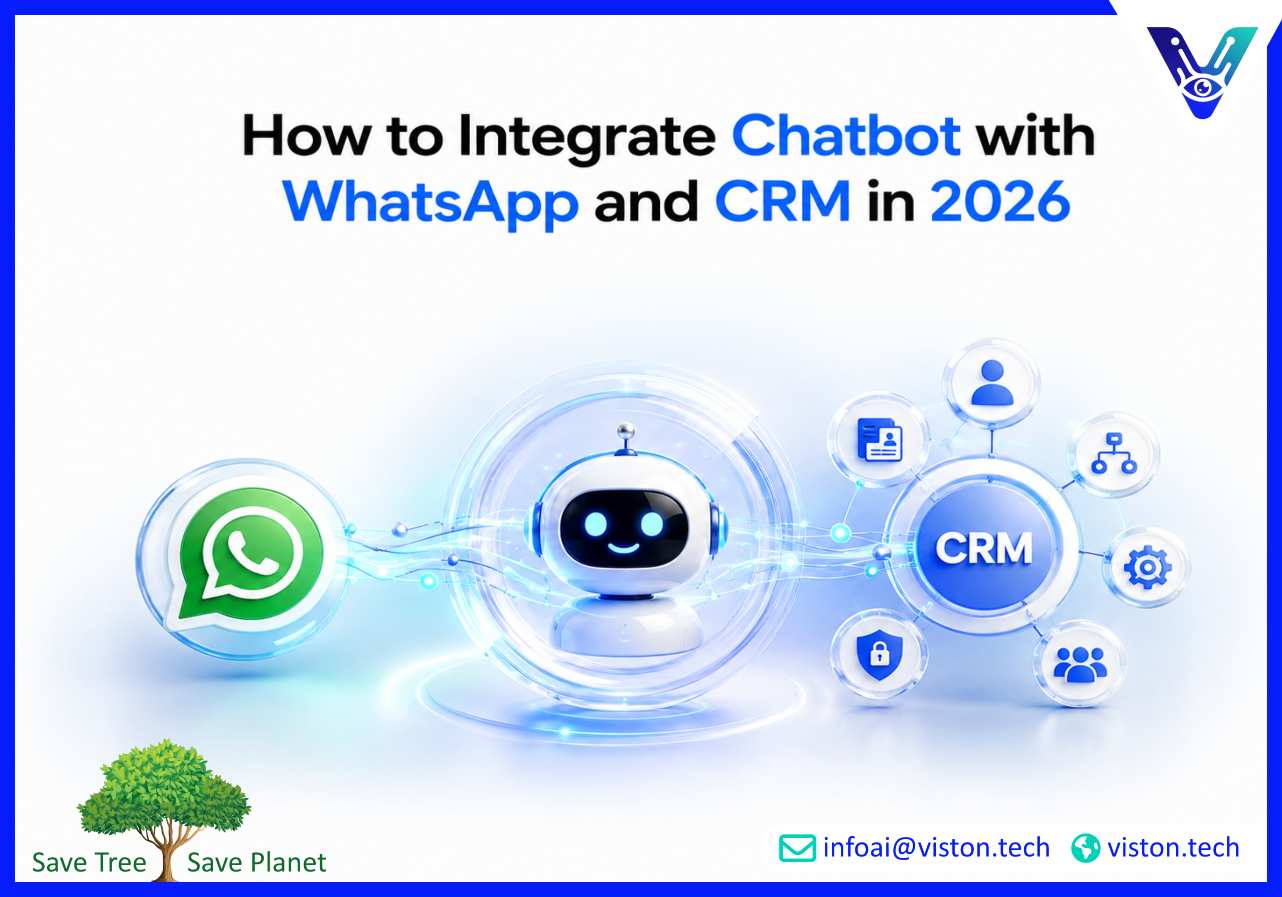
How to Integrate Chatbot with WhatsApp and CRM in 2026
Businesses today expect customer conversations to move seamlessly from messaging platforms into sales, support, and customer management systems. Integrating a chatbot with WhatsApp and a CRM allows organizations to automate interactions, capture valuable customer data, improve response times, and create more personalized customer experiences. In 2026, this integration has become a critical component of digital customer engagement and business automation strategies.
Why WhatsApp and CRM Integration Matters for Businesses
WhatsApp has evolved into one of the most important communication channels for businesses worldwide. Customers increasingly prefer messaging over traditional email or phone support because it is faster, more convenient, and accessible.However, customer conversations lose value when they remain isolated within messaging platforms. CRM integration bridges this gap by connecting chatbot interactions directly to customer records, sales pipelines, and support workflows.Key business benefits include:
Centralized customer information
Automated lead capture and qualification
Faster customer support response times
Improved sales follow-up processes
Better customer journey visibility
Reduced manual data entry
Enhanced reporting and analytics
More personalized customer engagement
For organizations focused on growth, combining WhatsApp automation with CRM intelligence creates a more connected and efficient customer experience.
How Chatbot Integration with WhatsApp and CRM Works
A WhatsApp chatbot acts as the customer-facing communication layer, while the CRM serves as the system of record for customer data and business activities.The integration process typically follows this workflow:
A customer initiates a conversation through WhatsApp.
The chatbot responds automatically using predefined workflows or AI-driven responses.
Customer information is collected during the conversation.
The chatbot sends data to the CRM through APIs or integration platforms.
The CRM updates existing records or creates new leads, contacts, or support tickets.
Sales, marketing, or support teams access real-time customer information.
Follow-up actions can be automated based on CRM workflows.
This connection enables businesses to move beyond simple messaging and create fully integrated customer engagement processes.
Key Steps to Integrate a Chatbot with WhatsApp and CRM
1. Define Business Objectives
Before implementation, businesses should identify what they want the chatbot to accomplish.Common objectives include:
Lead generation
Customer support automation
Appointment scheduling
Order tracking
Product recommendations
Customer onboarding
Service request management
Clear goals help determine integration requirements and chatbot functionality.
2. Choose a WhatsApp Business Solution
Most business chatbot integrations rely on the WhatsApp Business Platform for secure and scalable messaging capabilities.Organizations should evaluate:
Messaging volume requirements
Automation capabilities
API accessibility
Compliance requirements
Security standards
Scalability needs
The chosen solution should support both chatbot automation and CRM connectivity.
3. Select CRM Integration Requirements
The CRM system determines what customer data will be stored, synchronized, and utilized.Common CRM integration use cases include:
Creating new leads
Updating customer profiles
Logging conversation history
Tracking sales opportunities
Managing support requests
Triggering workflow automation
The integration should support real-time data synchronization to maintain accurate customer records.
4. Build Conversation Flows
Effective chatbot integration depends on well-designed conversational workflows.Businesses should map customer journeys for:
Lead inquiries
Support requests
Product information requests
Appointment bookings
Escalations to human agents
Conversation design should focus on delivering value while collecting relevant customer information.
5. Connect Systems Through APIs
Most WhatsApp chatbot and CRM integrations rely on APIs to exchange data securely.Typical API functions include:
Contact creation
Lead updates
Conversation logging
Ticket creation
Order status retrieval
Customer profile synchronization
Modern API-based integrations allow organizations to automate workflows across multiple business systems.
Common Business Use Cases for WhatsApp and CRM Chatbot Integration
Different industries use chatbot integrations in various ways depending on customer needs and operational requirements.
Sales Lead Management
Chatbots can qualify leads automatically, gather contact information, and push data directly into CRM pipelines for sales teams.
Customer Support Automation
Support requests can be routed, categorized, and logged within CRM systems while customers receive immediate responses through WhatsApp.
Appointment Scheduling
Service providers can automate booking workflows while synchronizing appointment data with customer records.
E-commerce Customer Service
Retail businesses can provide order updates, shipping information, and product recommendations through WhatsApp while maintaining CRM visibility.
Customer Onboarding
Organizations can automate onboarding journeys, collect required information, and update CRM records throughout the process.These use cases help businesses improve efficiency while delivering more responsive customer experiences.
Best Practices for Successful WhatsApp and CRM Integration in 2026
As customer expectations continue to evolve, businesses should follow several best practices to maximize integration success.
Prioritize customer experience over automation volume.
Ensure data synchronization occurs in real time.
Implement secure authentication and access controls.
Maintain compliance with privacy and data protection regulations.
Design clear escalation paths to human agents.
Regularly monitor chatbot performance metrics.
Continuously optimize conversation flows using customer feedback.
Integrate reporting and analytics for performance measurement.
Organizations that treat chatbot integration as an ongoing business initiative rather than a one-time deployment often achieve stronger long-term results.
How Viston AI Supports WhatsApp and CRM Chatbot Integration
For businesses seeking to connect customer conversations with operational systems, Viston AI specializes in AI chatbot integration solutions that help create seamless communication workflows across digital channels.Integrating a chatbot with WhatsApp and CRM platforms requires more than simply connecting APIs. Successful implementations depend on conversation design, workflow automation, secure data exchange, system interoperability, scalability planning, and ongoing optimization.Viston AI helps organizations build chatbot integration strategies that connect WhatsApp interactions with CRM platforms, support systems, knowledge bases, and other business applications. By focusing on practical business objectives and operational efficiency, businesses can automate customer engagement while maintaining visibility across the customer lifecycle.As organizations continue to invest in conversational AI during 2026, integrated solutions that unify customer communications and business data are becoming increasingly important for improving customer experience, operational performance, and growth opportunities.
Frequently Asked Questions
Can a chatbot automatically create leads in a CRM from WhatsApp conversations?
Yes. A properly integrated chatbot can capture customer details from WhatsApp conversations and automatically create or update leads within a CRM system.
Which CRM platforms can integrate with WhatsApp chatbots?
Many CRM platforms support chatbot integration, including Salesforce, HubSpot, Zoho CRM, Microsoft Dynamics, and other systems that provide API access.
Is WhatsApp chatbot integration secure?
When implemented correctly using secure APIs, encryption, authentication controls, and compliance best practices, WhatsApp chatbot integration can support secure customer communications.
How long does WhatsApp and CRM chatbot integration take?
Simple integrations may take a few days, while more advanced implementations involving multiple systems, workflows, and custom automation may require several weeks.
Can Viston AI help businesses integrate chatbots with WhatsApp and CRM systems?
Yes. Viston AI provides AI chatbot integration services that help businesses connect WhatsApp communication channels with CRM platforms and operational workflows to support automation and customer engagement goals.
Conclusion
Integrating a chatbot with WhatsApp and CRM systems enables businesses to create connected customer experiences while improving operational efficiency and data visibility. By combining conversational AI, messaging automation, and centralized customer management, organizations can streamline lead generation, customer support, onboarding, and engagement processes. As customer communication continues shifting toward messaging platforms in 2026, a well-executed AI chatbot integration strategy can help businesses respond faster, automate routine interactions, and make better use of customer data. Organizations looking to implement scalable chatbot solutions can benefit from specialized expertise from providers such as Viston AI.