What Is the Best Chatbot Integration Tool? A Business Guide for 2026
As businesses increasingly rely on automation to improve customer experiences, streamline operations, and generate leads, selecting the right chatbot integration tool has become a strategic decision. The best chatbot integration tool is not necessarily the one with the most features—it is the one that integrates seamlessly with your existing systems, supports your business objectives, and scales with your growth.
What Is a Chatbot Integration Tool?
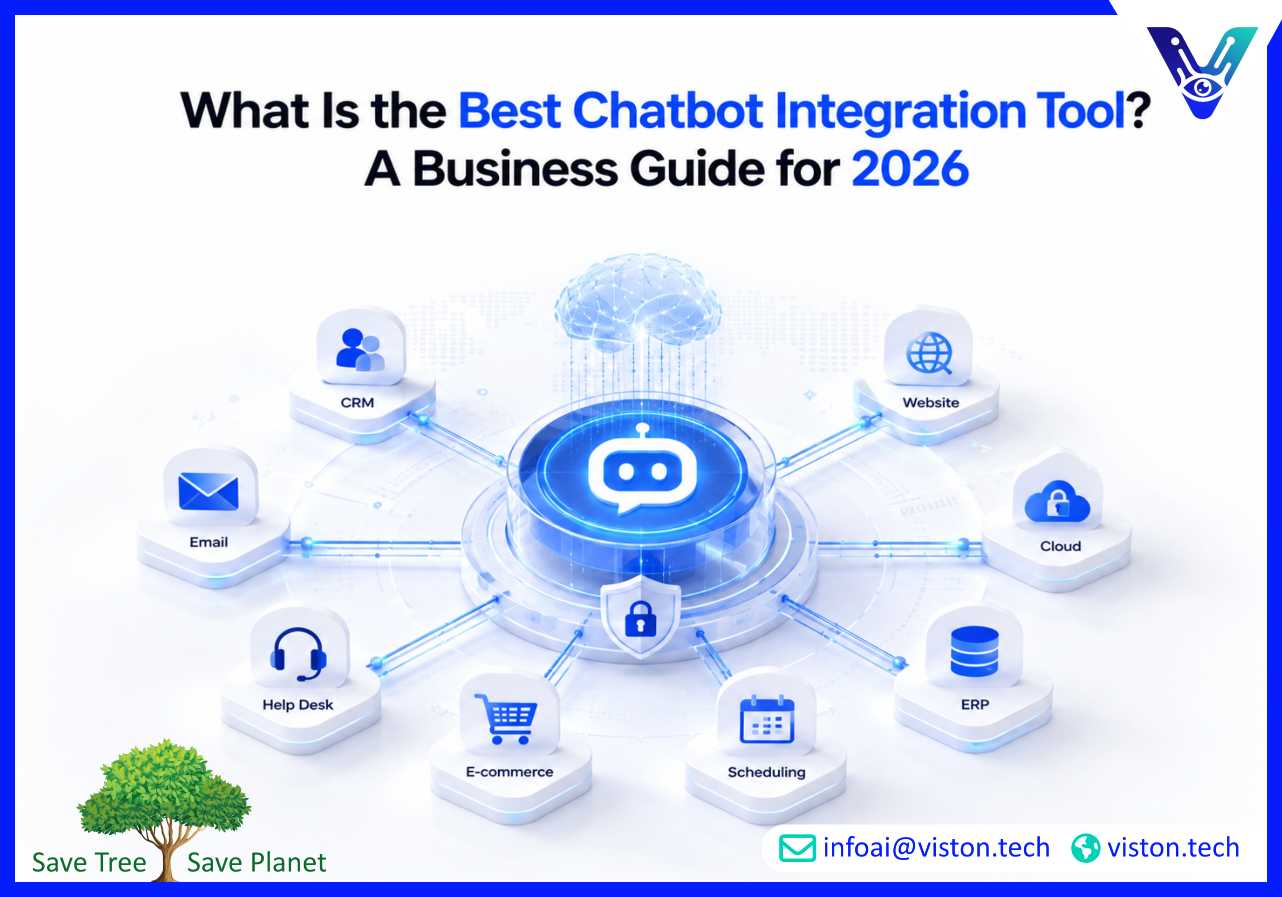
A chatbot integration tool connects an AI-powered chatbot with other business systems, applications, and communication channels. Instead of operating as a standalone solution, an integrated chatbot can access customer data, automate workflows, trigger actions, and provide more personalized interactions.Common integrations include:
Customer Relationship Management (CRM) platforms
Help desk and customer support systems
Email marketing software
E-commerce platforms
Booking and scheduling systems
ERP solutions
Knowledge bases and documentation platforms
Communication channels such as WhatsApp, websites, and social media
The right integration tool helps businesses create a unified customer experience while reducing manual work across teams.
What Makes a Chatbot Integration Tool the Best in 2026?
The chatbot landscape has evolved significantly. Businesses now expect more than simple question-and-answer functionality. Modern chatbot integration platforms must support advanced automation, AI capabilities, and enterprise-grade reliability.
Seamless Connectivity
The best tools offer pre-built connectors and APIs that allow businesses to integrate chatbots with existing technology stacks without extensive development effort.
AI and Natural Language Processing
Modern chatbots must understand context, intent, and conversational nuances. AI-powered integration tools support more natural and effective customer interactions.
Security and Compliance
Organizations handling customer data require strong security controls, encryption, access management, and compliance support for industry regulations.
Scalability
As businesses grow, chatbot infrastructure should handle increasing volumes of conversations, integrations, and workflows without performance issues.
Workflow Automation
The most effective integration platforms connect chat interactions to business processes, enabling automated lead routing, ticket creation, appointment scheduling, and customer onboarding.
Leading Chatbot Integration Tools Businesses Consider
Several chatbot integration tools have established strong positions in the market. Each serves different business requirements.
Zapier
Zapier remains one of the most popular no-code integration platforms. It connects chatbots with thousands of business applications, making it ideal for organizations seeking rapid deployment and workflow automation.Best suited for:
Small and medium-sized businesses
Marketing automation
Lead management workflows
Quick integrations without development resources
Make (Formerly Integromat)
Make offers advanced workflow customization and visual automation capabilities. It provides greater flexibility than many no-code platforms while remaining accessible to non-technical users.Best suited for:
Complex automation workflows
Multi-step integrations
Data transformation requirements
Operations-focused teams
Microsoft Power Automate
Organizations already using Microsoft products often benefit from Power Automate’s deep integration with Microsoft 365, Dynamics 365, and Azure services.Best suited for:
Enterprise organizations
Microsoft ecosystems
Internal process automation
Corporate IT environments
Salesforce Integration Tools
Businesses heavily invested in Salesforce frequently leverage native integration capabilities to connect chatbots with customer data, sales pipelines, and service workflows.Best suited for:
Sales-driven organizations
Customer service teams
Large CRM deployments
Revenue operations teams
Custom API Integration Frameworks
Many organizations require tailored chatbot integrations using APIs and middleware platforms. Custom integration approaches provide maximum flexibility and control.Best suited for:
Complex business environments
Unique workflows
Multiple enterprise systems
High-security requirements
How to Choose the Right Chatbot Integration Tool
There is no universal solution that fits every organization. Businesses should evaluate integration tools based on operational requirements, technical infrastructure, and long-term objectives.
Identify Existing Systems
Start by mapping the systems your chatbot needs to connect with. This may include CRM platforms, customer support software, ERP systems, marketing tools, and communication channels.
Assess Integration Complexity
Simple lead capture workflows may only require a no-code platform. More advanced customer journeys often need custom integrations and API-driven architecture.
Consider Data Security Requirements
Organizations handling sensitive customer information should evaluate encryption, authentication methods, access controls, and compliance capabilities.
Evaluate Scalability Needs
A solution that supports current requirements may become restrictive as business needs evolve. Scalability should be part of the initial evaluation process.
Review Total Cost of Ownership
Costs extend beyond licensing fees. Businesses should consider implementation, maintenance, customization, training, and ongoing support requirements.
Why Professional AI Chatbot Integration Matters
Even the most powerful chatbot platform can underperform if integration is poorly executed. Successful chatbot deployment requires strategic planning, technical expertise, workflow design, testing, and ongoing optimization.Common integration challenges include:
Disconnected customer data
Broken workflows
API limitations
Security vulnerabilities
Poor user experiences
Inaccurate automation logic
Scalability constraints
Professional integration services help businesses avoid these issues while ensuring chatbots deliver measurable business value.
How Viston AI Supports AI Chatbot Integration
For organizations seeking reliable AI chatbot integration, Viston AI focuses on connecting intelligent conversational systems with the business tools and platforms companies rely on daily. Effective chatbot integration goes beyond deployment—it involves creating connected workflows that support customer engagement, lead generation, support operations, and business automation.Viston AI helps businesses integrate AI chatbots with websites, CRM platforms, customer service systems, scheduling tools, marketing platforms, and other operational software. This enables organizations to create unified customer experiences while reducing manual effort across departments.By focusing on practical business outcomes, Viston AI supports companies looking to improve response times, automate routine interactions, capture qualified leads, and provide consistent customer support across channels. The integration approach emphasizes scalability, security, workflow efficiency, and long-term operational value.As chatbot technology continues to evolve in 2026, businesses increasingly require integration strategies that align with existing processes and future growth plans. A structured integration approach helps maximize the return on chatbot investments while ensuring reliable performance across connected systems.
Frequently Asked Questions
What is the best chatbot integration tool for small businesses?
Many small businesses choose tools such as Zapier because of their ease of use, affordability, and extensive library of application integrations.
Can chatbot integration tools connect with CRM systems?
Yes. Most modern chatbot integration tools support CRM platforms, allowing businesses to automate lead capture, customer updates, and sales workflows.
Do chatbot integration tools require coding?
Not always. Many platforms offer no-code or low-code integration options. However, complex enterprise requirements may require custom development.
How long does chatbot integration typically take?
Simple integrations may take a few days, while enterprise implementations involving multiple systems can take several weeks depending on complexity.
Why work with a specialist such as Viston AI for chatbot integration?
When chatbot integration involves multiple systems, custom workflows, and business-critical processes, specialist expertise can help reduce implementation risks and improve long-term performance.
Conclusion
Choosing the best chatbot integration tool depends on your business goals, existing technology stack, security requirements, and automation needs. While platforms such as Zapier, Make, Power Automate, and native CRM integrations offer strong capabilities, the most successful implementations focus on creating connected customer experiences and efficient business workflows.AI Chatbot Integration has become a critical component of modern digital operations in 2026. Businesses that invest in the right integration strategy can improve customer engagement, increase operational efficiency, and unlock greater value from their technology investments. For organizations seeking expert support, Viston AI provides specialized AI chatbot integration services designed to connect conversational AI with real business outcomes.