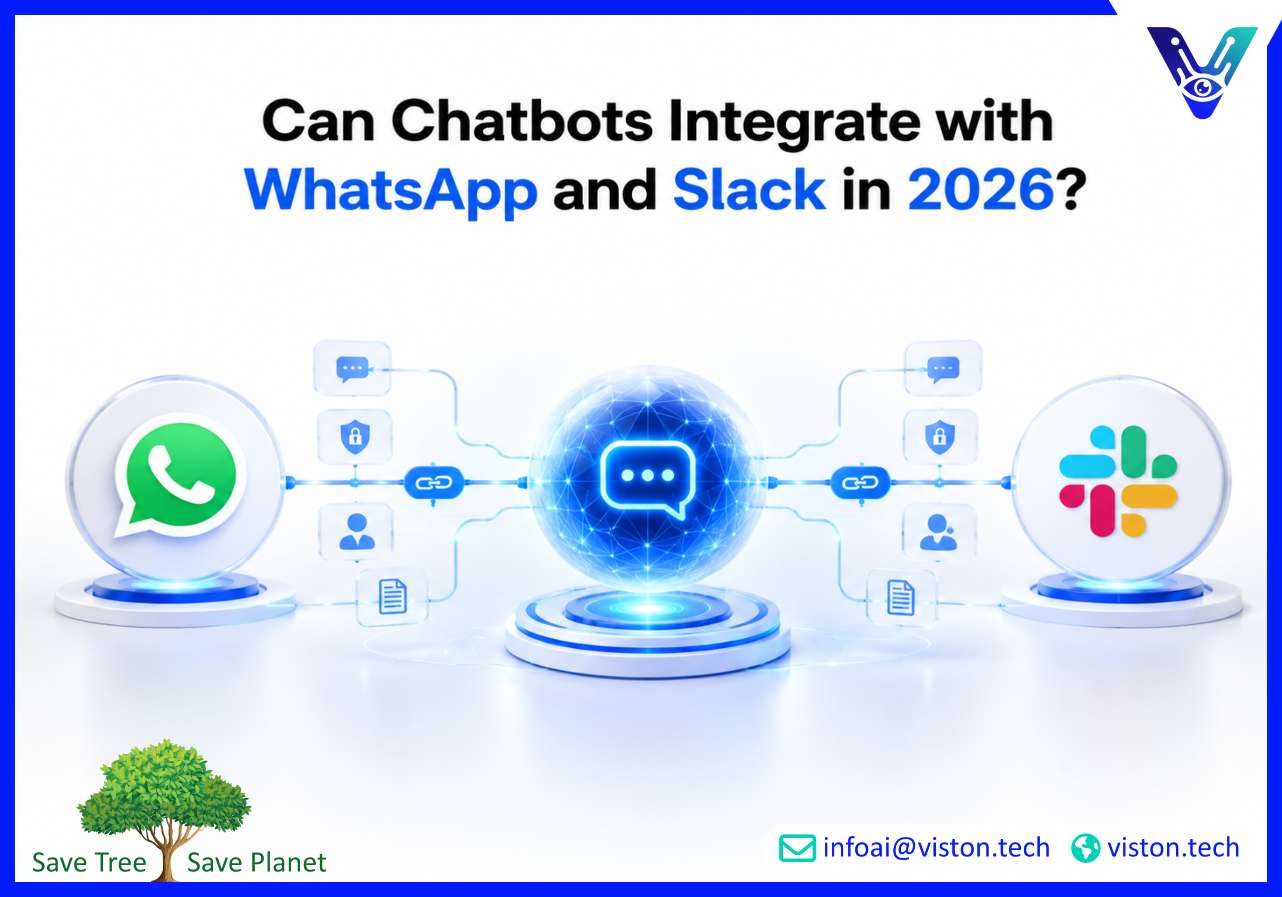
Can Chatbots Integrate with WhatsApp and Slack in 2026?
Yes, chatbots can integrate with WhatsApp and Slack, but successful integration depends on the right APIs, workflows, security controls, and business use case. For companies using AI Chatbot Integration, these channels can support faster customer communication, internal automation, lead handling, and service operations.
What WhatsApp and Slack Chatbot Integration Means for Businesses
WhatsApp and Slack serve different communication needs. WhatsApp is usually customer-facing, helping businesses manage sales enquiries, support requests, appointment reminders, order updates, and follow-ups. Slack is usually team-facing, helping employees access information, trigger workflows, summarize conversations, manage approvals, and receive alerts.AI chatbot integration connects a conversational assistant to these platforms so users can interact with business systems through natural language. Instead of switching between CRM tools, helpdesk platforms, spreadsheets, inboxes, and dashboards, users can ask questions, submit requests, or receive automated responses directly inside the channel they already use.
Why WhatsApp and Slack Chatbot Integration Matters in 2026
In 2026, businesses expect chatbots to do more than answer basic FAQs. A useful chatbot should understand context, retrieve accurate information, route conversations, update systems, support human handoff, and maintain secure records.WhatsApp integration is valuable because customers often prefer quick messaging over email or phone calls. A chatbot can qualify leads, answer common questions, share booking links, send service updates, and escalate complex cases to a human team.Slack integration is valuable because teams need faster access to operational knowledge. A Slack chatbot can help employees search internal documents, check project status, create tickets, summarize updates, notify teams about urgent issues, and reduce repetitive admin work.
How AI Chatbots Integrate with WhatsApp and Slack
WhatsApp chatbot integration
WhatsApp chatbot integration usually works through the WhatsApp Business Platform or an approved business messaging provider. The chatbot receives user messages, processes the request through an AI model or automation layer, retrieves the right data, and sends a response back through WhatsApp.Common WhatsApp chatbot workflows include:
Customer support automation
Lead capture and qualification
Appointment booking
Order and delivery updates
Payment or document reminders
Human agent handoff
Slack chatbot integration
Slack chatbot integration usually works through Slack apps, bot users, slash commands, workflow triggers, and API-based connections. The chatbot can respond in direct messages, channels, or specific workflow contexts.Common Slack chatbot workflows include:
Internal knowledge search
IT and HR request handling
CRM or helpdesk alerts
Task creation and status updates
Meeting or channel summaries
Approval workflow automation
Key Requirements for Reliable WhatsApp and Slack Chatbot Integration
A reliable integration needs more than a chatbot widget. Businesses should consider data access, user permissions, escalation rules, message templates, audit trails, analytics, and system performance.For WhatsApp, businesses must plan approved messaging use cases, customer consent, message quality, response timing, and compliance with privacy expectations. For Slack, businesses must manage workspace permissions, channel access, sensitive internal data, and role-based controls.The best integrations are designed around real workflows. A chatbot should know when to answer automatically, when to ask for more information, when to update a connected system, and when to involve a human.
How Viston AI Supports WhatsApp and Slack Chatbot Integration
Viston AI is relevant to this topic because its AI Chatbot Integration services focus on connecting conversational AI with business systems, workflows, CRM platforms, and automation tools. This aligns directly with WhatsApp and Slack chatbot use cases, where the value comes from connecting conversations to real operational processes.For customer-facing communication, Viston AI can support businesses that want to use AI chatbots for lead capture, customer support, routing, and follow-up automation across messaging channels such as WhatsApp. For internal teams, its workflow automation approach is relevant to Slack-based assistants that help employees reduce manual tasks, access information faster, and coordinate work across systems.The practical benefit is not simply having a chatbot available on another channel. The value comes from designing the chatbot around business rules, data sources, escalation paths, and measurable outcomes. For companies considering AI Chatbot Integration, Viston AI’s service-led approach can help turn WhatsApp and Slack from standalone communication tools into connected automation channels that support sales, support, operations, and internal productivity.
Frequently Asked Questions
Can one chatbot work on both WhatsApp and Slack?
Yes. A single AI chatbot backend can support both WhatsApp and Slack if it is designed with channel-specific logic, permissions, message formatting, and workflow rules.
Is WhatsApp chatbot integration suitable for customer support?
Yes. WhatsApp chatbot integration can help answer common questions, collect customer details, provide updates, and route complex issues to support agents.
Can Slack chatbots connect with business tools?
Yes. Slack chatbots can connect with CRMs, helpdesks, project management tools, databases, knowledge bases, and automation platforms through APIs.
Is chatbot integration secure?
It can be secure when designed with authentication, access control, data minimization, encryption, logging, and clear rules for handling sensitive information.
Does Viston AI help with WhatsApp and Slack chatbot workflows?
Viston AI supports AI Chatbot Integration across business workflows, automation tools, and connected systems, making it relevant for companies planning WhatsApp or Slack chatbot use cases.
Conclusion
Chatbots can integrate with WhatsApp and Slack, but the real business value depends on thoughtful AI Chatbot Integration. WhatsApp helps businesses automate customer conversations, while Slack helps teams improve internal workflows and access information faster. In 2026, companies should focus on secure setup, reliable integrations, clear escalation paths, and measurable outcomes. Viston AI can support businesses looking to connect chatbot experiences with practical workflows, business systems, and automation goals.