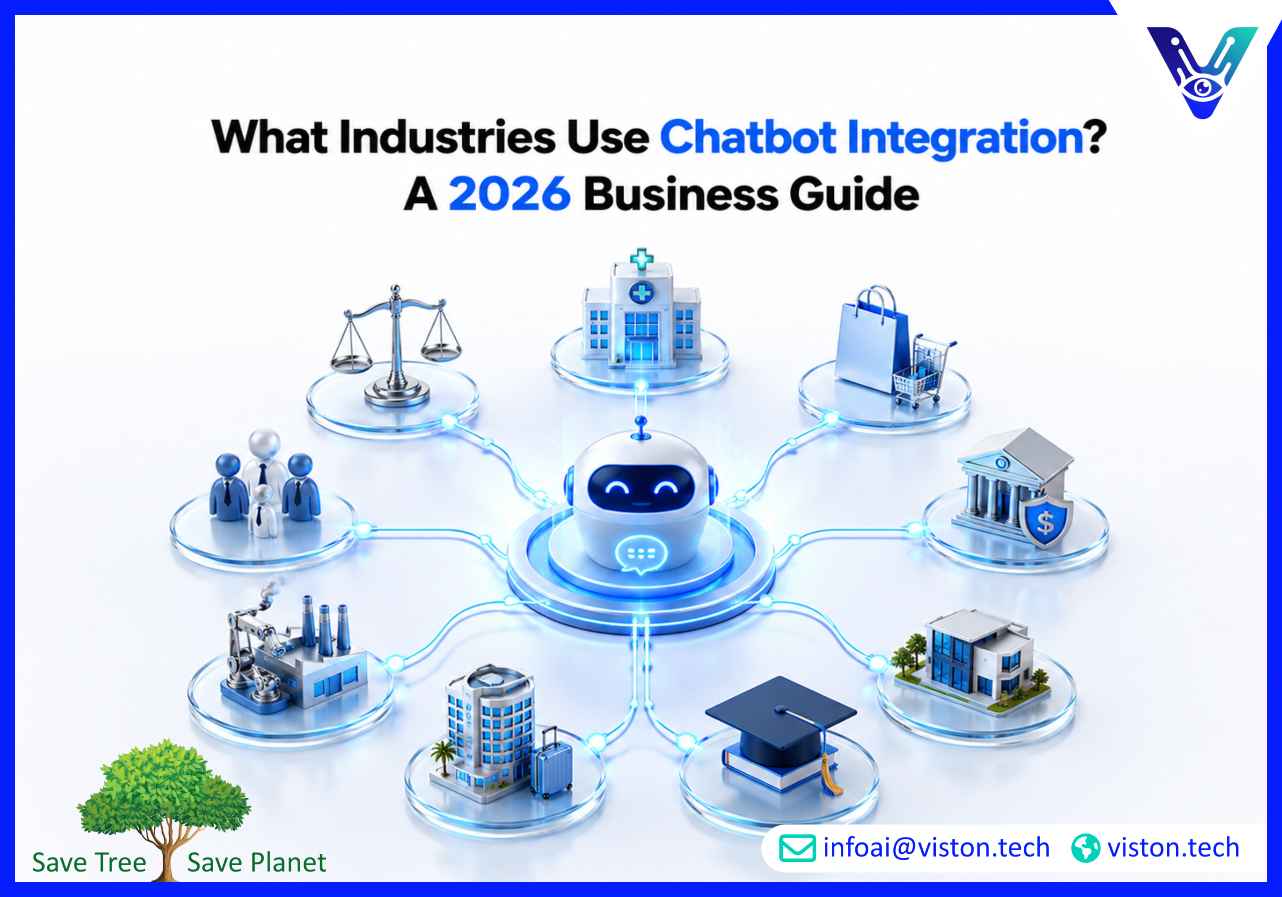
What Industries Use Chatbot Integration? A 2026 Business Guide
As businesses continue to prioritize automation, customer experience, and operational efficiency, chatbot integration has become a valuable technology across multiple sectors. Modern AI-powered chatbots can connect with websites, CRM systems, communication platforms, customer support tools, and business applications to streamline interactions and improve service delivery. Understanding which industries benefit most from chatbot integration can help organizations identify practical opportunities for automation and growth.
Why Chatbot Integration Matters Across Industries
Chatbot integration refers to connecting AI chatbots with existing business systems, communication channels, databases, and workflows. Rather than functioning as standalone tools, integrated chatbots can access business information, automate processes, and deliver more personalized customer experiences.In 2026, organizations increasingly expect chatbots to handle tasks such as:
Customer support automation
Lead generation and qualification
Appointment scheduling
Order tracking
Employee self-service
CRM updates
Data collection and reporting
Omnichannel communication
The ability to integrate with platforms such as CRM software, ERP systems, help desks, payment gateways, WhatsApp, Slack, Microsoft Teams, and websites has expanded chatbot adoption across many industries.
Industries That Commonly Use Chatbot Integration
Healthcare
Healthcare providers use chatbot integration to improve patient communication and reduce administrative workloads. Integrated chatbots can connect with appointment systems, patient portals, and healthcare databases.Common healthcare use cases include:
Appointment booking and reminders
Patient intake forms
Frequently asked medical questions
Prescription refill requests
Insurance verification support
Patient follow-up communications
Healthcare organizations often prioritize compliance, data security, and secure integrations when deploying chatbot solutions.
Retail and E-commerce
Retailers and online stores use chatbot integration extensively to support customers throughout the buying journey. By connecting chatbots to inventory systems, order management platforms, and payment solutions, businesses can provide real-time assistance.Typical retail applications include:
Product recommendations
Order tracking
Returns and exchange assistance
Cart recovery campaigns
Promotional messaging
Customer support automation
Integrated chatbots help retailers deliver faster responses while reducing customer service costs.
Financial Services and Banking
Banks, insurance providers, and financial institutions use chatbot integration to improve customer service while maintaining operational efficiency.Popular use cases include:
Account inquiries
Loan application assistance
Policy information requests
Fraud alerts and notifications
Customer onboarding
Financial product guidance
Financial organizations typically focus on security, authentication, regulatory compliance, and secure API connectivity during chatbot implementation.
Real Estate
Real estate agencies and property management firms use chatbots to engage potential buyers and tenants around the clock.Integrated chatbot solutions can:
Qualify leads automatically
Schedule property viewings
Answer property-related questions
Collect buyer preferences
Connect with CRM platforms
Manage rental inquiries
This automation helps real estate professionals spend more time on high-value sales activities.
Education
Educational institutions increasingly use chatbot integration to support students, applicants, and staff.Examples include:
Admissions support
Student onboarding
Course information delivery
Event registrations
Student support services
Learning management system integration
Chatbots help educational organizations provide consistent information while reducing administrative burden.
Travel and Hospitality
Hotels, airlines, travel agencies, and hospitality providers rely on chatbot integration to deliver responsive customer service throughout the booking journey.Common functions include:
Booking assistance
Reservation management
Travel updates
Customer support
Check-in guidance
Loyalty program support
Integration with reservation systems allows chatbots to provide real-time information and personalized assistance.
Emerging Industries Adopting Chatbot Integration in 2026
Manufacturing
Manufacturers are using chatbots internally and externally to improve operational efficiency.Applications include:
Supplier communication
Employee support portals
Equipment maintenance requests
Customer service automation
Technical support workflows
Legal Services
Law firms and legal service providers are adopting chatbots to streamline client interactions.Common use cases include:
Client intake forms
Consultation scheduling
Document collection
Case status updates
Frequently asked legal questions
Human Resources and Recruitment
Recruitment agencies and HR departments use chatbot integration to automate hiring processes.
Candidate screening
Interview scheduling
Employee onboarding
Internal HR support
Benefits information delivery
These automations help organizations manage larger applicant volumes while improving candidate experience.
Key Benefits Industries Gain from Chatbot Integration
Regardless of industry, organizations typically pursue chatbot integration to achieve several business outcomes.
Improved Customer Experience
Customers increasingly expect immediate responses. Integrated chatbots provide 24/7 support and faster issue resolution.
Operational Efficiency
Automation reduces repetitive manual tasks and allows teams to focus on more strategic work.
Scalable Communication
Businesses can handle growing customer inquiries without proportionally increasing staffing requirements.
Better Data Collection
Integrated chatbots can capture valuable customer information and automatically update CRM and business systems.
Higher Lead Conversion
Sales and marketing teams can qualify leads faster and improve response times through automated conversations.
How Businesses Should Evaluate Chatbot Integration Opportunities
Not every chatbot deployment delivers the same results. Organizations should evaluate their operational requirements before implementation.Key considerations include:
Business objectives and use cases
Integration requirements
Security and compliance needs
Customer communication channels
Scalability expectations
Reporting and analytics capabilities
Maintenance and support requirements
The most successful projects focus on solving specific business problems rather than implementing chatbot technology simply because it is available.
How Viston AI Supports AI Chatbot Integration
As businesses across industries seek to automate customer interactions and streamline operations, AI chatbot integration requires more than simply deploying a conversational interface. Effective implementation depends on connecting chatbots with existing business systems, communication platforms, workflows, and data sources.Viston AI specializes in AI Chatbot Integration solutions designed to help organizations create practical, scalable, and business-focused automation experiences. Depending on operational requirements, chatbot integrations can connect with websites, CRM platforms, customer support systems, messaging channels, scheduling tools, and other business applications.For organizations operating in sectors such as healthcare, retail, financial services, education, real estate, hospitality, and professional services, integrated chatbot solutions can improve customer engagement, reduce manual workloads, and support faster response times.A structured integration approach also helps businesses address important considerations such as data security, workflow automation, system compatibility, reporting, and long-term scalability. As chatbot capabilities continue to evolve in 2026, organizations increasingly benefit from implementation strategies that align technology with measurable business objectives and operational needs.
Frequently Asked Questions
Which industry uses chatbot integration the most?
Retail, e-commerce, customer support, healthcare, and financial services are among the largest adopters of chatbot integration due to high customer interaction volumes and automation opportunities.
Can small businesses benefit from chatbot integration?
Yes. Small businesses can use integrated chatbots for lead generation, appointment booking, customer support, and frequently asked questions without requiring large support teams.
Do chatbots work only on websites?
No. Modern chatbots can integrate with websites, WhatsApp, Slack, Microsoft Teams, CRM platforms, social media channels, mobile applications, and customer support systems.
Is chatbot integration suitable for regulated industries?
Yes. Industries such as healthcare, banking, and insurance use chatbot integration when appropriate security, compliance, authentication, and data protection measures are implemented.
How long does chatbot integration typically take?
Implementation timelines vary depending on complexity, integrations, workflows, and customization requirements. Simple projects may take weeks, while enterprise deployments can require several months.
How can Viston AI help businesses adopt chatbot integration?
Viston AI provides AI Chatbot Integration services that help organizations connect conversational AI with existing business systems, automate workflows, improve customer experiences, and support scalable business operations.
Conclusion
Chatbot integration is no longer limited to a few technology-focused sectors. Industries ranging from healthcare and finance to retail, education, manufacturing, and legal services are using integrated AI chatbots to improve efficiency, customer engagement, and operational scalability. As businesses continue to pursue automation and digital transformation in 2026, AI Chatbot Integration plays an increasingly important role in connecting customer conversations with real business processes. Organizations that approach chatbot implementation strategically can unlock measurable improvements in service quality, productivity, and business performance. Viston AI supports these efforts through practical AI Chatbot Integration solutions aligned with modern business requirements.