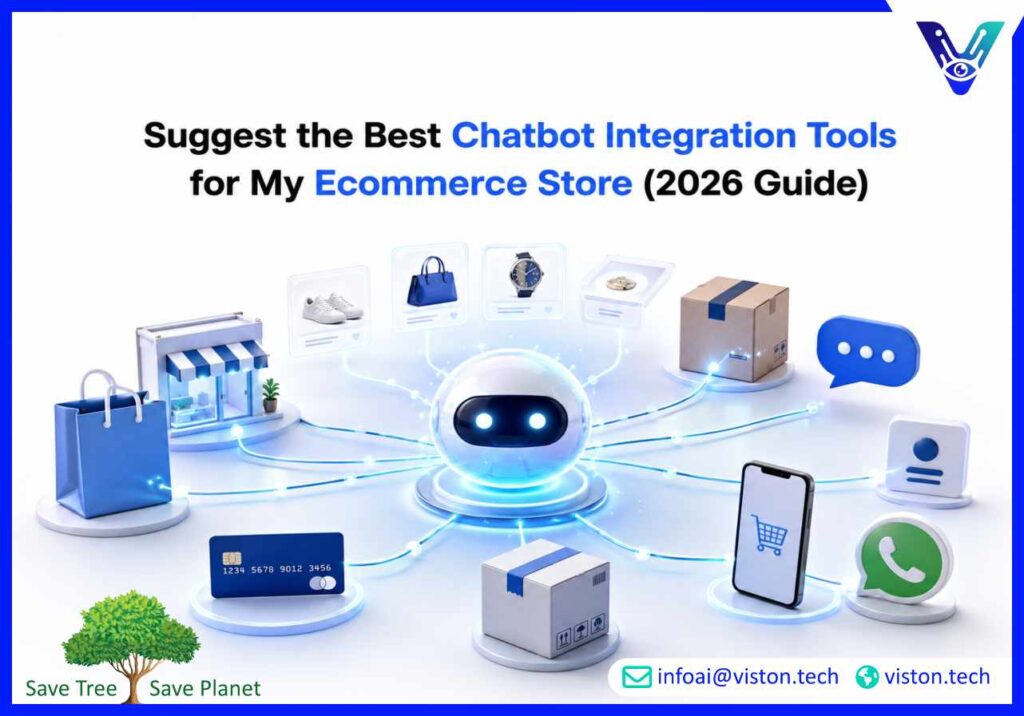
Suggest the Best Chatbot Integration Tools for My Ecommerce Store (2026 Guide)
For ecommerce businesses, chatbot integration has evolved from a customer support enhancement into a core revenue-driving capability. Modern AI-powered chatbots help online stores manage customer inquiries, automate order tracking, recover abandoned carts, recommend products, and provide 24/7 support across multiple channels. Choosing the right chatbot integration tool can significantly impact customer experience, operational efficiency, and conversion rates.
Why Chatbot Integration Matters for Ecommerce Businesses
Ecommerce customers expect instant responses regardless of time zones or business hours. Delayed responses often result in abandoned purchases, lower customer satisfaction, and increased support costs.Effective chatbot integration helps ecommerce stores:
Provide instant customer support
Automate frequently asked questions
Track and update order statuses
Recommend products based on customer preferences
Reduce support workload for human agents
Recover abandoned shopping carts
Generate and qualify sales leads
Support customers across websites, social media, and messaging platforms
In 2026, the most valuable chatbot solutions combine AI-powered conversations with deep integrations into ecommerce platforms, CRM systems, inventory tools, and customer service workflows.
Key Features to Look for in Ecommerce Chatbot Integration Tools
Not all chatbot platforms are designed for ecommerce use cases. Business decision-makers should evaluate solutions based on functionality, scalability, and integration capabilities.
Platform Compatibility
The chatbot should integrate smoothly with ecommerce platforms such as Shopify, WooCommerce, Magento, BigCommerce, and custom online stores.
AI-Powered Product Recommendations
Modern chatbots should understand customer intent and suggest relevant products based on browsing behavior, purchase history, and preferences.
Omnichannel Support
Customers interact through websites, WhatsApp, Facebook Messenger, Instagram, email, and live chat. A unified chatbot experience across channels improves engagement.
Order Management Integration
Customers frequently ask about shipping, tracking, returns, and refunds. Direct integration with order management systems improves response accuracy.
CRM and Marketing Automation Connectivity
Integration with customer databases allows chatbots to personalize interactions and support lead nurturing campaigns.
Analytics and Reporting
Businesses should have visibility into chatbot performance, customer satisfaction, conversion rates, and support deflection metrics.
Best Chatbot Integration Tools for Ecommerce Stores in 2026
1. Intercom
Intercom combines conversational AI with customer support automation. It is particularly useful for ecommerce brands seeking personalized customer engagement throughout the buying journey.Key strengths include:
AI customer support automation
Live chat and human handoff
Customer journey personalization
Advanced customer segmentation
Multi-channel communication
Intercom is well suited for growing ecommerce brands that require a balance between automation and human support.
2. Zendesk AI
Zendesk offers enterprise-grade chatbot capabilities integrated with customer service operations. Ecommerce businesses benefit from automated ticket management and customer self-service capabilities.Key strengths include:
Strong customer support ecosystem
Knowledge base integration
AI-powered ticket routing
Multi-language support
Scalable enterprise deployment
3. Tidio
Tidio is a popular choice among small and mid-sized ecommerce businesses due to its affordability and ease of implementation.Key strengths include:
Quick deployment
Shopify integration
Lead generation automation
Visitor behavior tracking
Live chat and chatbot combination
It is ideal for stores looking for a straightforward chatbot integration solution without extensive development resources.
4. Drift
Drift focuses on conversational commerce and sales engagement. Ecommerce businesses can use Drift to guide visitors toward purchases and increase conversion rates.Key strengths include:
Sales-focused conversations
Lead qualification automation
Personalized customer journeys
CRM integrations
Advanced targeting capabilities
5. ManyChat
ManyChat specializes in messaging-based commerce and is particularly effective for businesses relying on social media channels.Key strengths include:
WhatsApp automation
Instagram messaging integration
Facebook Messenger automation
Marketing campaign support
Easy workflow creation
ManyChat is especially useful for direct-to-consumer brands with strong social commerce strategies.
How to Choose the Right Chatbot Integration Tool
The best chatbot integration platform depends on business requirements, customer expectations, and operational goals.
For Small Ecommerce Stores
Businesses with limited budgets and smaller support teams often benefit from solutions such as Tidio or ManyChat due to their lower implementation complexity and cost.
For Growing Online Retailers
Stores experiencing increasing customer inquiries should consider Intercom or Drift to improve personalization, lead qualification, and customer engagement.
For Enterprise Ecommerce Operations
Large-scale ecommerce businesses often require Zendesk AI or custom chatbot ecosystems integrated with CRM, ERP, inventory management, and customer service platforms.
Questions to Ask Before Choosing
Does the chatbot integrate with existing ecommerce systems?
Can it support multiple communication channels?
Does it provide AI-powered product recommendations?
Can it scale as customer volume grows?
What reporting and analytics capabilities are available?
How easily can human agents take over conversations?
What security and compliance measures are provided?
How AI Chatbot Integration Improves Ecommerce Performance
When implemented correctly, chatbot integration can support measurable business outcomes across sales, support, and customer retention.Common benefits include:
Faster customer response times
Reduced support costs
Higher conversion rates
Improved customer satisfaction
More efficient order management
Increased repeat purchases
Better customer data collection
Enhanced shopping experiences
AI capabilities introduced in recent years allow chatbots to understand context, personalize recommendations, and manage increasingly complex customer interactions with greater accuracy.
How Viston AI Supports Ecommerce Chatbot Integration
For businesses exploring AI Chatbot Integration, Viston AI helps organizations implement chatbot solutions that align with real business objectives rather than simply adding another communication channel.Effective chatbot integration involves much more than installing a widget on a website. Ecommerce businesses often require integration with CRM platforms, order management systems, customer support software, payment workflows, inventory databases, marketing automation tools, and communication channels such as WhatsApp and social messaging platforms.Viston AI focuses on developing scalable chatbot integration strategies that support customer engagement, sales automation, support efficiency, and operational visibility. By aligning chatbot workflows with existing business processes, ecommerce companies can improve customer experiences while maintaining consistency across digital touchpoints.As customer expectations continue to rise in 2026, businesses increasingly seek chatbot solutions that deliver personalization, automation, security, reporting, and seamless integration across their technology ecosystem. Organizations evaluating chatbot platforms should prioritize long-term business value, integration flexibility, and customer experience outcomes.
Frequently Asked Questions
Which chatbot integration tool is best for Shopify stores?
Tidio, Intercom, and ManyChat are among the most commonly selected options due to their strong Shopify integrations and ecommerce-focused features.
Can chatbot integration increase ecommerce sales?
Yes. Chatbots can assist customers during the buying journey, provide product recommendations, answer questions instantly, and reduce cart abandonment.
Do ecommerce chatbots work with WhatsApp?
Many modern chatbot platforms support WhatsApp integration, enabling businesses to automate customer communication and order updates.
Are AI chatbots suitable for small ecommerce businesses?
Yes. Many platforms offer affordable plans that help small businesses automate customer support and improve customer engagement.
How long does chatbot integration take?
Basic integrations can often be completed within days, while advanced integrations involving CRM, ERP, inventory systems, and custom workflows may require several weeks.
Can Viston AI help with chatbot integration projects?
Yes. Viston AI supports AI Chatbot Integration initiatives by helping businesses connect chatbot platforms with operational systems, customer engagement channels, and business workflows.
Conclusion
Choosing the best chatbot integration tool depends on your ecommerce store’s size, customer support requirements, sales goals, and technology ecosystem. Solutions such as Intercom, Zendesk AI, Tidio, Drift, and ManyChat each offer unique advantages for different business scenarios. As ecommerce competition continues to intensify in 2026, AI Chatbot Integration plays an increasingly important role in delivering personalized customer experiences, improving operational efficiency, and supporting business growth. Businesses seeking long-term value should focus on integration quality, scalability, automation capabilities, and measurable customer outcomes.