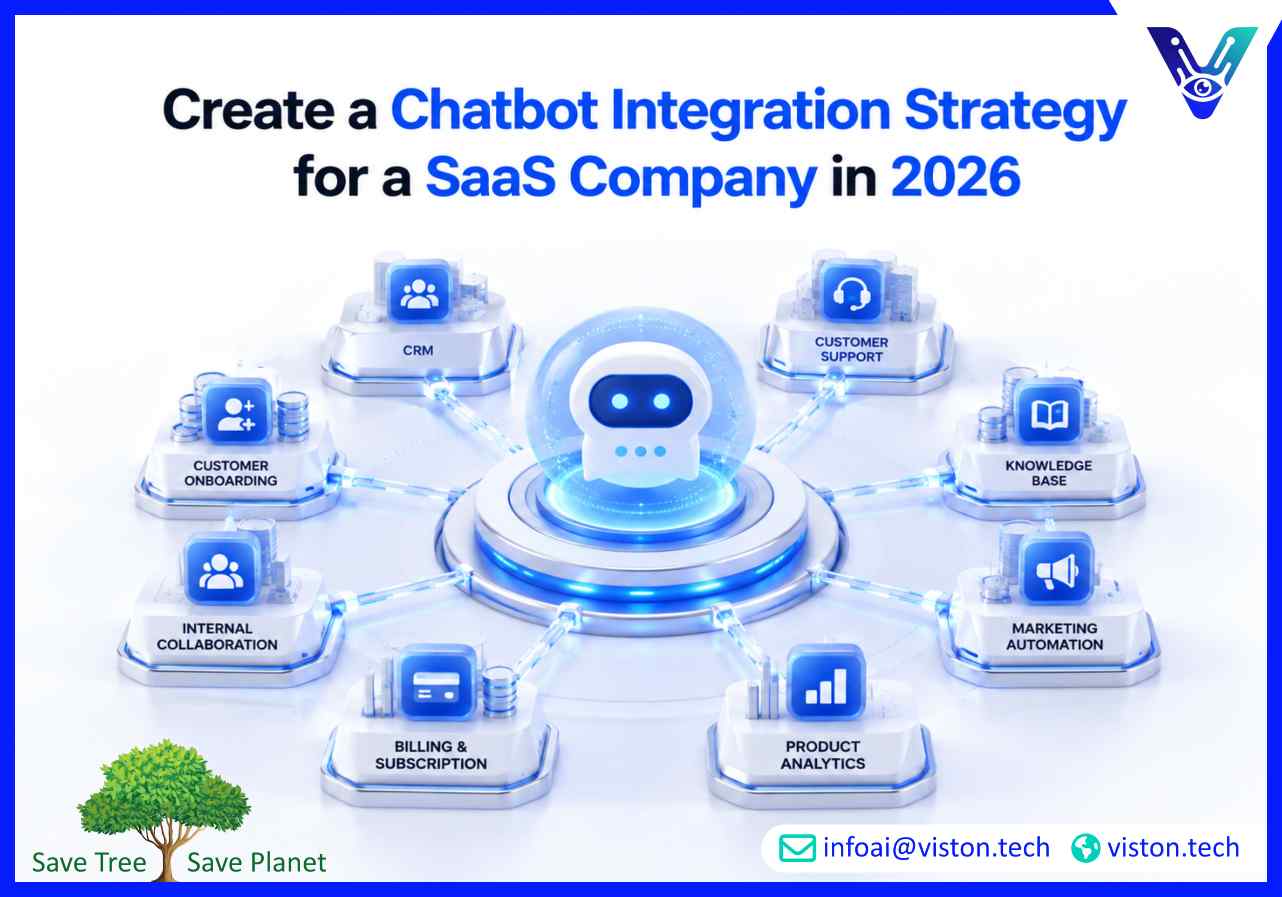
Create a Chatbot Integration Strategy for a SaaS Company in 2026
As SaaS businesses continue to compete on customer experience, operational efficiency, and scalability, chatbot integration has evolved from a support enhancement into a strategic business capability. A well-planned chatbot integration strategy helps SaaS companies automate customer interactions, streamline internal workflows, improve onboarding, generate qualified leads, and provide consistent support across multiple channels.
What a Chatbot Integration Strategy Means for SaaS Companies
A chatbot integration strategy is the structured approach used to connect AI-powered conversational systems with the platforms, applications, and business processes that drive a SaaS company.Rather than functioning as a standalone support widget, modern chatbots are integrated into critical systems such as:
Customer Relationship Management (CRM) platforms
Customer support systems
Knowledge bases
Product analytics tools
Marketing automation platforms
Billing and subscription systems
Help desk software
Internal communication platforms
Customer onboarding workflows
The goal is to create a connected ecosystem where chatbot interactions can access, process, and act upon relevant business data in real time.
Why Chatbot Integration Matters for SaaS Businesses in 2026
SaaS customers increasingly expect instant responses, personalized experiences, and self-service capabilities. At the same time, support teams face growing ticket volumes and increasing pressure to scale efficiently.Effective AI chatbot integration helps address these challenges by:
Reducing support workload
Improving customer satisfaction
Accelerating onboarding processes
Increasing lead qualification efficiency
Providing 24/7 assistance
Reducing operational costs
Enhancing customer retention
Delivering faster issue resolution
For SaaS providers operating globally, chatbot integration also supports multilingual customer engagement and around-the-clock service availability.
Key Components of a Successful SaaS Chatbot Integration Strategy
Define Clear Business Objectives
Every integration initiative should start with measurable goals.Common objectives include:
Reducing support tickets
Improving lead conversion rates
Enhancing onboarding experiences
Increasing self-service adoption
Reducing customer churn
Automating repetitive internal tasks
Without clear objectives, chatbot projects often struggle to demonstrate measurable business value.
Map Customer Journeys
Understanding customer touchpoints helps identify where chatbot interactions can create the greatest impact.Typical SaaS chatbot touchpoints include:
Website visitors
Product trial users
New customer onboarding
Technical support requests
Subscription management
Account upgrades
Renewal assistance
A detailed customer journey map ensures chatbot functionality aligns with real user needs.
Integrate Core Business Systems
The effectiveness of a chatbot depends heavily on its access to relevant data.High-value integrations often include:
CRM systems for customer context
Support platforms for ticket management
Knowledge bases for accurate responses
Product usage analytics
Marketing automation systems
Subscription and billing platforms
User authentication systems
These integrations allow chatbots to provide personalized and actionable interactions rather than generic responses.
Prioritize Data Security and Compliance
SaaS businesses frequently handle sensitive customer information.Chatbot integrations should include:
Role-based access controls
Data encryption
Secure API connections
Authentication mechanisms
Audit logging
Compliance monitoring
Organizations operating across multiple regions should also evaluate regulatory requirements related to customer data handling.
Implementation Framework for Chatbot Integration
Phase 1: Assessment and Planning
Begin by evaluating current systems, workflows, and customer interaction channels.Key activities include:
Identifying integration requirements
Auditing existing platforms
Assessing API availability
Defining success metrics
Prioritizing use cases
Phase 2: Integration Architecture Design
Develop a scalable architecture that supports future growth.Important considerations include:
API management
Data synchronization
Authentication methods
Error handling
System monitoring
Performance optimization
A scalable architecture reduces future redevelopment costs and supports expanding chatbot capabilities.
Phase 3: Development and Testing
Once integrations are configured, extensive testing is essential.Testing should cover:
Data accuracy
Workflow functionality
Response quality
Load performance
Security validation
Cross-platform compatibility
Testing helps identify issues before customer-facing deployment.
Phase 4: Deployment and Monitoring
After launch, continuous monitoring ensures optimal performance.Organizations should track:
Response accuracy
Conversation completion rates
Customer satisfaction scores
Support ticket reductions
Lead conversion metrics
System uptime
Regular optimization helps maintain chatbot effectiveness as customer expectations evolve.
Common SaaS Chatbot Integration Use Cases
Customer Support Automation
Chatbots can answer common questions, troubleshoot issues, and route complex requests to support agents.
Product Onboarding
Integrated chatbots guide users through setup processes, feature adoption, and account configuration.
Lead Qualification
Sales-focused chatbots collect prospect information, assess requirements, and schedule meetings with sales teams.
Subscription Management
Customers can update billing information, review plans, and manage subscriptions through chatbot interactions.
Knowledge Base Assistance
AI-powered search capabilities help users quickly find relevant documentation and support resources.
How Viston AI Supports SaaS Chatbot Integration Initiatives
For SaaS organizations looking to implement a comprehensive AI chatbot integration strategy, Viston AI focuses on connecting conversational AI solutions with the systems that drive business operations.AI chatbot integration is most effective when it extends beyond simple website chat functionality. SaaS companies often require integrations across CRM platforms, support systems, knowledge repositories, workflow automation tools, communication channels, and customer-facing applications.Viston AI helps organizations build chatbot ecosystems that support operational efficiency, customer engagement, and scalable growth. This includes designing integration architectures, enabling secure API connectivity, supporting automation workflows, facilitating data synchronization, and creating conversational experiences aligned with business objectives.For SaaS businesses, successful chatbot integration requires a balance between automation, customer experience, security, and scalability. By aligning chatbot capabilities with operational workflows and customer journeys, organizations can create meaningful business value while maintaining flexibility for future expansion.As SaaS environments continue to evolve in 2026, strategic integration remains one of the most important factors influencing chatbot performance and long-term ROI.
Frequently Asked Questions
What is a chatbot integration strategy?
A chatbot integration strategy defines how conversational AI connects with business systems, workflows, and customer touchpoints to support operational and customer experience goals.
Why do SaaS companies need chatbot integration?
SaaS companies use chatbot integration to automate support, improve onboarding, qualify leads, increase efficiency, and provide scalable customer engagement.
Which systems should a SaaS chatbot integrate with?
Common integrations include CRM platforms, support software, knowledge bases, analytics tools, billing systems, marketing automation platforms, and communication tools.
How long does chatbot integration typically take?
Project timelines vary based on system complexity, integration requirements, customization needs, security considerations, and testing requirements.
What are the biggest challenges in chatbot integration?
Challenges often include data quality issues, API limitations, security requirements, workflow complexity, scalability planning, and maintaining response accuracy.
How can Viston AI help with chatbot integration?
Viston AI supports businesses by designing and implementing AI chatbot integration solutions that connect conversational experiences with operational systems and business workflows.
Conclusion
Creating a chatbot integration strategy for a SaaS company requires more than deploying an AI assistant. Success depends on connecting chatbot capabilities with customer journeys, business systems, operational workflows, and long-term growth objectives. A well-executed AI chatbot integration approach can improve customer experiences, reduce support burdens, increase efficiency, and support scalable business growth. For organizations seeking a structured and business-focused approach, Viston AI provides expertise in building integrated chatbot ecosystems that align technology investments with measurable operational outcomes.