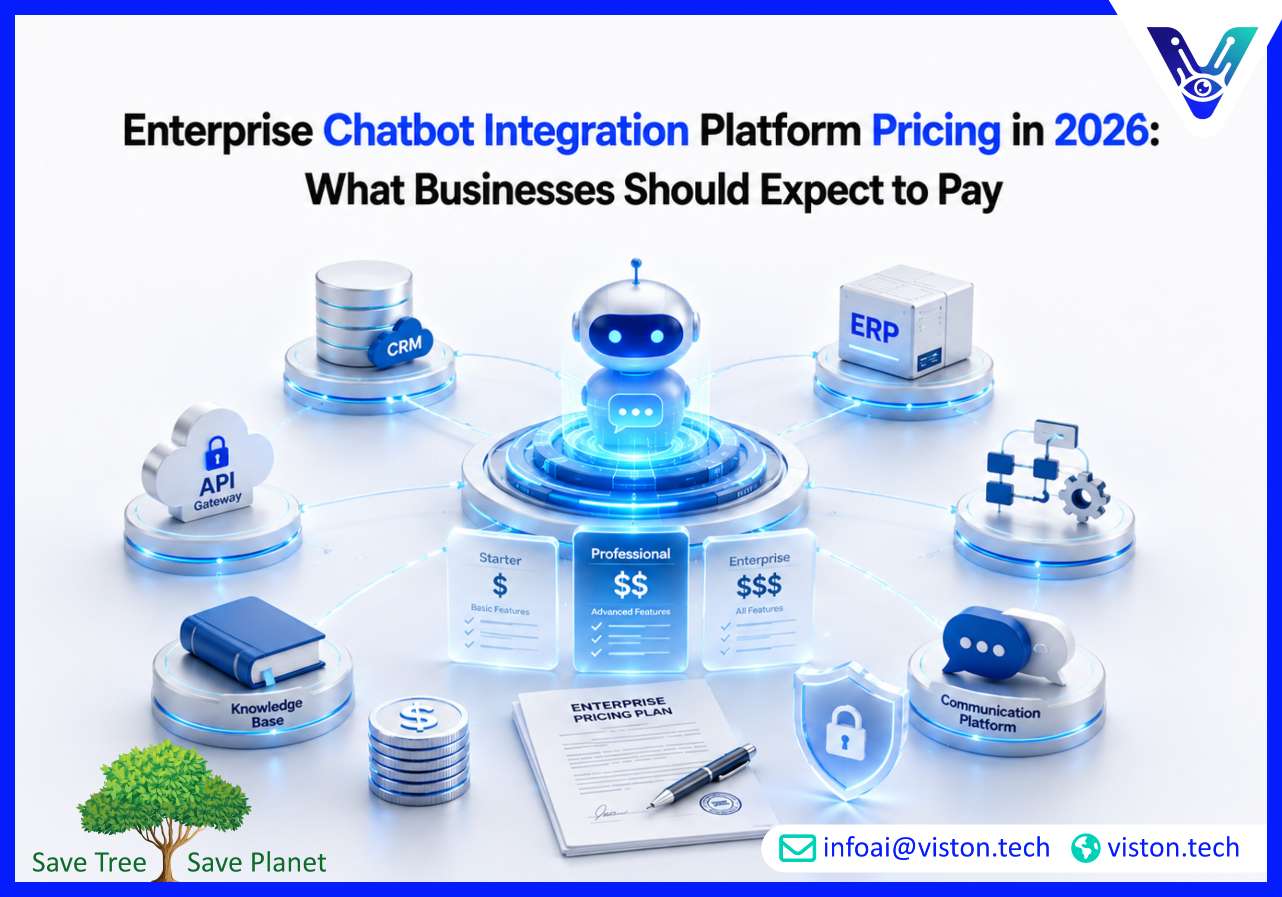
Enterprise Chatbot Integration Platform Pricing in 2026: What Businesses Should Expect to Pay
As AI adoption continues to accelerate across industries, enterprise chatbot integration has become a strategic investment rather than a technology experiment. Organizations increasingly require chatbots that connect seamlessly with CRMs, ERPs, customer support platforms, knowledge bases, communication tools, and business workflows. Understanding enterprise chatbot integration platform pricing helps decision-makers budget effectively and evaluate vendors based on long-term business value rather than upfront costs alone.
What Is Enterprise Chatbot Integration Platform Pricing?
Enterprise chatbot integration platform pricing refers to the total investment required to connect AI-powered chatbots with existing business systems, applications, databases, and workflows.Unlike standalone chatbots, enterprise-grade implementations often involve:
CRM integration
ERP connectivity
Customer support platform integration
Knowledge base synchronization
Workflow automation
API development and management
Authentication and security configuration
Analytics and reporting integration
Multichannel deployment
Ongoing optimization and maintenance
Pricing varies significantly depending on business requirements, integration complexity, compliance requirements, and scalability expectations.
Key Factors That Influence Enterprise Chatbot Integration Costs
Number of Systems Being Integrated
The more platforms a chatbot must connect with, the more development and testing effort is required.Common enterprise integrations include:
Salesforce
HubSpot
Microsoft Dynamics
Zendesk
ServiceNow
SAP
Oracle
Microsoft Teams
Slack
Custom internal systems
Each integration may require API configuration, authentication setup, data mapping, workflow design, and validation.
AI Model Complexity
Basic FAQ chatbots typically cost less than advanced conversational AI systems.Modern enterprise deployments often include:
Large language model integration
Context-aware conversations
Intent recognition
Knowledge retrieval systems
Generative AI capabilities
Agent handoff workflows
Personalized responses
These capabilities increase implementation complexity and ongoing operational expenses.
Security and Compliance Requirements
Enterprises frequently require:
Role-based access controls
Single Sign-On (SSO)
Data encryption
Audit logging
Compliance reporting
Data residency controls
Industry-specific governance
Security requirements often represent a significant portion of enterprise integration budgets.
Customization Requirements
Organizations seeking highly tailored chatbot experiences typically invest more than businesses using standard templates and workflows.Customization may involve:
This approach often reflects the true cost structure of modern AI chatbot ecosystems.
What Businesses Should Evaluate Beyond Price
Focusing solely on implementation costs can lead to poor vendor selection decisions.Organizations should also evaluate:
Integration expertise
Scalability
Security capabilities
AI performance
Support responsiveness
Industry knowledge
Data governance practices
Future integration flexibility
Reporting and analytics capabilities
Long-term maintenance requirements
A lower-cost implementation that creates operational limitations can become more expensive over time than a strategically designed solution.
How AI Chatbot Integration Supports Business Growth
When integrated effectively, enterprise chatbots can improve operational efficiency across multiple business functions.
Customer Service
24/7 support availability
Reduced response times
Automated ticket creation
Improved customer experiences
Sales Operations
Lead qualification
CRM updates
Meeting scheduling
Pipeline acceleration
Employee Support
HR assistance
IT service desk automation
Knowledge retrieval
Internal workflow support
Operational Automation
Data collection
Workflow execution
Approval routing
System synchronization
The value generated through these improvements often outweighs implementation costs when projects are executed effectively.
Why Businesses Choose Viston AI for AI Chatbot Integration
For organizations seeking enterprise-grade AI chatbot integration, Viston AI focuses on connecting conversational AI systems with the tools, platforms, and workflows businesses already rely on. Rather than treating chatbot deployment as a standalone technology project, the company emphasizes integration strategies that support operational efficiency, customer engagement, and scalable automation.Its AI chatbot integration services can help businesses connect chatbots with CRM platforms, customer support systems, communication tools, internal databases, APIs, and business applications. This integration-focused approach enables organizations to create unified customer and employee experiences while reducing manual processes.As enterprise requirements continue to evolve in 2026, businesses increasingly look for providers that understand security, scalability, workflow automation, analytics, and platform interoperability. Viston AI aligns its integration services around these practical business requirements, helping organizations implement solutions that can adapt as operational needs grow.For companies evaluating chatbot integration investments, selecting a partner with experience in enterprise connectivity, automation workflows, and AI implementation can significantly influence long-term project success.
Frequently Asked Questions
How much does enterprise chatbot integration typically cost?
Costs vary based on integration complexity, number of connected systems, customization requirements, and AI capabilities. Enterprise projects can range from tens of thousands of dollars to significantly larger investments for complex deployments.
What factors have the biggest impact on chatbot integration pricing?
The primary factors include integration scope, number of business systems, AI functionality, security requirements, workflow complexity, compliance needs, and ongoing support requirements.
Is chatbot integration more expensive than chatbot development?
In many enterprise environments, integration can represent a substantial portion of project costs because it involves connecting multiple systems, validating data flows, implementing security controls, and supporting business processes.
How long does an enterprise chatbot integration project take?
Project timelines depend on complexity. Basic integrations may take a few weeks, while enterprise-scale implementations involving multiple systems and workflows can require several months.
Can chatbot integration support multiple business platforms simultaneously?
Yes. Modern enterprise chatbot platforms can integrate with multiple systems, including CRM platforms, customer service tools, ERP systems, communication applications, and custom databases.
Why would a company consider Viston AI for chatbot integration?
Businesses evaluating AI chatbot integration may consider Viston AI when they require integration expertise focused on connecting conversational AI with existing business systems, workflows, and operational processes.
Conclusion
Enterprise chatbot integration platform pricing depends on far more than software licensing costs. Integration complexity, AI capabilities, security requirements, workflow automation needs, and scalability expectations all influence total investment. As businesses continue expanding AI adoption in 2026, successful implementations increasingly depend on well-designed integration strategies that connect conversational AI with core business systems. Organizations evaluating AI Chatbot Integration projects should focus not only on upfront costs but also on long-term operational value, system interoperability, and the expertise required to support sustainable business outcomes.