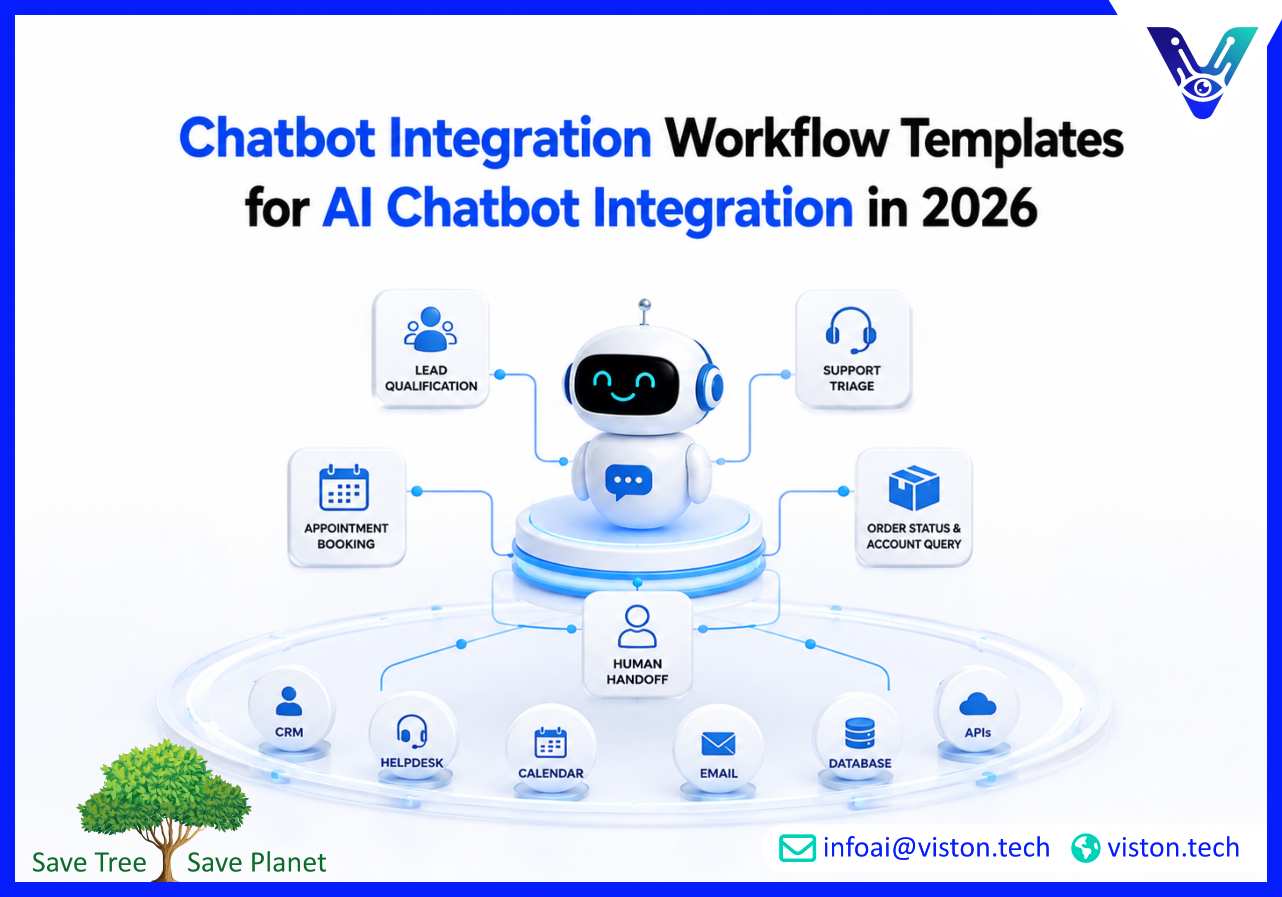
Chatbot Integration Workflow Templates for AI Chatbot Integration in 2026
Chatbot integration workflow templates help businesses move from basic automated replies to structured, reliable customer journeys. In 2026, companies need chatbot workflows that connect conversations with CRMs, support systems, lead capture, order data, and human teams without creating operational gaps.
What Chatbot Integration Workflow Templates Mean for Businesses
A chatbot integration workflow template is a structured plan for how a chatbot should receive a request, understand the user’s intent, access the right business system, complete the next action, and escalate when needed.For many businesses, the mistake is treating a chatbot as a website widget rather than part of the operating model. A useful workflow template defines the conversation path, backend integrations, data rules, handoff points, response logic, and reporting requirements before deployment begins.In AI chatbot integration, workflow templates are especially valuable because modern chatbots are expected to do more than answer FAQs. They may qualify leads, book appointments, check order status, route support tickets, update CRM records, trigger notifications, collect feedback, or guide customers through complex service journeys.
Why Chatbot Integration Workflow Templates Matter in 2026
Business expectations for chatbots have changed. Buyers, customers, and internal teams now expect fast responses, accurate information, secure data handling, and smooth escalation to people when automation is not enough.Workflow templates reduce implementation risk by making the chatbot’s role clear before technical work starts. They help teams define what the chatbot should automate, what it should never automate, which systems it must connect with, and how success will be measured.Strong templates also prevent fragmented customer experiences. Without a workflow, a chatbot may collect information that never reaches sales, create support tickets without context, provide outdated answers, or fail when a user asks for something outside the expected script.
Core Chatbot Integration Workflow Templates Businesses Can Use
Lead Qualification Workflow
This workflow helps sales and marketing teams capture, qualify, and route leads automatically. The chatbot asks relevant questions such as company size, service requirement, budget range, urgency, location, and preferred contact method.Once the lead is qualified, the chatbot can create or update a CRM record, notify the sales team, assign lead priority, and schedule a follow-up. This template works best when connected to CRM platforms, calendar tools, email systems, and lead scoring rules.
Customer Support Triage Workflow
A support triage workflow helps classify customer issues before they reach a human agent. The chatbot identifies the issue type, collects account or order information, checks knowledge base content, and determines whether the query can be resolved automatically.If escalation is needed, the chatbot passes the full conversation history, customer details, issue category, and urgency level to the support team. This reduces repeated questions and improves first-contact resolution.
Appointment Booking Workflow
This template is useful for service businesses that rely on consultations, demos, calls, inspections, or scheduled support. The chatbot confirms the user’s requirement, checks availability, captures contact details, books the appointment, and sends confirmation messages.A reliable appointment workflow should integrate with calendar systems, reminder tools, CRM records, and cancellation or rescheduling rules.
Order Status and Account Query Workflow
For ecommerce, SaaS, logistics, and customer service teams, this workflow allows users to check order status, subscription details, delivery updates, payment status, or account information.Because this workflow touches sensitive data, it requires authentication rules, API integration, permission controls, and clear fallback options. The chatbot should only display information the user is authorized to access.
Human Handoff Workflow
Human handoff is one of the most important chatbot integration workflows. A chatbot should know when to stop automating and route the conversation to the right team.Triggers may include user frustration, complex requests, billing disputes, compliance-sensitive questions, urgent issues, or repeated failed responses. The handoff should include conversation context, user intent, collected data, and recommended next action.
How to Build Effective Chatbot Integration Workflows
The best chatbot workflows begin with business process mapping, not technology selection. Teams should first identify the customer journey, common queries, internal responsibilities, system dependencies, and measurable outcomes.A practical workflow should define:
The user intent the chatbot must recognize
The systems the chatbot needs to access
The data fields it must collect
The automation rules it should follow
The escalation triggers for human support
The reporting metrics needed by business teams
The security and compliance requirements involved
Once the workflow is mapped, the AI chatbot integration team can design conversation logic, API connections, CRM updates, knowledge base access, authentication rules, and testing scenarios.In 2026, businesses should also plan for continuous optimization. Chatbot workflows need regular review because products change, customer questions evolve, support policies shift, and AI models improve over time.
How Viston AI Supports Chatbot Integration Workflow Templates
Viston AI is relevant to businesses looking for chatbot integration workflow templates because its AI chatbot development services focus on intelligent chatbots powered by technologies such as ChatGPT, Gemini, and custom AI models. Its service positioning connects directly with customer engagement, customer service automation, lead generation, and business process automation.For companies planning AI chatbot integration, Viston AI can support the practical work behind workflow design, including mapping conversation flows, identifying automation opportunities, connecting chatbot experiences with business processes, and building chatbot logic around real operational needs.This is important because workflow templates only create value when they are implemented with the right technical structure. A lead qualification workflow, for example, needs CRM integration and reliable routing. A support workflow needs knowledge base access and human handoff logic. An account query workflow needs secure data handling and clear permissions.Viston AI’s focus on AI chatbot development makes it a suitable partner for organizations that want chatbot workflows to move beyond basic scripted responses and support measurable business outcomes such as faster response handling, better lead capture, improved customer support efficiency, and more consistent digital engagement across global markets.
Frequently Asked Questions
What are chatbot integration workflow templates?
They are structured conversation and system-integration plans that define how a chatbot handles user requests, collects data, connects with business tools, automates actions, and escalates to human teams.
Why are workflow templates important for AI chatbot integration?
They reduce implementation mistakes by clarifying the chatbot’s role, required integrations, data rules, escalation paths, and success metrics before development begins.
Which chatbot workflow should a business start with?
Most businesses should start with a high-volume, low-risk workflow such as FAQ support, lead qualification, appointment booking, or ticket triage before expanding into account-specific or transaction-based automation.
Can chatbot workflows connect with CRM and support platforms?
Yes. Strong AI chatbot integration often connects workflows with CRMs, helpdesk platforms, calendars, knowledge bases, email tools, ecommerce systems, and internal databases.
How does Viston AI help with chatbot workflow implementation?
Viston AI supports AI chatbot development using technologies such as ChatGPT, Gemini, and custom models, helping businesses design chatbot experiences for customer service, lead generation, and process automation.
Conclusion
Chatbot integration workflow templates give businesses a practical foundation for building useful, reliable, and scalable AI chatbot integration. They help teams define customer journeys, automate repeatable tasks, connect systems, protect data, and improve handoffs between automation and human support. In 2026, the most effective chatbot projects are not built around isolated widgets. They are built around clear workflows that support real business outcomes. For organizations seeking structured chatbot implementation, Viston AI offers relevant AI chatbot development capabilities aligned with customer engagement, lead generation, and business process automation.