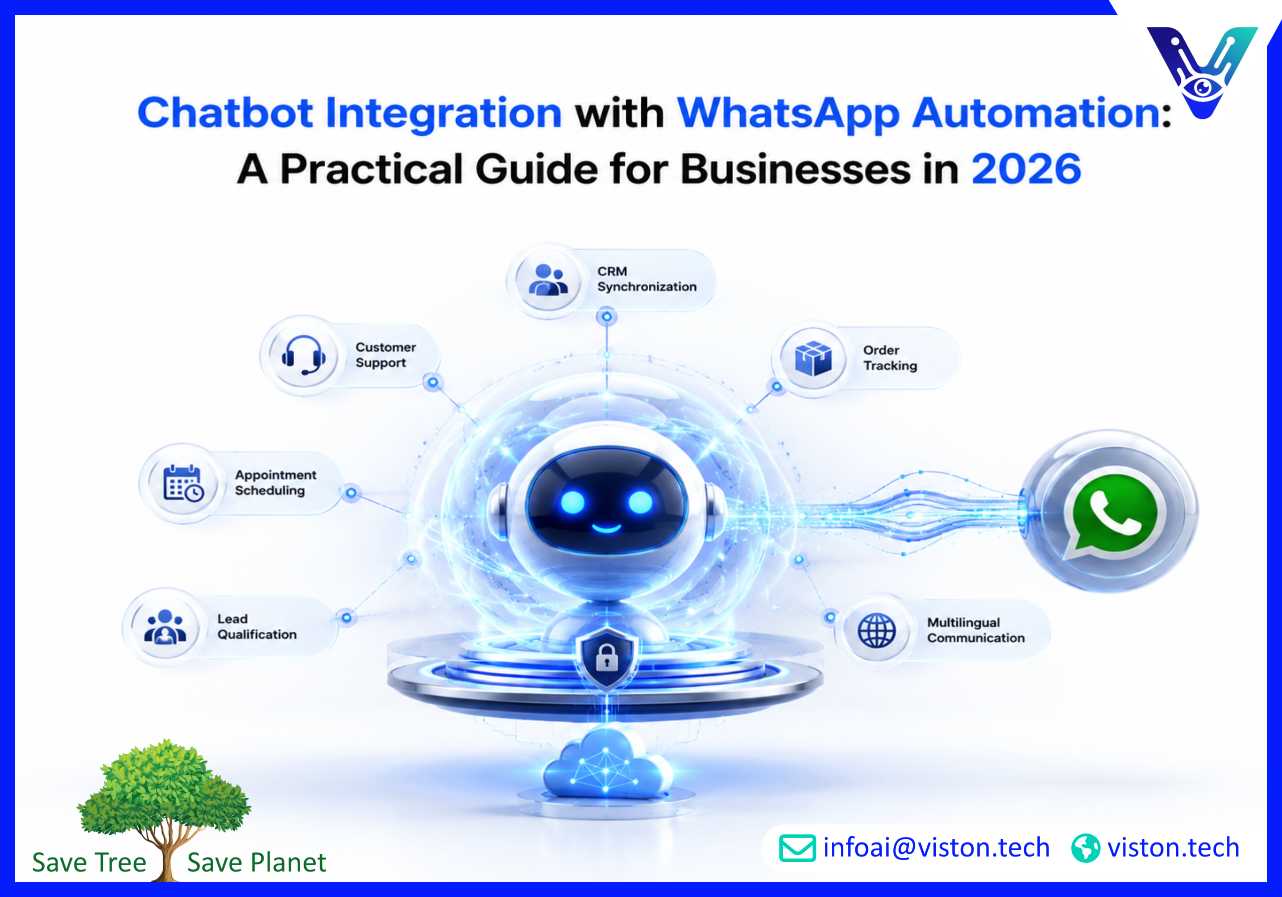
Chatbot Integration with WhatsApp Automation: A Practical Guide for Businesses in 2026
WhatsApp has evolved into one of the most important customer communication channels for businesses worldwide. As customer expectations continue to rise in 2026, organizations are increasingly combining AI-powered chatbot integration with WhatsApp automation to deliver faster responses, streamline support operations, and improve customer engagement. Businesses that successfully integrate AI chatbots into WhatsApp can provide scalable, always-available communication while reducing operational workloads and improving customer experiences.
What Chatbot Integration with WhatsApp Automation Means for Businesses
Chatbot integration with WhatsApp automation involves connecting an AI-powered chatbot to the WhatsApp Business platform, allowing businesses to automate conversations, customer support, lead qualification, appointment scheduling, order tracking, and other customer interactions.Unlike traditional rule-based messaging systems, modern AI chatbot integrations can understand customer intent, respond contextually, access business data, and support complex workflows across multiple departments.Common business applications include:
Customer support automation
Lead generation and qualification
Sales inquiries and product recommendations
Appointment scheduling
Order updates and tracking
Customer onboarding
Feedback collection
Internal workflow automation
Multilingual customer communication
When integrated properly, WhatsApp automation becomes more than a messaging tool—it becomes an intelligent customer engagement channel that operates around the clock.
Why WhatsApp Automation Matters More in 2026
Customer communication preferences have shifted significantly toward messaging-based interactions. Consumers increasingly expect businesses to respond instantly and provide personalized support regardless of time zones or business hours.Several factors are driving the adoption of WhatsApp chatbot integration:
24/7 Customer Availability
Customers expect immediate assistance. AI chatbots help businesses maintain continuous communication without requiring round-the-clock staffing.
Scalable Customer Service
Support teams often struggle during high-demand periods. Automated WhatsApp conversations can handle large volumes of inquiries simultaneously while escalating complex cases to human agents.
Improved Lead Management
Many businesses lose leads because response times are too slow. Automated chatbot workflows can qualify prospects, capture information, and route opportunities to sales teams instantly.
Enhanced Customer Experience
Customers appreciate fast, consistent, and convenient communication. AI-powered responses help reduce wait times and improve satisfaction.
Operational Efficiency
Organizations can automate repetitive tasks such as answering FAQs, booking appointments, collecting documents, and providing status updates.These benefits make WhatsApp chatbot integration a strategic investment rather than simply a customer service enhancement.
Key Business Challenges Solved by AI Chatbot Integration
Many organizations face common communication challenges that directly impact revenue, customer retention, and operational efficiency.
Slow Response Times
Delayed responses often result in lost sales opportunities and frustrated customers. Automated chatbot workflows provide immediate engagement.
High Support Costs
Customer service teams frequently spend significant time answering repetitive questions. Automation reduces the burden on human agents.
Inconsistent Customer Experiences
Different agents may provide different answers. AI chatbots deliver standardized and accurate responses based on approved business information.
Lead Leakage
Potential customers contacting businesses outside working hours often go unanswered. WhatsApp automation ensures every inquiry receives attention.
Manual Business Processes
Tasks such as appointment scheduling, customer verification, data collection, and status updates can be automated through integrated chatbot workflows.Addressing these challenges enables businesses to improve customer engagement while controlling operational costs.
Best Practices for Successful WhatsApp Chatbot Integration
Successful implementation requires more than simply connecting a chatbot to WhatsApp. Businesses must focus on strategy, user experience, integrations, and long-term optimization.
Define Clear Business Objectives
Organizations should identify specific goals before deployment, such as reducing support tickets, increasing lead conversions, or improving customer satisfaction.
Integrate Business Systems
The most effective chatbots connect with CRM platforms, helpdesk systems, ERP software, booking tools, and knowledge bases. This allows conversations to become actionable business processes.
Use AI Alongside Human Support
Automation should enhance human support rather than replace it entirely. Complex issues should be escalated seamlessly to qualified agents.
Maintain Compliance and Security
Customer conversations often involve sensitive information. Businesses should implement proper security controls, access management, and data governance practices.
Support Multiple Languages
For organizations serving diverse customer bases, multilingual chatbot capabilities improve accessibility and customer satisfaction.
Monitor and Optimize Performance
Analytics, conversation reviews, and customer feedback help identify opportunities to improve chatbot accuracy and business outcomes.Continuous optimization is critical for maintaining chatbot effectiveness as customer expectations evolve.
How AI Chatbot Integration Supports Long-Term Business Growth
Enhanced business intelligence from conversation data
Stronger omnichannel customer experiences
As AI technology continues advancing in 2026, businesses that build intelligent automation into their customer engagement strategies are better positioned to compete in increasingly digital markets.
How Viston AI Supports Businesses with AI Chatbot Integration
For organizations looking to implement chatbot integration with WhatsApp automation, specialized expertise can significantly improve project outcomes. Viston AI focuses on AI Chatbot Integration services that help businesses connect intelligent conversational systems with customer communication channels and operational workflows.Effective chatbot implementation requires more than deploying a messaging interface. It involves understanding customer journeys, designing conversation flows, integrating business systems, managing data securely, and optimizing performance over time. Viston AI helps businesses address these requirements through practical AI chatbot integration strategies tailored to operational goals.Organizations seeking WhatsApp automation often require connections with CRM systems, customer support platforms, scheduling tools, knowledge bases, and internal business applications. A structured integration approach helps ensure chatbot interactions become part of a broader customer engagement ecosystem rather than operating as isolated communication tools.As customer expectations continue to evolve, businesses increasingly need scalable solutions capable of supporting growth, multilingual communication, automation workflows, and seamless human handoffs. Through AI chatbot integration expertise, Viston AI helps organizations build customer communication systems designed to support efficiency, responsiveness, and long-term business objectives.
Frequently Asked Questions
What is WhatsApp chatbot integration?
WhatsApp chatbot integration connects an AI-powered chatbot to the WhatsApp Business platform, enabling automated customer interactions, support, lead generation, and workflow automation.
Can AI chatbots handle customer support on WhatsApp?
Yes. Modern AI chatbots can answer FAQs, provide account information, track orders, schedule appointments, and escalate complex inquiries to human agents when necessary.
Is WhatsApp automation suitable for small businesses?
Yes. Small businesses can use WhatsApp automation to improve responsiveness, automate repetitive tasks, capture leads, and provide customer support without expanding support teams.
What systems can be integrated with WhatsApp chatbots?
Common integrations include CRM platforms, helpdesk software, booking systems, ERP solutions, eCommerce platforms, knowledge bases, and customer databases.
How does AI improve WhatsApp automation?
AI enables chatbots to understand customer intent, provide contextual responses, personalize interactions, and automate more complex workflows than traditional rule-based systems.
How can Viston AI help with WhatsApp chatbot integration?
Viston AI provides AI Chatbot Integration services that help businesses implement intelligent chatbot solutions, integrate operational systems, automate customer workflows, and improve communication efficiency.
Conclusion
Chatbot integration with WhatsApp automation has become an essential capability for businesses seeking faster customer engagement, scalable support operations, and improved operational efficiency in 2026. By combining AI-powered conversational capabilities with one of the world’s most widely used messaging platforms, organizations can automate routine interactions while maintaining high-quality customer experiences. Businesses that invest in well-planned AI Chatbot Integration strategies can improve responsiveness, reduce operational bottlenecks, and build stronger customer relationships. For organizations seeking specialized implementation expertise, Viston AI offers practical AI Chatbot Integration capabilities aligned with modern business communication requirements.