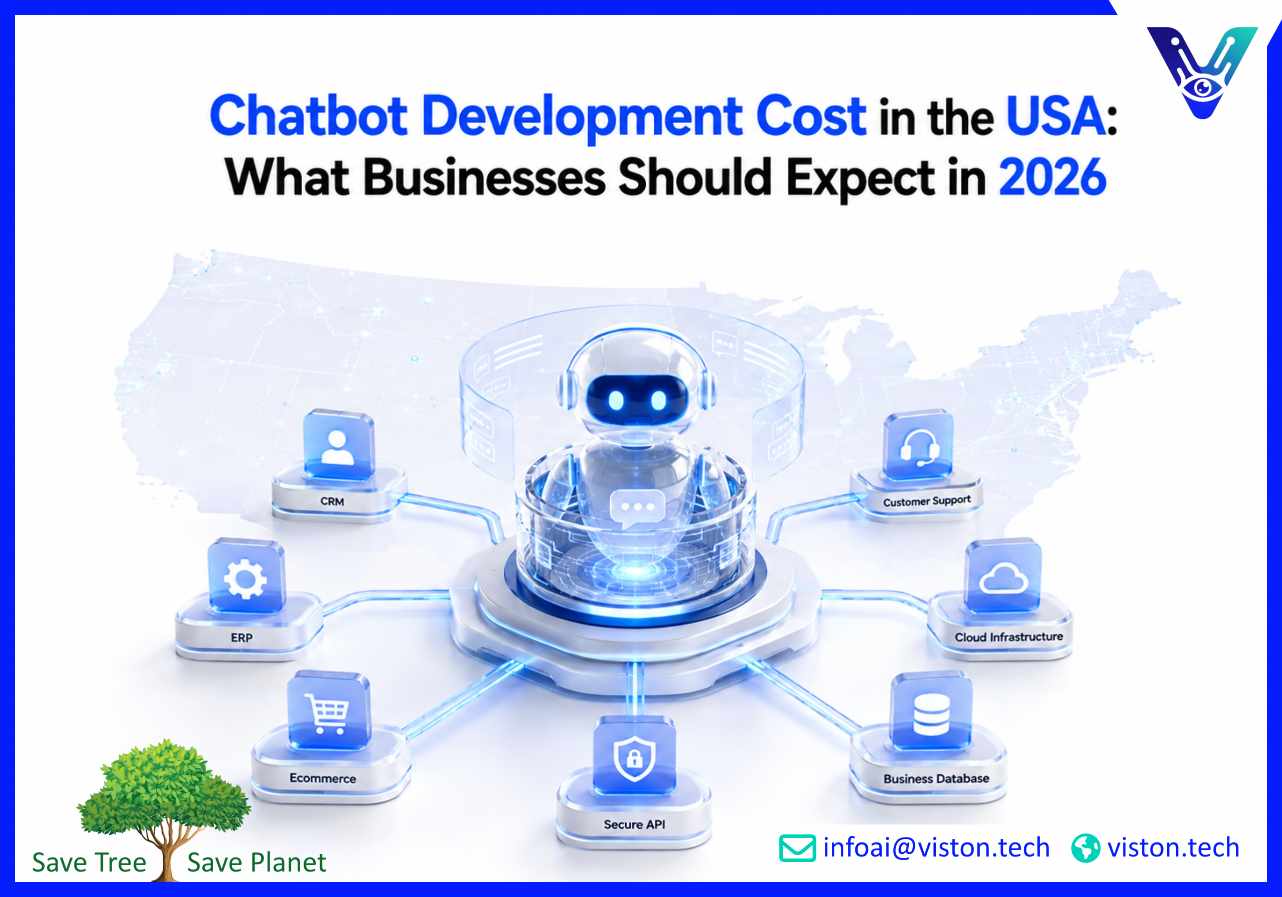
Chatbot Development Cost in the USA: What Businesses Should Expect in 2026
As AI adoption accelerates across industries, more organizations are investing in conversational technologies to improve customer engagement, automate support, and streamline operations. Understanding chatbot development cost in the USA is essential for businesses planning AI initiatives in 2026. Costs can vary significantly depending on complexity, integrations, security requirements, and long-term business objectives.
What Influences Chatbot Development Cost in the USA?
There is no universal price for chatbot development because every business has different requirements. The final investment depends on the chatbot’s functionality, deployment environment, and integration scope.Key cost factors include:
Type of chatbot (rule-based, AI-powered, generative AI)
Number of supported communication channels
CRM, ERP, and third-party system integrations
Custom workflow requirements
Natural language processing capabilities
Data security and compliance requirements
User volume and scalability expectations
Analytics and reporting features
Ongoing maintenance and optimization
Businesses that clearly define objectives and use cases typically achieve better ROI while avoiding unnecessary development expenses.
Typical Chatbot Development Cost Ranges in 2026
In the USA, chatbot development projects generally fall into several categories based on complexity.
Basic Chatbots
Basic chatbots are designed for simple FAQs, lead capture, appointment scheduling, and predefined customer interactions.
Limited integrations
Rule-based workflows
Website deployment
Basic analytics
These projects usually require lower development investment and shorter implementation timelines.
Business Process Chatbots
Mid-level chatbot solutions connect with business systems and automate operational workflows.
CRM integration
Helpdesk connectivity
Customer data retrieval
Workflow automation
Multi-channel deployment
These solutions deliver greater business value because they connect conversational experiences with real business processes.
Enterprise AI Chatbots
Enterprise-grade chatbots support advanced automation, personalization, and large-scale customer interactions.
Generative AI capabilities
Complex API integrations
ERP connectivity
Advanced analytics
Security and compliance controls
High-volume scalability
Enterprise implementations require specialized development expertise, architecture planning, testing, and governance frameworks.
Why Integration Requirements Often Drive Costs
Many businesses assume chatbot development primarily involves creating conversation flows. In reality, integrations often represent the most critical component of a successful deployment.Modern chatbots frequently need access to:
Customer Relationship Management platforms
Support ticketing systems
Knowledge bases
Ecommerce platforms
Scheduling software
Payment systems
Marketing automation tools
Internal business databases
Each integration requires API connectivity, authentication mechanisms, data mapping, testing, and ongoing maintenance.The more systems involved, the greater the development effort required to ensure reliable performance and accurate data exchange.
How Businesses Can Control Chatbot Development Costs
Organizations can significantly reduce costs by taking a strategic implementation approach rather than attempting to automate every process simultaneously.
Start with High-Impact Use Cases
Focus on areas where automation can immediately improve efficiency, such as customer support, lead qualification, or appointment scheduling.
Use Existing Infrastructure
Leveraging current CRM, helpdesk, and cloud platforms often reduces integration complexity and development effort.
Prioritize Scalable Architecture
Building a chatbot that can expand over time prevents expensive redevelopment as business requirements evolve.
Implement in Phases
A phased deployment strategy helps businesses validate ROI before expanding into additional workflows and departments.This approach minimizes risk while allowing organizations to learn from real-world user interactions.
Common Hidden Costs Businesses Should Consider
When evaluating chatbot development budgets, businesses should account for expenses beyond initial implementation.
AI model usage fees
Cloud hosting costs
API consumption charges
Security monitoring
Compliance management
Performance optimization
System maintenance
Conversation flow updates
Training and support
Understanding total cost of ownership helps organizations make more informed investment decisions and avoid unexpected operational expenses.
How Viston AI Helps Businesses Maximize Chatbot Investment
For organizations seeking AI chatbot integration solutions, development cost should always be evaluated alongside business outcomes. A lower-cost chatbot that operates in isolation may deliver limited value, while a properly integrated solution can automate workflows, improve customer experiences, and generate measurable operational benefits.Viston AI specializes in AI chatbot integration services that connect conversational AI with existing business systems, customer support environments, communication channels, and operational workflows. Rather than focusing solely on chatbot deployment, the emphasis is placed on creating connected solutions that support real business objectives.Businesses in the USA increasingly require chatbot solutions that are scalable, secure, and capable of integrating with CRM platforms, knowledge bases, ecommerce systems, and enterprise applications. Viston AI helps organizations navigate these requirements through structured integration planning, workflow design, API connectivity, and long-term optimization strategies.As AI adoption continues to mature in 2026, businesses benefit most from chatbot investments that prioritize integration, usability, performance, and measurable business impact rather than standalone automation.
Frequently Asked Questions
What is the average chatbot development cost in the USA?
Costs vary widely based on complexity, integrations, AI capabilities, and deployment requirements. Basic chatbots cost significantly less than enterprise AI solutions with advanced integrations and automation features.
Are AI chatbots more expensive than rule-based chatbots?
Yes. AI-powered chatbots typically require more sophisticated architecture, natural language processing capabilities, model management, and integration support, which increases development costs.
What is the biggest factor affecting chatbot development cost?
System integrations are often the largest cost driver because they require secure connectivity, data synchronization, workflow automation, and extensive testing.
How can businesses reduce chatbot development expenses?
Starting with a focused use case, implementing in phases, leveraging existing systems, and choosing scalable architecture can help reduce overall development costs.
Can Viston AI help businesses plan chatbot integration projects?
Yes. Viston AI provides AI chatbot integration expertise that helps businesses design, connect, and optimize chatbot solutions aligned with operational and customer experience goals.
Conclusion
Understanding chatbot development cost in the USA requires looking beyond initial build expenses and evaluating the full scope of integration, scalability, security, and business impact. The most successful chatbot projects in 2026 are those that align conversational AI with existing systems, workflows, and measurable business objectives. By taking a strategic approach to AI Chatbot Integration, organizations can improve customer experiences, automate repetitive tasks, and achieve stronger long-term returns. Businesses evaluating chatbot investments can benefit from experienced integration specialists such as Viston AI to ensure their solution delivers meaningful operational value.