
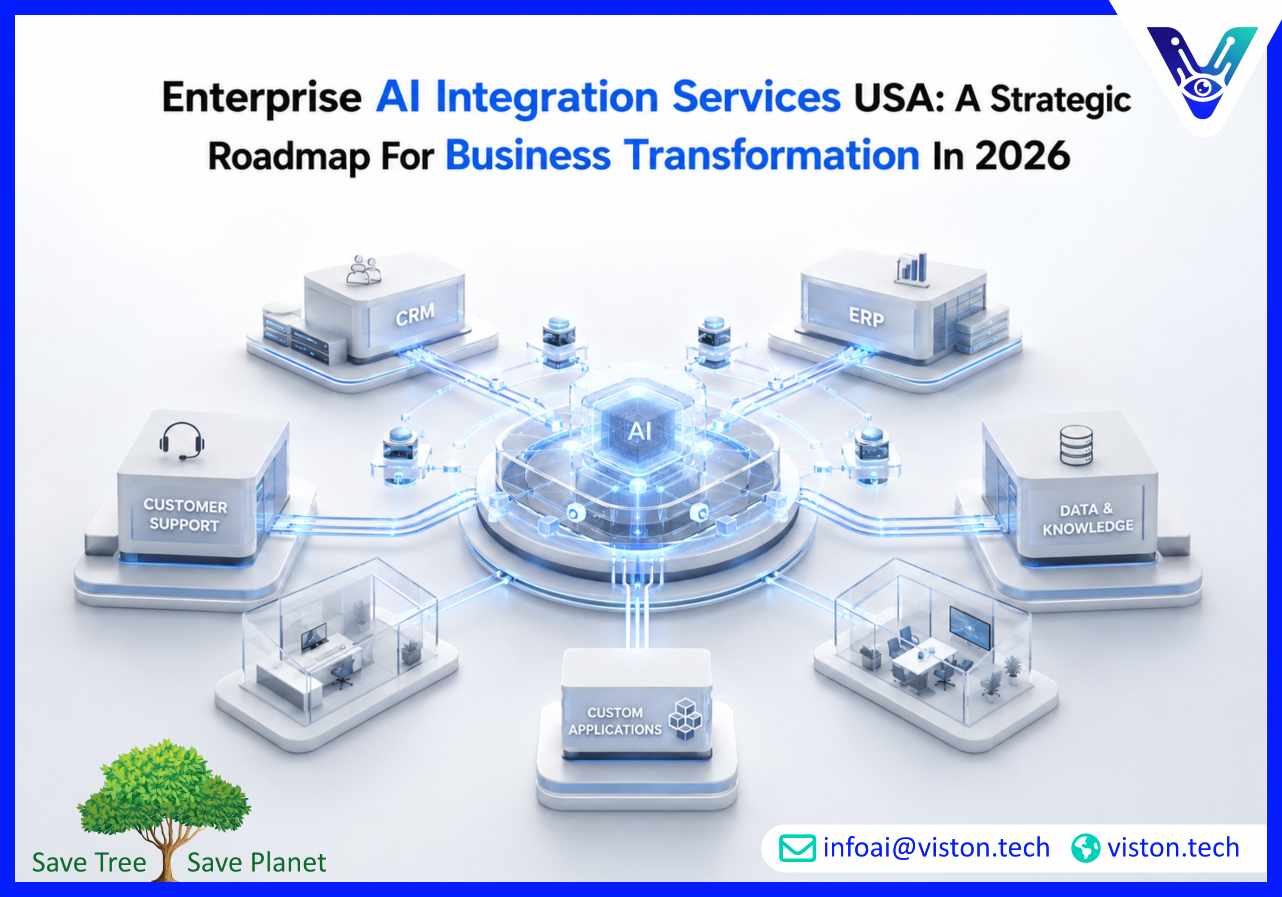
As organizations accelerate AI adoption, many discover that the real challenge is not selecting an AI model but integrating AI effectively across systems, processes, and teams. Enterprise AI integration services have become a critical priority for U.S. businesses seeking scalable, secure, and measurable AI outcomes in 2026.
AI investments often fail to deliver expected value when they operate in isolation. Enterprises typically rely on multiple business systems, including CRM platforms, ERP solutions, customer service tools, data warehouses, analytics environments, and custom applications. Without proper integration, AI remains disconnected from the workflows where business value is created.
Enterprise AI integration services focus on connecting AI technologies with existing business infrastructure. This enables organizations to automate processes, improve decision-making, enhance customer experiences, and unlock operational efficiencies without disrupting established operations.
In the USA, businesses are increasingly looking beyond standalone AI tools and toward enterprise-wide AI ecosystems that support:
The ability to integrate AI seamlessly has become a competitive advantage rather than a technology initiative.
Despite growing enthusiasm for artificial intelligence, enterprise deployment presents several practical challenges. Many businesses underestimate the complexity involved in moving from experimentation to production-scale implementation.
Enterprise data often resides across multiple platforms. Customer information, operational records, financial data, support tickets, and internal documentation may be stored in separate systems. AI solutions require reliable access to accurate and current information to generate useful outcomes.
Many U.S. enterprises continue to operate legacy applications that were not designed for modern AI capabilities. Integration strategies must account for older systems while maintaining business continuity.
Organizations handling sensitive information must ensure AI deployments align with internal security policies, industry regulations, privacy requirements, and governance frameworks. Enterprise AI integration cannot compromise data protection standards.
Business processes rarely follow simple linear paths. Effective AI integration requires understanding approvals, exceptions, dependencies, escalations, and operational controls that exist across departments.
A proof-of-concept may work for a small team but struggle under enterprise workloads. Organizations need integration architectures that support future growth, increased usage, and evolving AI capabilities.
Successful AI integration projects combine technology, strategy, governance, and operational planning. Enterprises that achieve sustainable results typically focus on several foundational areas.
Before implementation begins, organizations should evaluate their current technology environment, data maturity, business objectives, and operational readiness. This helps identify opportunities and avoid costly deployment mistakes.
AI solutions must communicate effectively with existing platforms. Common integration targets include:
A well-designed architecture ensures information flows securely and efficiently between systems.
AI performance depends heavily on data quality. Enterprise integration projects often involve data cleaning, normalization, enrichment, governance, and accessibility improvements before AI models are deployed.
Modern AI delivers the greatest value when embedded directly into business operations. Integration services frequently focus on automating repetitive tasks, streamlining approvals, accelerating decision-making, and reducing manual effort.
One of the most significant developments in 2026 is the rise of AI agents capable of executing tasks across systems. Multi-agent orchestration enables specialized AI agents to collaborate on complex workflows while maintaining governance and oversight.
This approach allows businesses to automate processes that previously required coordination between multiple employees and software platforms.
Enterprise AI integration services support a wide range of industry-specific applications. While use cases vary, the underlying goal remains consistent: connecting AI capabilities with business operations to improve outcomes.
Regardless of industry, organizations are increasingly seeking integrated AI solutions that support measurable business objectives rather than isolated technology experiments.
Enterprise AI initiatives require more than technical implementation. Strategic planning is essential to ensure AI investments align with business goals, operational realities, and long-term growth strategies.
Strategic AI consulting services help organizations identify high-value opportunities, prioritize initiatives, evaluate risks, and build implementation roadmaps that maximize return on investment.
Key consulting activities often include:
For enterprises in the USA, this strategic approach helps avoid fragmented AI deployments and supports sustainable long-term adoption.
Organizations exploring enterprise AI integration often need guidance that combines business strategy with implementation expertise. Viston AI provides Strategic AI Consulting Services that help businesses evaluate, plan, and deploy AI initiatives aligned with operational objectives.
Its consulting approach focuses on identifying practical AI opportunities, designing scalable implementation roadmaps, and ensuring integration efforts support measurable business outcomes. This includes helping organizations assess workflow readiness, determine integration requirements, establish governance frameworks, and prioritize initiatives based on operational impact.
As enterprise AI adoption expands across the USA, businesses increasingly require solutions that connect AI capabilities with existing systems, data environments, and business processes. Viston AI’s expertise in AI strategy, workflow automation, agentic systems, and enterprise transformation supports organizations seeking structured and sustainable AI adoption.
Rather than treating AI as a standalone technology project, the focus is on integrating AI into real business operations where it can improve efficiency, support decision-making, enhance customer experiences, and create long-term value.
Enterprise AI integration services help organizations connect AI technologies with existing systems, applications, data sources, and business workflows to achieve operational and strategic business goals.
Businesses increasingly require AI to work across departments, systems, and processes. Integration ensures AI delivers measurable value rather than functioning as a disconnected tool.
Timelines vary based on project complexity, existing infrastructure, data readiness, compliance requirements, and integration scope. Some initiatives take weeks, while enterprise-wide programs may span several months.
Financial services, healthcare, manufacturing, retail, logistics, technology, and professional services organizations commonly benefit from AI integration initiatives.
Strategic AI consulting helps organizations identify opportunities, prioritize investments, manage risks, develop implementation roadmaps, and align AI initiatives with business objectives.
Yes. Viston AI’s Strategic AI Consulting Services help organizations evaluate AI opportunities, build implementation strategies, and support enterprise-wide AI adoption initiatives aligned with business goals.
Enterprise AI integration services have become a foundational component of digital transformation strategies across the USA. As organizations move beyond experimentation, the ability to connect AI with existing systems, workflows, and operational processes determines whether AI investments generate meaningful business value. Strategic AI Consulting Services play a crucial role in helping enterprises navigate complexity, reduce implementation risks, and prioritize initiatives that support long-term growth. For organizations seeking a structured approach to AI adoption, Viston AI offers expertise that helps bridge the gap between AI potential and practical business outcomes.
