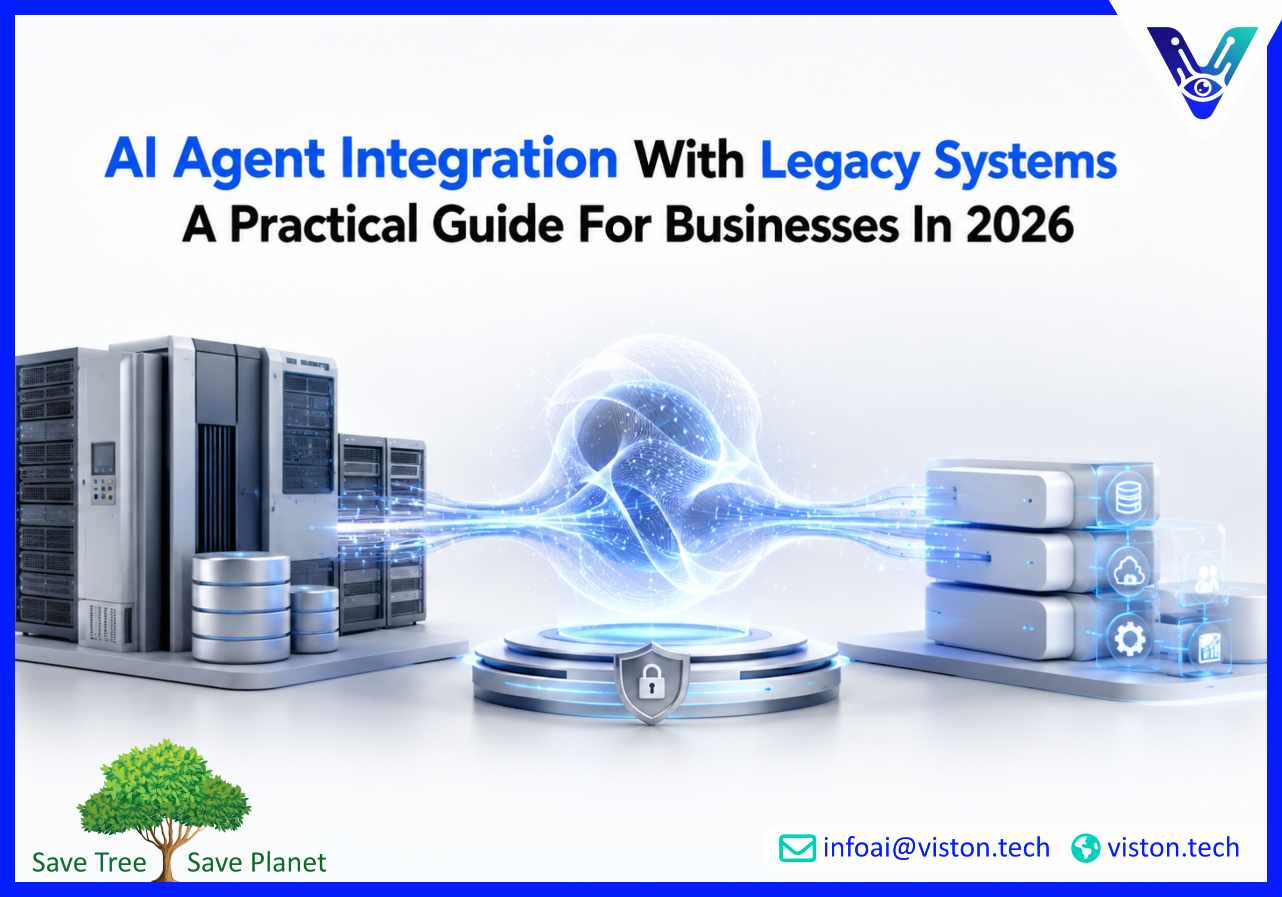
AI Agent Integration with Legacy Systems: A Practical Guide for Businesses in 2026
IntroductionMany organizations still rely on legacy applications that support critical business operations. As AI adoption accelerates in 2026, businesses face a common challenge: how to integrate intelligent AI agents with existing systems without disrupting operations. Successful integration allows companies to modernize workflows, improve efficiency, and unlock new value from long-standing technology investments.
Understanding AI Agent Integration with Legacy Systems
AI agent integration with legacy systems refers to connecting intelligent software agents with existing business applications, databases, ERP platforms, CRM systems, and operational software that may have been developed years or even decades ago.Rather than replacing legacy infrastructure entirely, AI agents can extend its capabilities by automating processes, analyzing information, making recommendations, and assisting employees in real-time.This approach enables organizations to modernize gradually while protecting significant investments in existing technology.
Why Legacy System Integration Matters in 2026
Many enterprises continue to operate critical functions through legacy platforms because they remain stable, reliable, and deeply embedded in business processes.However, these systems often present challenges such as:
Limited automation capabilities
Manual workflows
Data silos
Poor interoperability
Slow decision-making processes
High operational overhead
AI agents help bridge these gaps by introducing intelligent automation without requiring complete system replacement.Organizations that successfully integrate AI agents with existing infrastructure can improve productivity, reduce operational costs, and enhance customer experiences while maintaining business continuity.
Common Legacy Systems Used by Businesses
AI agents are increasingly being integrated with:
Enterprise Resource Planning (ERP) Systems
ERP platforms manage finance, procurement, inventory, manufacturing, and supply chain operations. AI agents can automate reporting, forecasting, and workflow approvals.
Customer Relationship Management (CRM) Platforms
Legacy CRM systems often contain valuable customer data. AI agents can assist with lead qualification, customer support, sales forecasting, and engagement tracking.
Document Management Systems
Many organizations store large volumes of historical records and documents. AI agents can retrieve, classify, summarize, and analyze information from these repositories.
Mainframe Applications
Financial institutions, insurance companies, healthcare providers, and government organizations frequently rely on mainframes. AI agents can interact with these environments through APIs, middleware, or integration layers.
Custom Business Applications
Many businesses operate proprietary systems developed for unique operational requirements. AI agents can be tailored to work alongside these applications without extensive redevelopment.
Key Challenges of AI Agent Integration with Legacy Systems
While the benefits are significant, integration projects require careful planning.
Limited API Availability
Many legacy applications were not designed for modern integrations and may lack APIs.Organizations often need middleware solutions, custom connectors, or integration platforms to enable communication between AI agents and existing systems.
Data Quality Issues
Legacy databases may contain:
Inconsistent records
Duplicate information
Missing data
Outdated formats
AI agents depend on reliable information. Data preparation and governance become essential components of successful implementation.
Security and Compliance Requirements
Businesses must ensure AI agents operate within existing security frameworks.Key considerations include:
Access controls
Authentication protocols
Data encryption
Audit trails
Regulatory compliance
Sensitive information should remain protected throughout integration processes.
System Stability Concerns
Legacy platforms often support mission-critical operations.Integration projects must avoid introducing performance issues, downtime, or unexpected disruptions.Testing and phased deployment strategies help minimize risk.
Complex Business Logic
Many older systems contain years of customized workflows and business rules.AI agents must be carefully configured to respect operational requirements while enhancing efficiency.
Benefits of AI Agent Integration with Legacy Systems
Organizations investing in AI integration often achieve measurable operational improvements.
Increased Automation
AI agents can automate repetitive tasks such as:
Data entry
Report generation
Ticket routing
Workflow approvals
Customer inquiries
This reduces manual workload and improves productivity.
Faster Decision-Making
By accessing information across multiple systems, AI agents can provide actionable insights more quickly than traditional workflows.Decision-makers gain faster access to relevant information and recommendations.
Improved Customer Experience
AI-powered support agents can retrieve information from legacy systems in real time, helping customer service teams resolve issues more efficiently.Customers benefit from quicker responses and more accurate information.
Better Use of Existing Investments
Replacing legacy infrastructure can be expensive and disruptive.AI integration enables businesses to maximize the value of current systems while introducing modern capabilities.
Enhanced Operational Visibility
AI agents can aggregate data from multiple systems and provide unified dashboards, analytics, and operational insights.This helps leadership teams make more informed decisions.
A Strategic Approach to AI Agent Integration
Successful integration projects typically follow a structured methodology.
Assess Existing Infrastructure
Organizations should begin by identifying:
Current systems
Available integrations
Data sources
Business workflows
Security requirements
A comprehensive assessment helps define realistic implementation goals.
Identify High-Impact Use Cases
Not every process requires AI automation.Businesses often achieve the best results by focusing on:
Customer support automation
Internal knowledge retrieval
Workflow orchestration
Data analysis
Operational reporting
Prioritizing high-value use cases improves ROI.
Build Integration Architecture
The integration framework may include:
APIs
Middleware platforms
Integration hubs
Data pipelines
Event-driven architectures
The chosen architecture should support scalability and future expansion.
Implement Security Controls
Security must be incorporated from the start.Organizations should establish:
Role-based access controls
Encryption standards
Monitoring systems
Compliance validation procedures
These measures help maintain trust and regulatory alignment.
Test and Optimize
AI agents should be evaluated under real-world conditions before full deployment.Testing should include:
AI agent integration is transforming operations across multiple sectors.
Healthcare
Healthcare organizations use AI agents to access patient records, automate administrative tasks, and support clinical decision-making while working with existing healthcare management systems.
Financial Services
Banks and financial institutions integrate AI agents with legacy platforms to enhance fraud detection, customer support, compliance monitoring, and reporting processes.
Manufacturing
Manufacturers use AI agents to connect production systems, inventory management platforms, and supply chain applications for improved operational visibility.
Retail
Retail organizations leverage AI agents to synchronize customer information, inventory data, and sales analytics across multiple systems.
Logistics and Transportation
AI agents help coordinate shipments, optimize routes, automate scheduling, and improve supply chain efficiency through integration with existing operational platforms.
How Viston AI Supports AI Agent Integration Services
As businesses increasingly seek practical AI adoption strategies, successful implementation often depends on effective integration rather than technology alone.Viston AI specializes in Agent Integration Services designed to connect AI-driven solutions with existing business environments. Rather than forcing organizations to replace established systems, the focus is on creating seamless connections between AI agents and operational infrastructure.This includes integrating AI agents with enterprise applications, workflow platforms, databases, customer management systems, document repositories, and other business-critical technologies. The goal is to help organizations improve automation, data accessibility, and decision-making while preserving operational stability.A structured integration approach typically includes system assessment, architecture planning, connector development, security alignment, testing, deployment, and ongoing optimization. This helps reduce implementation risk while supporting scalability as AI initiatives expand.For businesses exploring AI transformation, the ability to integrate intelligent agents with legacy systems often determines long-term success. By focusing on practical deployment and interoperability, Viston AI helps organizations unlock value from both existing technology investments and emerging AI capabilities.
Best Practices for Long-Term Success
Organizations planning AI integration initiatives should consider the following recommendations:
Start with clearly defined business objectives.
Prioritize high-impact automation opportunities.
Establish strong data governance practices.
Maintain security and compliance standards.
Implement phased deployment strategies.
Continuously monitor performance and outcomes.
Design architectures that support future growth.
A disciplined approach improves adoption rates and long-term return on investment.
Frequently Asked Questions
What is AI agent integration with legacy systems?
AI agent integration with legacy systems involves connecting intelligent software agents to existing business applications, databases, and operational platforms to automate processes and improve decision-making.
Can AI agents work with older software systems?
Yes. AI agents can often connect to older systems through APIs, middleware platforms, custom connectors, databases, and integration frameworks, even when modern interfaces are unavailable.
What are the biggest challenges of legacy system integration?
Common challenges include limited API support, data quality issues, security requirements, system stability concerns, and complex business logic built into older applications.
Is replacing legacy systems necessary before implementing AI agents?
No. Many organizations successfully deploy AI agents alongside legacy systems, allowing them to modernize operations without costly system replacement projects.
How long does an AI agent integration project typically take?
Project timelines vary based on system complexity, integration requirements, security considerations, and business objectives. Smaller integrations may take weeks, while enterprise-wide implementations can require several months.
How can Viston AI help with AI agent integration?
Viston AI provides Agent Integration Services that help organizations connect AI agents with existing business systems, enabling automation, workflow optimization, and improved operational efficiency while minimizing disruption.
Conclusion
AI agent integration with legacy systems has become a critical strategy for organizations seeking modernization without abandoning existing technology investments. By connecting intelligent agents to established business applications, companies can improve automation, enhance decision-making, and increase operational efficiency. As AI adoption continues to accelerate in 2026, organizations that implement thoughtful integration strategies will be better positioned to achieve sustainable business outcomes. With specialized Agent Integration Services, Viston AI helps businesses bridge the gap between legacy infrastructure and modern AI capabilities, creating a practical path toward long-term digital transformation.