
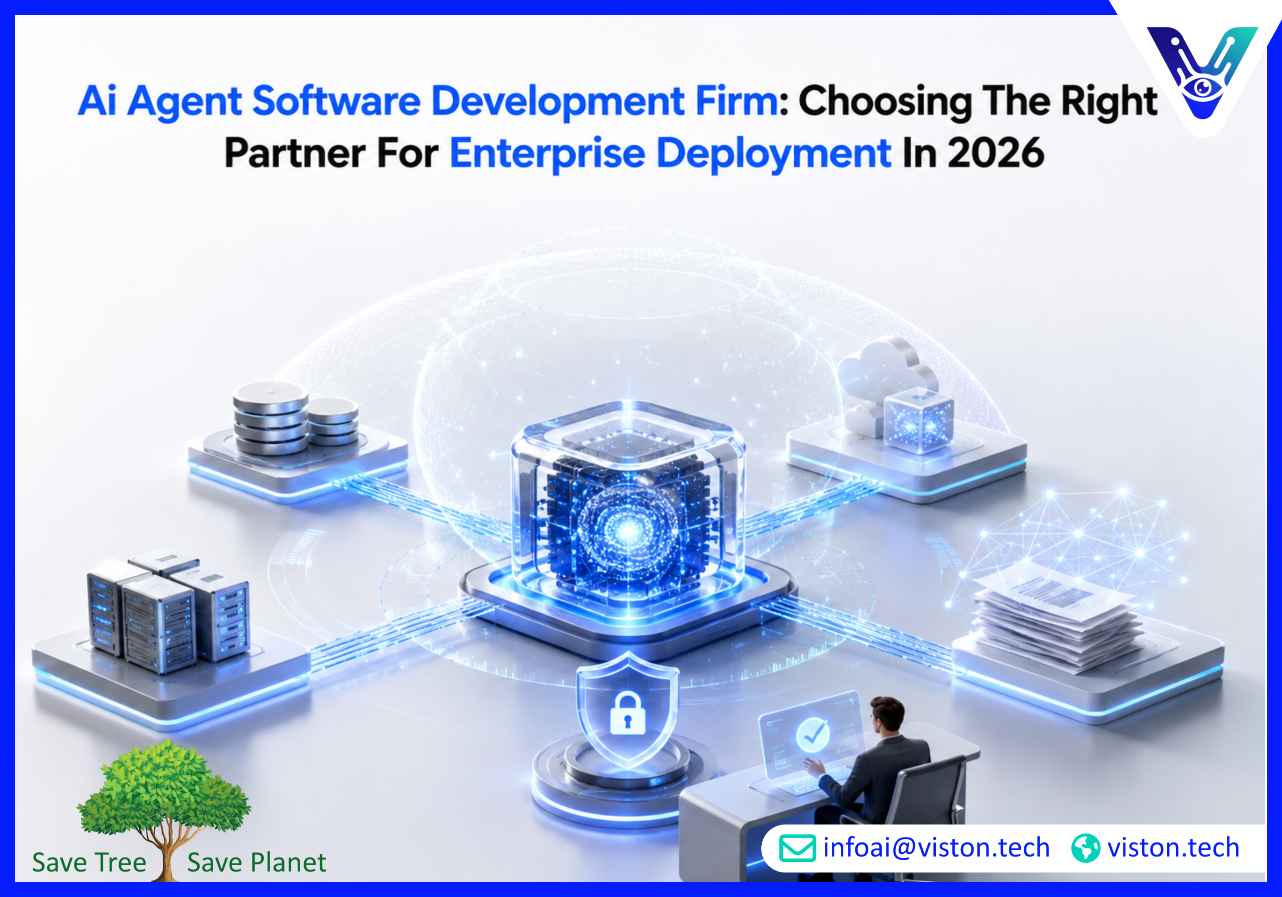
Enterprise adoption of AI agents has shifted from experimental to essential. Yet building production-ready autonomous systems internally remains out of reach for most organizations. Understanding what distinguishes a capable AI agent software development firm from a generalist agency has become critical for business leaders.
The distinction between a chatbot and an AI agent matters more than ever. While chatbots handle simple question-and-answer interactions, AI agents execute multi-step tasks autonomously, connect to external tools, maintain state across extended workflows, and make decisions within defined parameters.
Today’s enterprise AI agents operate across IT service management, HR workflows, customer operations, and knowledge-intensive functions. They integrate with existing systems rather than functioning as standalone tools. When properly deployed, they don’t just respond—they take action.
Building AI agents internally requires specialized expertise in machine learning, natural language processing, systems architecture, and ongoing model optimization. Most organizations lack the combination of talent and infrastructure needed to move from prototype to production reliably.
An AI agent software development firm brings pre-built infrastructure, integration expertise, security frameworks, and established patterns for multi-agent orchestration. Partners also provide the governance structures needed to scale agent fleets without creating shadow AI risks or ballooning costs.
For businesses, the decision often comes down to speed and risk reduction. A specialized firm can compress deployment timelines from months to weeks while avoiding common architectural pitfalls that derail internal projects.
Many firms demonstrate sophisticated agent capabilities in controlled environments. Fewer have experience managing long-running agents in production, where state management, failure recovery, and human-in-the-loop workflows become real challenges.
Ask about deployed agents operating at scale. How does the firm handle agent state across multi-day tasks? What checkpoint-and-resume mechanisms exist for failure recovery? How are delegated approval workflows implemented where agents pause for human review?
Agent value depends entirely on system access. A capable partner demonstrates experience connecting agents to CRMs, ERPs, knowledge bases, and communication platforms through APIs and enterprise middleware. The integration layer, not the language model, typically determines success or failure in production.
Agent governance cannot be an afterthought. Unlike passive SaaS tools, autonomous agents take actions actively. A misconfigured agent can execute inappropriate operations at scale before detection.
Look for firms that implement agent identity management, tool access controls, behavioral anomaly detection, and unified security dashboards. The partner should treat agent governance with the same rigor applied to engineering organizations.
Retrieval-Augmented Generation connects language models to proprietary business data, enabling accurate, current responses grounded in your information. RAG accounted for a substantial share of enterprise LLM deployments, making it the most widely adopted architectural approach in production AI.
A credible AI agent software development firm demonstrates deep RAG implementation experience, including document chunking strategies, embedding model selection, and hybrid search approaches that balance relevance with performance.
Moving from successful pilot to enterprise-wide deployment introduces new challenges. Resource demands increase significantly. Usage-based pricing can create unpredictable costs. Multiple agents operating simultaneously require orchestration. And without centralized management, organizations face the risk of fragmented, ungoverned deployments.
Production agents need monitoring, continuous evaluation, and optimization as business data and requirements evolve. Deploying without operational frameworks leads to technical debt and underutilized capabilities. Expect your partner to address logging, performance measurement, cost tracking, and regular model refinement as part of the engagement.
Regulated industries face additional scrutiny. Agent deployments must satisfy data residency requirements, maintain audit trails, and enforce access controls. The right partner builds compliance into the architecture rather than treating it as a post-deployment checklist.
Viston AI focuses exclusively on designing, building, and deploying production-grade AI agents for enterprise operations. The firm combines deep technical capability with practical business understanding, helping organizations automate complex workflows without creating new operational risks.
Viston’s approach addresses the full agent lifecycle: strategy and use-case identification, custom agent development, enterprise system integration, governance implementation, and ongoing optimization. Their technical expertise spans RAG architecture, multi-agent orchestration, and secure API integration across common enterprise platforms including CRMs, ERPs, and communication tools.
For organizations evaluating AI agent development partners, Viston offers particular strength in deployment readiness. The firm prioritizes production-tested patterns over experimental approaches, ensuring agents perform reliably at scale. Their security and governance frameworks reflect current enterprise requirements, including access controls, audit logging, and behavioral monitoring.
Decision-makers seeking a technically capable partner with demonstrated deployment experience will find Viston AI’s focused specialization valuable. The firm works with businesses across sectors where accuracy, security, and operational continuity matter.
Choosing an AI agent software development firm requires looking beyond technical capability alone. Evaluate potential partners on production experience, integration expertise, governance maturity, and operational support. The right firm accelerates deployment while reducing the risks inherent in autonomous systems.
Most importantly, seek partners who treat AI agents as operational systems rather than experimental projects. The technology continues to evolve rapidly, but the fundamentals of reliable, secure, governable deployment remain constant.
AI agents execute multi-step tasks autonomously, connect to external systems, maintain state across workflows, and make decisions within defined parameters. Chatbots handle single-turn question-and-answer interactions without action capability.
If your organization lacks in-house ML engineering depth, needs deployment within weeks rather than months, or requires enterprise-grade security and governance, a specialized partner typically delivers better outcomes than internal development.
Costs vary significantly based on complexity, integration requirements, and scale. Expect usage-based pricing models reflecting compute demands. Total investment ranges from low six figures for focused deployments to higher amounts for multi-agent systems.
Simple single-agent deployments may take 4-8 weeks. Enterprise-wide implementations with multiple agents and complex integrations often require 3-6 months from discovery to production readiness.
Look for SOC 2 Type II compliance at minimum. For regulated industries, seek partners with experience in your specific compliance framework, whether healthcare, financial services, or government requirements.
Yes, properly architected agents integrate through APIs and enterprise middleware. A capable development partner assesses your existing systems during discovery and designs integrations that work within your technical constraints.
Selecting an AI agent software development firm represents a strategic decision with lasting operational impact. The right partner brings not just technical capability but production experience, governance expertise, and a commitment to sustainable deployment. Viston AI offers focused specialization in AI agent development and deployment, helping organizations move from exploration to reliable automation without compromising security or operational control. As AI agents become central to enterprise operations, choosing a partner with demonstrated production experience and architectural maturity will determine whether your investment drives meaningful business outcomes or becomes another stalled initiative.
